Quick Answer
Thinking about replacing your boiler? Here is what you can realistically expect to pay in 2026, what is included in the price, and which factors can push costs up or down.
Typical gas combi replacement
Supply and fit, including Gas Safe certificate, 2026 market rates
A new gas combi boiler costs £1,800-3,000 supply and fit in the UK in 2026. A system boiler with cylinder costs £2,500-4,500. Oil boilers cost £2,200-4,000. Air source heat pumps cost £8,000-15,000 installed. London and South East add 20-30% to these prices.
What Drives New Boiler Installation Costs?
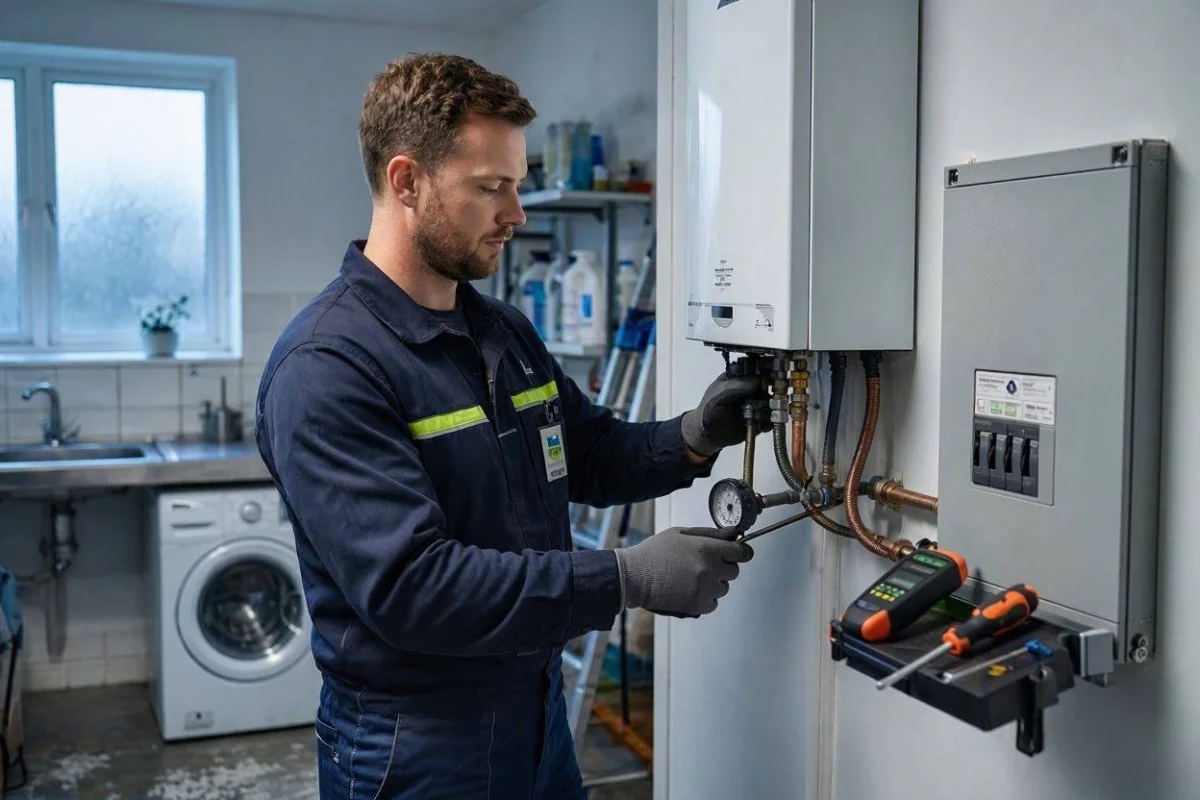
Getting a new boiler is one of the most significant home maintenance decisions most UK homeowners face. The price you pay depends on far more than just the boiler unit itself. Labour costs, the type of system you are replacing, the brand you choose, where you live, and whether any additional work is needed all play a role in the final bill.
The good news is that a like-for-like combi boiler replacement in a typical UK terraced or semi-detached home is one of the more straightforward jobs a Gas Safe engineer will carry out. In most cases it is completed in a single day, and the price includes the new unit, installation labour, removal of the old boiler, and a Gas Safe certificate on completion.
Where costs start to climb is when the job is anything other than straightforward. Moving the boiler to a different room, converting from an older back boiler system, upgrading from a regular or heat-only boiler to a combi, or adding a power flush to clean out sludge-filled pipework can all add time and money to the job. Premium boiler brands with 10-year warranties also cost more upfront but can save on repair bills over the long term.
This guide is aimed at both homeowners trying to budget for a boiler replacement and gas engineers and heating engineers who want up-to-date market rate information to use when quoting jobs or checking whether their pricing is competitive. The figures below reflect typical 2026 prices for supply and fit across the UK, with regional variations covered separately. For a more detailed breakdown of what a gas engineer charges per hour, see our gas engineer hourly rate guide.
If you want a personalised estimate based on your property type and location, use our boiler replacement cost calculator to get an instant ballpark figure.
New Boiler Installation Costs UK 2026
All prices below are for supply and fit, including labour, the new boiler unit, removal of the old unit, and a Gas Safe certificate. They do not include optional extras such as a power flush, smart thermostat, or new radiators.
| Boiler Type | Typical Cost (Supply and Fit) |
|---|---|
| Gas combi boiler (budget) | £1,800-2,200 |
| Gas combi boiler (mid-range) | £2,200-2,800 |
| Gas combi boiler (premium) | £2,800-4,000 |
| System boiler + cylinder | £2,500-4,500 |
| Oil boiler (combi) | £2,200-4,000 |
| LPG boiler | £2,500-4,200 |
| Air source heat pump | £8,000-15,000 |
Prices are national averages for 2026. London and South East will typically be 20-30% higher. Prices assume a like-for-like replacement with no significant pipework changes.
What Is Included in the Price
Typically included
- ✓New boiler supply
- ✓Installation labour (typically 1 day)
- ✓Gas Safe certificate on completion
- ✓Removing the old boiler
- ✓Commissioning and testing
Typically excluded
- ✗Power flush if required (add £400-600)
- ✗New radiators
- ✗Thermostatic radiator valves (TRVs)
- ✗Smart thermostat (add £150-350 fitted)
- ✗Pipework relocation
Key Factors That Affect the Price
No two boiler installations are identical. The following factors can push your quote significantly higher or lower than the average figures above.
Boiler brand and model
Worcester Bosch, Vaillant, Baxi, and Viessmann are the most commonly fitted brands in the UK. Worcester Bosch and Vaillant command a price premium but are consistently rated highest for reliability. A Worcester Bosch Greenstar or Vaillant ecoTEC will cost £300-600 more than a budget-tier boiler of equivalent output, but they come with 10-year warranties when fitted by an accredited installer. Budget brands such as Alpha and Potterton reduce upfront cost but tend to have shorter warranties and higher call-out rates over their lifetime.
Combi vs system vs heat-only
A combi boiler is the most common type in UK homes and heats water on demand, eliminating the need for a hot water cylinder or cold water storage tank. This makes it the cheapest to install in a typical flat or smaller home. A system boiler requires a hot water cylinder but no cold water tank in the loft, making it suitable for larger homes with higher hot water demand. A regular or heat-only boiler requires both a cylinder and a cold water tank and is now mainly found in older properties. Converting from one system type to another adds significant cost due to pipework changes and the removal or addition of storage tanks. System boilers are also better suited to underfloor heating circuits; see our underfloor heating cost guide for what this complementary heating upgrade costs in 2026.
Flue type and position
Most modern boilers use a room-sealed balanced flue that vents through an external wall. If the flue run is long, needs to go through a roof, or requires bends and extensions, labour time increases and so does the cost. Flue extensions and accessories can add £100-300 to the bill, and a vertical or roof-exit flue configuration adds more still. Always confirm the flue route with your engineer before accepting a quote.
Whether the system needs a power flush
Older central heating systems often accumulate sludge, scale, and corrosion products over years of use. Installing a new boiler onto a dirty system risks damaging the new heat exchanger and will often void the manufacturer warranty. A power flush uses specialist equipment to force water and cleaning chemicals through the radiators and pipework, removing the build-up. This costs £400-600 and adds a half to a full day of labour. Some installers will include a magnetic filter (add £80-150 fitted) as part of the service to prevent future sludge build-up.
Like-for-like vs moving the boiler
A straight swap where the new boiler goes in exactly the same position as the old one is the quickest and cheapest option. Moving the boiler to another room, to the loft, or to a purpose-built cupboard means rerouting gas and water pipework, extending flue runs, and potentially replastering. This can add £500-1,500 or more to the cost and extend the job to two days or longer.
Location in the UK
Where you live has a considerable impact on installation cost. Labour rates in London and the South East are notably higher than the national average. See the regional breakdown section below for more detail.
Regional Price Variation Across the UK
Boiler installation costs vary considerably across the UK, driven primarily by differences in labour rates rather than the cost of the boiler unit itself. The figures in the cost table above represent national averages. Here is how prices differ by region.
| Region | Price vs National Average |
|---|---|
| London | 25-35% above average |
| South East (excluding London) | 15-20% above average |
| South West, East of England | 5-10% above average |
| Midlands, East Midlands | Broadly average |
| North West, Yorkshire, North East | 5-10% below average |
| Wales and Scotland | 5-10% below average |
A gas combi boiler installation that costs £2,200 in Manchester or Leeds could cost £2,800-3,000 in London for the same unit, the same day of work, and the same Gas Safe certificate. This is purely a reflection of higher engineer day rates in the capital. If you are a gas engineer setting your own rates, our hourly rate calculator can help you benchmark your charges against the going rate in your region.
How to Get Accurate Boiler Quotes
Getting the right price for a boiler replacement comes down to comparing like with like. Here is how to make sure you are getting fair, accurate quotes rather than low-ball estimates that creep up once the job starts.
Get at least three quotes
Boiler installation prices vary significantly between engineers, even in the same postcode. Getting three quotes gives you a realistic market rate and protects you from paying over the odds. Be wary of quotes that are dramatically cheaper than the others as this often reflects corners being cut on materials, warranty registration, or Gas Safe certification.
Confirm what is included in writing
Before agreeing to any job, ask for a written quote that specifies the boiler make and model, warranty length, whether a power flush is included or recommended, whether a magnetic filter is included, and how the Gas Safe certificate will be issued. Quotes that only give a lump sum without breaking down what is covered are a red flag.
Check Gas Safe registration
Any engineer working on a gas boiler in the UK must be Gas Safe registered. This is a legal requirement, not an optional credential. You can verify any engineer on the Gas Safe Register website using their licence number. An unregistered installer cannot legally issue a Gas Safe certificate, and any work they carry out is illegal and will invalidate your home insurance.
Ask about warranty registration
Boiler manufacturers such as Worcester Bosch and Vaillant offer extended warranties of up to 10 years when the unit is installed by one of their accredited engineers and registered within 30 days of installation. A standard warranty without accredited installation may only cover 2-5 years. Always confirm that your installer will register the boiler with the manufacturer on your behalf.
Ask about the power flush recommendation
A reputable engineer will inspect your existing system and advise whether a power flush is needed before recommending it. If an engineer recommends a power flush on a relatively new system with no signs of sludge, ask them to justify the recommendation. Equally, if your radiators have cold spots and your heating has been slow for years and no one mentions a power flush, that is worth querying too.
Frequently Asked Questions
How long does a boiler installation take?
A straightforward like-for-like gas combi boiler replacement typically takes 6-8 hours for one engineer, so it is usually completed in a single day. Moving the boiler to a different location, converting from a back boiler, or installing a system boiler takes 1-2 days. Larger commercial jobs take longer. Most gas engineers will give you a realistic time estimate when they come to survey the job, and it is worth asking specifically whether they expect to finish in one day or two.
Which boiler brand is best value in 2026?
Worcester Bosch and Vaillant are consistently rated highest for reliability and customer satisfaction. Both come with 10-year warranties when fitted by accredited installers. Baxi and Ideal offer good mid-range value and are widely stocked by merchants, which makes getting parts easier. Budget brands like Alpha and Potterton are cheaper upfront but tend to have shorter warranties and higher long-term repair rates. When you factor in the cost of call-outs and parts over a 10-year period, the premium brands often work out cheaper overall.
Do I need a power flush when getting a new boiler?
Not always, but it is recommended when replacing a boiler in an older system with signs of sludge or corrosion. Symptoms include cold spots on radiators, discoloured water from radiator bleed valves, and slow heating. Installing a new boiler on a dirty system can void the warranty. A power flush costs £400-600 and extends the life of both the boiler and the radiators. As an alternative to a full power flush on a system that is only mildly contaminated, some engineers will use a chemical cleanse and fit a magnetic system filter, which is cheaper and less disruptive.
Can I get a grant for a new boiler?
The Boiler Upgrade Scheme (BUS) provides grants of £7,500 toward a qualifying air source heat pump and £5,000 toward a ground source heat pump in England and Wales. Gas boiler replacements no longer receive grants. Some energy suppliers offer free or subsidised boiler replacements under ECO4 for eligible households on certain benefits or low incomes. If you think you may qualify for ECO4 support, contact your energy supplier directly or check the government website for the latest eligibility criteria, as these schemes change regularly. Improving your home's insulation alongside a new boiler significantly increases the efficiency gains; our home insulation cost guide, including ECO4 grant eligibility, covers the options and what each measure costs.
What is the difference between a combi and a system boiler?
A combi boiler heats water on demand and does not need a separate hot water cylinder or cold water tank in the loft, making it ideal for smaller properties. A system boiler heats water and stores it in a cylinder, making it better for larger homes with multiple bathrooms where multiple taps or showers may be used simultaneously. System boilers generally deliver better water pressure to multiple outlets. The trade-off with a system boiler is that you can run out of stored hot water during periods of high demand and need to wait for the cylinder to reheat, whereas a combi provides continuous hot water whenever you need it.
Related Guides and Tools
Gas Engineer Hourly Rate UK 2026
Current day rates and hourly rates for Gas Safe engineers across the UK.
Gas Safe Registration Guide
Everything you need to know about Gas Safe registration for gas engineers.
Boiler Replacement Cost Calculator
Get an instant estimate tailored to your property type and location.
Hourly Rate Calculator
For gas engineers: check whether your day rate is competitive in your region.
Ready to get boiler installation quotes?
Compare quotes from Gas Safe registered engineers in your area. Free, no-obligation, and takes less than two minutes.
Get free boiler installation quotes