Gas Engineer Hourly Rate UK 2026: £45-75/hr, £300-540 Day Rate (Gas Safe Registered)
Written by Tom Ellis · Senior Trades Editor
Last updated: July 2026
Quick Answer
Gas engineers in the UK charge between £45 and £75 per hour in 2026, with the national average sitting at around £55 per hour. Day rates typically run from £300 to £540, averaging £420 for an eight-hour day. In London, rates push higher to £60-95 per hour reflecting the higher cost of operating in the capital.
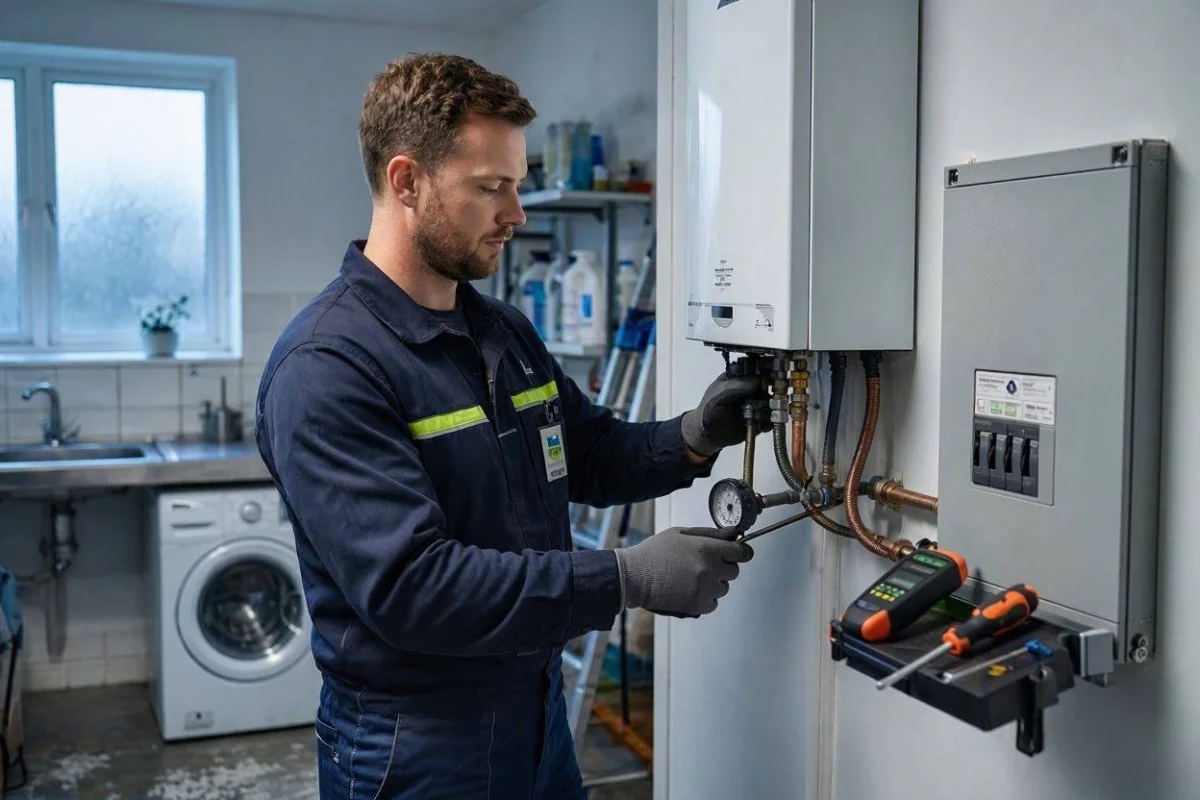
What Gas Engineers Charge in 2026
Gas engineering sits at the more lucrative end of the trades market, and for good reason. You are not just a skilled tradesperson; you are a legally accountable professional whose work directly affects the safety of your customers. Gas Safe registration is mandatory by law under the Gas Safety (Installation and Use) Regulations 1998, and maintaining it costs money every year. That legal obligation, combined with the specialist knowledge required and the liability involved, pushes gas engineer rates above many other trades.
Nationally, the going rate in 2026 sits between £45 and £75 per hour, with most experienced engineers landing somewhere around £55. Where you sit in that range depends on a few key factors: your location, how long you have been qualified, the type of work you take on, and how much overhead you carry. A sole trader working from a small van in the North East will have different costs and a different market to someone running a team of engineers in South London.
Day rates for gas engineers run between £300 and £540, with £420 being a reasonable average across the country. These are the figures you would quote for a full day on site, typically for larger installations or commercial work. It is worth being clear with customers about what a day rate includes: travel time, materials markup, and any call-out element should all be agreed upfront to avoid disputes later.
For a self-employed gas engineer putting in a full year of work, realistic annual earnings land between £70,000 and £90,000 before tax. That assumes roughly 1,000 to 1,200 billable hours after accounting for holidays, admin time, training, and the inevitable gaps between jobs. Strong pipeline management and a good reputation for reliability are what separate engineers at the top of that range from those at the bottom.
Gas engineers who also hold HVAC qualifications can expand into commercial climate control; see our HVAC engineer day rate guide for how rates compare in that overlapping specialism.
Gas Engineer Rates by Region
Location is one of the biggest single factors in what you can realistically charge. Engineers in London and the South East benefit from higher living costs pushing customer expectations upward, while those in Wales, Northern Ireland, and the North East will find the local market is tighter. Use the table below as a benchmark when setting or reviewing your rates.
| Region | Hourly Rate | Day Rate (8hrs) |
|---|---|---|
| London | £72/hr | £574 |
| South East | £63/hr | £506 |
| South West | £55/hr | £440 |
| East Anglia | £52/hr | £418 |
| Midlands | £52/hr | £418 |
| North West | £50/hr | £396 |
| Yorkshire | £50/hr | £396 |
| Scotland | £50/hr | £396 |
| North East | £47/hr | £374 |
| Wales | £47/hr | £374 |
| Northern Ireland | £47/hr | £374 |
Rates based on the national average of £55/hr adjusted by regional multipliers. Actual rates will vary depending on local competition and individual overhead costs.
Why Gas Engineer Rates Are Rising in 2026
National skills shortage
The CITB projects a shortfall of 250,000 trade workers nationally by 2028. Apprenticeship starts have fallen by approximately 170,000 over the past decade, and the Gas Safe registration pathway adds further barriers to entry. Fewer new Gas Safe engineers entering the market each year, combined with an aging registered workforce, is creating a growing supply gap that supports rate increases.
Boiler servicing demand holding firm
Despite the long-term move toward heat pumps, the UK has approximately 24 million gas boilers in service. Annual boiler service requirements, landlord gas safety certificates (CP12), and reactive repair work create a demand baseline that is not declining quickly enough to offset the reduction in new Gas Safe entrants. The installed base of gas appliances will remain substantial well into the 2030s.
Heat pump transition creating dual demand
Gas Safe engineers with ACS heat pump qualifications can service both gas appliances and heat pump systems. The transition to heat pumps is not eliminating gas engineer demand in the medium term — it is creating an additional qualification that gas engineers with the right tickets can exploit for a premium, further differentiating those who invest in training from those who do not.
Rates by Experience Level
Experience plays a significant role in what a gas engineer can command. A recently qualified engineer working towards their first few years of independent work will naturally charge less than someone with fifteen years of boiler installations and commercial gas work under their belt. Customers are generally willing to pay more for an engineer they know is going to get the job done right first time, without callbacks.
| Experience Level | Multiplier | Typical Rate |
|---|---|---|
| Apprentice / Trainee | 0.6x | £33/hr |
| 1-3 years | 0.8x | £44/hr |
| 3-7 years (baseline) | 1.0x | £55/hr |
| 7-15 years | 1.15x | £63/hr |
| 15+ years / Master | 1.3x | £72/hr |
What Affects Your Rate as a Gas Engineer
Overhead Costs
Your overhead costs are the baseline that your rate needs to cover before you start making a profit. For a gas engineer working as a sole trader, those costs typically include van finance or depreciation, tools and specialist gas testing equipment, public liability insurance, van insurance, Gas Safe registration renewal, accountancy fees, and fuel. Fuel costs in particular have become more significant in recent years. A van covering 20,000 miles annually can easily cost £4,000 to £6,000 in fuel alone. When you add up all your annual overheads and divide by your billable hours, you get a cost per hour that forms your absolute minimum rate.
Gas Safe Registration
Gas Safe registration is not optional; it is a legal requirement for anyone working on gas appliances in the UK. The registration fee varies depending on the number of appliance categories you hold, but it runs into hundreds of pounds annually. More importantly, holding Gas Safe registration allows you to charge a significant premium over any unregistered competitor. Registered engineers typically command 15 to 25 percent more than an unregistered worker, partly because customers know the work is done legally and comes with proper certification. If you are looking at how to maintain or renew your registration, our guide on Gas Safe registration covers the process in detail.
Seasonal Demand
Gas engineers experience pronounced seasonal demand swings. October through February is peak season as boilers break down and homeowners scramble for heating. Experienced engineers use this period to charge at or near the top of their range, knowing that demand outstrips supply. The summer months tend to be quieter for reactive work, though annual boiler services and landlord gas safety certificates help fill the diary year-round. Some engineers offer a small discount for summer bookings to smooth out the seasonal dip, while others use quieter periods for training or equipment maintenance.
Local Competition
The density of Gas Safe registered engineers in your area directly affects how much you can charge. In rural areas with fewer engineers, you can often push rates higher because customers have less choice. In densely populated cities, competition is stiffer and the market more price-sensitive. Regularly checking what other local engineers are advertising on platforms like Checkatrade or MyBuilder gives you a useful market pulse check.
How to Set Your Gas Engineer Rate Step by Step
Setting your rate is not guesswork. Follow these steps to arrive at a number that covers your costs, reflects your value, and holds up against the local market.
- Start with your base rate. Work out your total annual personal expenses: rent or mortgage, food, bills, transport, savings. This is your minimum take-home requirement. Divide by the number of billable days you expect in a year (typically 200 to 220 for a full-time sole trader) to find your minimum daily earnings target.
- Add your overhead costs. Calculate your annual business costs (van, insurance, Gas Safe fees, tools, fuel, accountancy) and divide by billable hours. Add this to your personal cost-per-hour to get your true minimum rate. As a rough guide, overheads typically add 20 to 30 percent on top of your labour value.
- Check your local market. Search for Gas Safe engineers in your area on comparison sites. Get a feel for what experienced engineers are charging. Your rate should be competitive but not the cheapest. Competing on price alone attracts price-sensitive customers who are often the most demanding to work with.
- Factor in your specialism. If you hold additional competencies such as commercial gas or LPG, adjust your rate upward for those categories of work. Specialist work commands specialist rates.
- Review annually. Costs go up every year. Your rate needs to keep pace. Build a review into your calendar and do not be afraid to increase rates with existing customers with adequate notice.
For a more precise calculation, use our hourly rate calculator to plug in your actual figures. You can also compare with our tradesman day rates guide for 2026 to see how gas engineers sit relative to other trades.
Gas Engineer Specialisms and Premium Rates
Not all gas work is priced the same. Certain specialisms attract higher rates because they require additional qualifications, carry greater liability, or involve more complex equipment.
Boiler Installation
Full boiler replacements are among the highest-earning jobs for a gas engineer. A standard combi boiler swap typically takes a full day and the installation element alone is priced between £500 and £900, separate from the cost of the boiler itself. If you are upgrading pipework, adding system filters, or converting from a heat-only to combi setup, the labour charge rises further. Our guide to new boiler installation costs in the UK breaks down the full cost picture for customers and engineers alike.
Boiler Servicing
Annual boiler services are the bread-and-butter recurring revenue of a gas engineer's business. A standard service takes 45 to 90 minutes and is typically priced as a fixed job rate rather than hourly, usually between £80 and £130. Batching services in a single street or estate makes these jobs very efficient. Building a base of regular service customers provides stable income through the quieter summer months.
Landlord Gas Safety Certificates (CP12)
Landlords in the UK are legally required to have their rental properties inspected annually by a Gas Safe registered engineer, and a certificate issued. These CP12 inspections are a reliable source of repeat work. A certificate covering a single appliance typically costs £60 to £90; properties with multiple appliances attract additional charges per item. Building relationships with letting agents can fill a significant portion of your diary with predictable, pre-booked work.
Commercial Gas
Commercial gas work requires additional competencies beyond the domestic ACS qualifications. It involves larger and more complex systems, carries higher liability, and is generally priced at a premium to domestic work. Engineers working in the commercial sector can often command day rates of £450 to £600 or more, particularly for industrial or catering gas installations.
LPG Systems
LPG (liquefied petroleum gas) is used in properties off the mains gas network, including rural homes, caravans, and some commercial premises. Engineers holding LPG competencies can access a market with less competition than standard natural gas work and can charge a 10 to 20 percent premium on LPG-specific work. The storage, pressure, and safety requirements differ from mains gas, so the additional qualification is genuinely valued.
Frequently Asked Questions
How much does a gas engineer charge per hour in the UK in 2026?
Gas engineers in the UK charge between £45 and £75 per hour in 2026, with a national average around £55 per hour. Rates vary significantly by region, with London engineers typically charging £60 to £95 per hour. Your Gas Safe registration status, years of experience, and local competition all influence where in that range you should pitch your rate. Engineers with additional specialisms such as commercial gas or LPG can push beyond the upper end of the national range for that type of work.
What is the average gas engineer day rate in the UK?
The average gas engineer day rate in the UK is around £420 for an eight-hour working day in 2026, with the typical range spanning £300 to £540. Day rates in London and the South East push higher, often reaching £500 or more for an experienced engineer. Many engineers prefer quoting day rates for larger jobs such as boiler installations where the work is likely to run across a full day. For help working out what your personal day rate should be, try the day rate calculator.
How do I calculate my overhead costs as a self-employed gas engineer?
Add up your annual fixed costs including van finance or depreciation, tools and equipment, public liability and van insurance, Gas Safe registration renewal, accountancy fees, and fuel. Divide the total by your billable hours in the year, typically 1,000 to 1,200 for a solo trader. This gives you a cost per billable hour that you need to cover before making any profit. Add your desired net income on top to arrive at your minimum viable hourly rate. A common rule of thumb is that overheads add around 20 to 30 percent on top of your labour value, though this varies considerably depending on how much kit you carry and how far you travel.
Do gas engineers charge more in London?
Yes, gas engineers in London typically charge 25 to 30 percent more than the national average, putting hourly rates in the range of £60 to £95. This reflects the higher costs of operating in the capital, including parking charges, congestion zone fees, and higher insurance premiums. The time cost of travelling between jobs in London traffic is also a factor that engineers need to account for. The South East also commands a premium, typically around 15 percent above the national average, driven by higher property values and cost of living in the region.
Should I charge per hour or per job as a gas engineer?
Both approaches have merit depending on the type of work. Hourly rates work well for reactive callouts and fault-finding where the time required is genuinely unknown. Fixed job prices suit routine tasks such as boiler servicing or landlord gas safety certificates where you can estimate time reliably and the job is consistent. Many experienced gas engineers use a hybrid approach: a fixed price for common jobs they know inside out, and an hourly rate for anything diagnostic or open-ended. Fixed prices give customers certainty and remove the awkwardness of a job running over time, but they do require you to build enough of a buffer into the quote to cover slower-than-expected progress.
How often should I review my gas engineer rates?
Review your rates at least once a year, ideally at the start of each tax year or each calendar year. Use the review to account for increases in Gas Safe registration fees, insurance premiums, fuel costs, and general cost of living. If your diary is consistently full several weeks ahead, that is a strong signal that your rates are below market and you can increase them without losing significant work. Most customers will accept a reasonable annual increase, particularly if your work quality is high and you give them advance notice. Increasing by 5 to 10 percent per year is generally far less jarring to customers than a large jump after several years of holding the same rate.
Will gas engineer rates keep rising despite the shift to heat pumps?
Yes, in the medium term. With approximately 24 million gas boilers currently in service in the UK, the transition away from gas will take at least a decade to materially reduce the demand for Gas Safe registered engineers. Annual servicing, CP12 landlord certificates, and reactive repairs on this enormous installed base will sustain demand well into the 2030s. In the interim, gas engineers who invest in ACS heat pump qualifications can access a growing premium market for heat pump servicing alongside their core gas work. The scarcity of new Gas Safe registrants entering the market means the supply-demand imbalance will support rate growth regardless of the energy transition timeline.
Work Out Your Exact Rate
Use our free tools to calculate the right hourly or day rate for your specific costs and location. Takes about two minutes and gives you a defensible number based on your actual overheads.
Related Guides