Tradesman Day Rates in London 2026: What You'll Actually Pay (And Why)
Written by Tom Ellis · Senior Trades Editor
Last updated: July 2026
Sleepless Tradesman UK Trades Rate Index 2026 (n = 847, March–May 2026)
Quick Answer
- London tradesman day rates run 25–40% above the national average across all trades.
- A typical London builder charges £320–£420/day; a plumber £300–£400/day; an electrician £290–£390/day.
- Inner-London boroughs (Westminster, Kensington, Islington) cost 15–20% more than outer London (Bromley, Croydon, Havering).
- ULEZ (£12.50/day), Congestion Charge (£15/day in the zone), and parking (£15–£40/day) are often charged on top — always ask whether they are included.
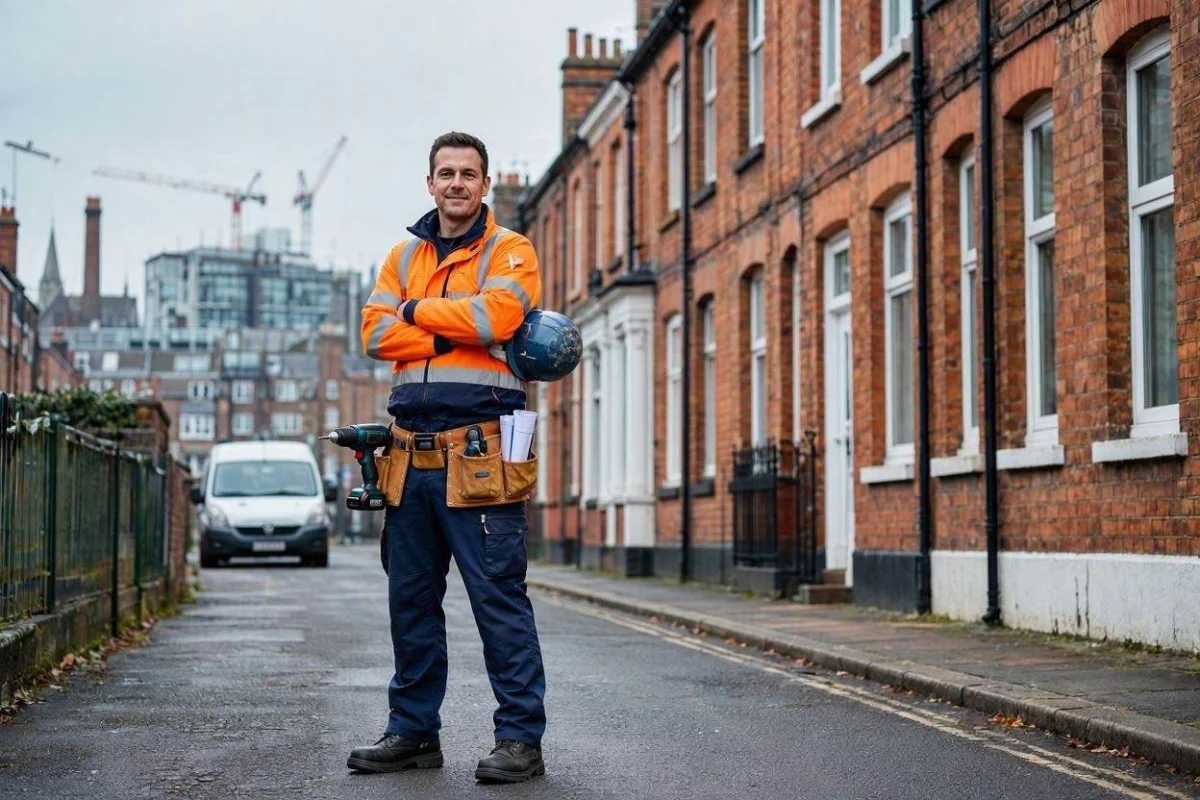
London Tradesman Day Rates at a Glance
2026 day rate ranges for Greater London, compared with the national range outside London. Figures are labour only — materials are priced separately. Inner-London jobs typically sit at the upper end of each range.
| Trade | London Day Rate | London Mid |
|---|---|---|
| Builder / General | £320–£420 | £370 |
| Electrician | £290–£390 | £340 |
| Plumber | £300–£400 | £350 |
| Gas Engineer | £310–£420 | £365 |
| Roofer | £300–£390 | £345 |
| Plasterer | £270–£360 | £315 |
| Carpenter / Joiner | £280–£370 | £325 |
| Tiler | £260–£340 | £300 |
| Painter & Decorator | £240–£320 | £280 |
| Landscaper | £280–£360 | £320 |
Source: Sleepless Tradesman UK Trades Rate Index 2026 (n = 847). Labour only. Rates vary by borough, experience, and qualifications.
Why London Rates Are Higher Than the National Average
The London premium is real, structural, and not going anywhere. It is not simply a case of tradespeople charging more because they can. The cost of running a trade business in London is materially higher, and those costs are passed on in every quote. Here is what drives the gap.
Higher wages and cost of living
London wages across every sector are higher — and tradespeople compete for the same workforce as every other employer. An apprentice or second-fix carpenter who can earn £180/day in Leeds can earn £240/day in London. Sole traders and small firms have to match that to retain staff, and the day rate reflects it. Sole traders themselves have higher personal living costs: a London tradesperson paying £1,800/month in rent needs to clear significantly more than one paying £800/month in the Midlands.
Commercial premises and storage
Renting a lock-up unit for a van, tools, and materials storage in Greater London costs two to three times more than in most other UK cities. Many London tradespeople work from home out of necessity — but those who need secure yard or storage space pay a heavy premium. Commercial rent is factored directly into overhead rates.
Longer travel times between jobs
A tradesperson in rural Yorkshire might complete two jobs in a day with 20 minutes of driving. The same tradesperson in London might spend 45–90 minutes travelling between jobs — time they cannot bill for. To maintain the same effective daily earnings, the London rate must be higher. A 7-hour London day can mean 5.5 hours on-site and 1.5 hours in traffic.
Van insurance and running costs
Comprehensive van insurance for a tradesperson with a Greater London postcode is typically £400–£800/year more than an equivalent policy in a provincial city. Add annual MOT, wear from stop-start urban driving, and the cost of maintaining a van that passes ULEZ standards — and the vehicle alone adds meaningful overhead versus national peers.
Structural supply shortage — and it is getting worse
The Construction Industry Training Board (CITB) projects that 250,000 additional workers will be needed in UK construction trades by 2028, against a backdrop where apprenticeship starts have fallen by approximately 170,000 over the past decade. London feels this shortage most acutely: demand from commercial construction, high-specification residential, and green retrofit is concentrated here, while qualified tradespeople increasingly relocate to lower-cost areas. The result is a genuine scarcity premium on top of the cost-of-living premium — particularly for electricians, gas engineers, and HVAC engineers.
The New Demand Driving London Rates Higher in 2026
Beyond general construction activity, three structural shifts are concentrating new demand in London specifically — and are likely to keep upward pressure on rates through the decade.
EV charging installs
London has the UK's highest EV adoption rate, and every new charger requires a qualified electrician. Demand for home EV charge point installs is outpacing electrician capacity in most London boroughs, and the work commands a significant premium over standard electrical jobs.
Smart home & low-carbon retrofit
High-specification London residential — particularly in inner boroughs — is driving heavy demand for smart home integration and low-carbon retrofits (heat pumps, solar, battery storage). These jobs require specialist knowledge and carry higher day rates than standard domestic work.
National infrastructure spillover
Major London infrastructure projects (rail, utilities, energy grid upgrades) absorb qualified tradespeople at commercial rates, reducing availability for domestic work. As the CITB notes, modern trades play a critical role in everything from clean energy projects to national infrastructure — London is where much of that work is concentrated.
Inner London vs Outer London: The Borough Premium
"London" is not a single market. The rate you are quoted depends heavily on which borough you are in — and whether your street has specific access restrictions.
Inner London (higher rates)
- Westminster, Kensington & Chelsea
- Islington, Camden, Hackney
- Southwark, Lambeth, Tower Hamlets
- Hammersmith & Fulham, Wandsworth
Typically 15–20% above outer-London rates. Parking is harder, skips require council permits, and building management in mansion blocks or period conversions often restricts working hours and material deliveries.
Outer London (lower rates)
- Bromley, Croydon, Sutton
- Havering, Bexley, Hillingdon
- Enfield, Harrow, Barnet
- Kingston, Richmond, Merton
Rates are closer to the lower end of the London range — still 20–30% above the national median, but without the Central London access premium. Parking is easier and skip permits are more straightforward.
The specific drivers of the Central London premium are worth spelling out for anyone negotiating a quote:
- Access restrictions. Many mansion blocks and housing estates in W1, SW1, WC1, and EC1 have goods lifts with timed booking windows. Tradespeople may need to arrive before 9am or after 5pm, meaning they lose a productive half-day around the delivery slot.
- No skip access. Many inner-London streets will not permit a skip at all, or require a council permit that takes 5–10 working days to arrange. Waste often has to be taken off-site in the van at the end of each day — adding an hour and skip-hire or tip costs.
- Material deliveries timed by building management. On high-end residential projects, deliveries may be restricted to specific hours. The tradesperson absorbs the time cost of coordinating around this.
- Parking. In many inner-London zones there is simply nowhere to park a van legally. Blue-badge bays, loading bays (with strict time limits), and NCP car parks are the only options — all add cost.
Related guides
Sleepless Tradesman
Quote, invoice and manage jobs — all in one app
Join thousands of UK tradespeople running their admin from their phone. Free to start, no card needed.
ULEZ and Congestion Charge: How Tradespeople Handle These Costs
Two of the most significant and least-understood components of a London tradesman's overheads are the Ultra Low Emission Zone charge and the Congestion Charge. Both affect what you pay — but how they appear on a quote varies widely.
Ultra Low Emission Zone — £12.50/day across all of Greater London
Since August 2023, the ULEZ covers all 33 London boroughs — not just Central London. Any van that does not meet Euro 6 (diesel) or Euro 4 (petrol) standards pays £12.50 every calendar day it enters the zone. At five days per week, 52 weeks per year, that is £3,250 per year — before fuel, insurance, or maintenance.
Many established London tradespeople have already upgraded to compliant vans, absorbing the capital cost in their rates. Others — particularly sole traders who bought their van outright and cannot afford a £30,000 replacement — still pay the daily charge and pass it on. You may see a ULEZ surcharge line on the invoice, typically £12.50 per job day, or it may be bundled into the day rate without being itemised.
What to ask:"Does your day rate include ULEZ, or is that additional?" A straightforward tradesperson will tell you. If they are not ULEZ-compliant and working across Greater London five days a week, the cost is real and fair to pass on — just make sure you know before you commit.
Congestion Charge — £15/day in the Central London zone
The Congestion Charge applies only to the Central London zone (roughly bounded by Euston Road, Elephant & Castle, Vauxhall Bridge Road, and Park Lane). At £15 per day, it is separate from and additional to ULEZ. A tradesperson doing a week's work in a Central London mansion flat could pay £75 in Congestion Charge alone — again, either bundled into the quote or itemised separately.
What to ask:"Is this job within the Congestion Charge zone? If so, is that included in your quote?" For a one-day job, £15 on a £350+ day rate is noise. For a two-week fit-out, £150 in Congestion Charge is worth knowing about before you sign.
Parking — £15–£40/day depending on location
Parking is often the most variable and least predictable cost. In outer-London residential streets, a tradesperson may find free parking without difficulty. In most of inner London, every street is within a CPZ (controlled parking zone) — residents only, typically 8am–6pm. Legal options are NCP car parks (£20–£35 for a full working day near a residential job), pay-and-display loading bays (£3–£6/hour, often limited to one or two hours), or a day permit arranged through the council in advance.
What to ask:"Is parking included in your quote, or will parking costs be itemised on the invoice?" Most reputable tradespeople either include a fixed daily parking allowance or charge at-cost with receipts. The ones to watch are those who do not mention it at all and then add a vague "sundries" line to the final bill.
What Does a London Tradesman Invoice Look Like?
A well-itemised London tradesman invoice looks different from one in a provincial city because there are more legitimate cost components. Here is a realistic example for a two-day electrical job in Islington:
Example invoice — consumer unit replacement, 2 days, Islington N1
Notice that parking and ULEZ are itemised separately with receipts — this is the transparent approach. A quote that buries these costs in a higher day rate without explanation is not necessarily dishonest, but it does make comparison shopping harder. When you get multiple quotes and one appears significantly lower than the others, check whether it is simply omitting these London-specific costs that will be added later.
How to Get a Fair London Quote
London's large pool of tradespeople creates choice, but it also creates opportunity for confusion. These steps will help you compare quotes on a like-for-like basis and avoid the most common problems.
- 1
Get at least three written quotes
In London, the spread between the cheapest and most expensive quote for the same job is often 40–60%. Written quotes should itemise: day rate or total labour cost; materials (listed separately, with the markup percentage stated); ULEZ, Congestion Charge, and parking (included or additional); estimated duration; VAT status of the business. Never accept a verbal estimate for anything over £500.
- 2
Ask whether the tradesperson works regularly in your borough
A tradesperson based in Bromley who rarely works in Islington will spend more time travelling, may not know the parking situation on your street, and may not be familiar with the quirks of local building management. Ask: 'Do you regularly work in this area?' Tradespeople who do will give more accurate quotes and fewer surprises on the day.
- 3
Clarify ULEZ, Congestion Charge, and parking upfront
The single question that prevents most London invoice disputes: 'Is your quote all-in for ULEZ, Congestion Charge, and parking — or will those be charged separately?' A clear yes or no before work starts prevents awkward conversations at invoice time. If they are to be charged separately, ask for a realistic estimate.
- 4
Check licences and insurance
Gas work legally requires a Gas Safe registered engineer — verify at gassaferegister.co.uk. Notifiable electrical work requires an NICEIC or NAPIT registered contractor, or a building notice. Any tradesperson entering your home should carry public liability insurance of at least £1m — £2–5m is standard in London. Ask to see the certificate. Reputable tradespeople keep a digital copy to hand.
- 5
Watch out for unusually low London quotes
If one quote is 30–40% below the others for an identical scope of work, it warrants scrutiny — not celebration. Common explanations include: the tradesperson is not VAT registered (fine if they are genuinely below the threshold, but check); they are not intending to include ULEZ or parking; they are planning to use cheaper materials than specified; or they are underquoting to win the job and will reprice once started. Ask the cheapest quoter to walk you through their pricing.
- 6
Understand materials markup
Most London tradespeople mark up materials 15–25% above their trade cost. This is standard practice — it compensates for time spent sourcing, collecting, and warranting the materials. A quote that includes materials at retail prices with a labour charge on top may actually cost more than one with a modest markup built in. Ask: 'Are your materials priced at trade cost plus a percentage, or at retail?'
Red Flags on London Quotes
London's size and anonymity make it easier for less reputable operators to find customers. These warning signs are worth knowing before you commit.
No written quote
Any tradesperson unwilling to put a price in writing before starting is a risk. If it goes wrong, you have no record of what was agreed.
Cash only, no receipt
Legitimate tradespeople accept bank transfer and provide receipts. Cash-only working without a receipt means no paper trail if something goes wrong — and likely means no VAT is being paid.
Unsolicited knock at the door
Legitimate tradespeople do not cold-call residential properties. If someone knocks and offers to fix your roof or driveway on the spot, decline and find your own tradesperson independently.
No fixed address or verifiable business
Check that the tradesperson has a verifiable trading name, address, and phone number. A Gmail address, a mobile number, and 'LDN Trades' is not enough to pursue a claim if work goes wrong.
Pressure to start immediately
Legitimate tradespeople in London are usually booked weeks in advance. Anyone who can start tomorrow and is pressing you to commit the same day — particularly for large structural or roofing work — warrants caution.
Large upfront deposit requests
A deposit of 10–25% for materials on a large job is normal. A request for 50%+ upfront before any work begins is unusual and risky, particularly from a tradesperson you cannot independently verify.
Frequently Asked Questions
How much does an electrician charge per day in London in 2026?+
London electricians typically charge £290–£390 per day in 2026, with a midpoint around £340. In inner-London boroughs such as Westminster or Islington, expect the upper end of that range. Most electricians price ULEZ and parking on top of the day rate unless you confirm otherwise in writing.
How much does a plumber charge per day in London in 2026?+
London plumbers charge approximately £300–£400 per day for planned work in 2026. Emergency callouts are typically 1.5–2× the standard rate — so £450–£800 for an out-of-hours visit — plus parts. Always confirm the call-out rate before booking an emergency plumber.
What is the ULEZ surcharge on a London tradesman quote?+
The ULEZ covers all of Greater London. Tradespeople with non-compliant vans pay £12.50 per day to work anywhere in London — £3,250 per year at 5 days per week. Most pass this cost to customers either bundled into their day rate or as a separate line item on the invoice. Ask your tradesperson explicitly whether their quote includes ULEZ.
Are tradesman rates higher in inner London than outer London?+
Yes — inner-London boroughs (Westminster, Kensington & Chelsea, Islington, Camden, Hackney) typically attract rates 15–20% above outer-London boroughs (Bromley, Croydon, Havering, Sutton). The main drivers are higher parking costs, congestion, access restrictions, and the fact that tradespeople who work regularly in Central London factor those overheads into their standard rates.
Do London tradespeople charge for parking separately?+
Many do — especially for jobs in CPZ (controlled parking zone) areas or central London. Parking can cost £15–£40 per day. Reputable tradespeople will tell you upfront; less reputable ones add it to the final invoice. Ask when accepting a quote: 'Is parking included, or will it be charged separately?'
How do I find a vetted tradesperson in London?+
Get at least three written quotes, check that gas work is done by a Gas Safe registered engineer (search gassaferegister.co.uk), and that notifiable electrical work is carried out by an NICEIC or NAPIT registered contractor. Sleepless Tradesman lists verified London tradespeople with reviews from real customers.
Will London tradesman rates keep rising after 2026?+
The structural case for continued rate growth is strong. The CITB projects a shortfall of 250,000 trade workers across UK construction by 2028, and apprenticeship starts have fallen by around 170,000 over the past decade — so the supply squeeze is not resolving quickly. In London specifically, demand from EV charging installations, smart home retrofit, and low-carbon upgrades (heat pumps, solar) is growing faster than qualified tradespeople can absorb it. Electricians and HVAC engineers are particularly exposed to this demand spike. If you are budgeting for a significant London project in 2027 or beyond, assume rates will be at least 5–8% higher than 2026 benchmarks.
Related guides
Looking for a vetted London tradesperson?
Sleepless Tradesman lists verified tradespeople across all London boroughs, with reviews from real customers and transparent pricing profiles.