Drainage Contractor Day Rate UK 2026
Written by Tom Ellis · Senior Trades Editor
Last updated: August 2026
Quick Answer
Drainage contractors in the UK charge £220 to £380 per day on average in 2026, with a national mid-point of around £300. London and the South East reach £320 to £450 per day. Specialists who operate CCTV survey equipment or carry out drain relining command rates at the top end of the scale. Hourly rates typically sit between £30 and £44 for standard work, rising to £55 or more for specialist drainage operations.
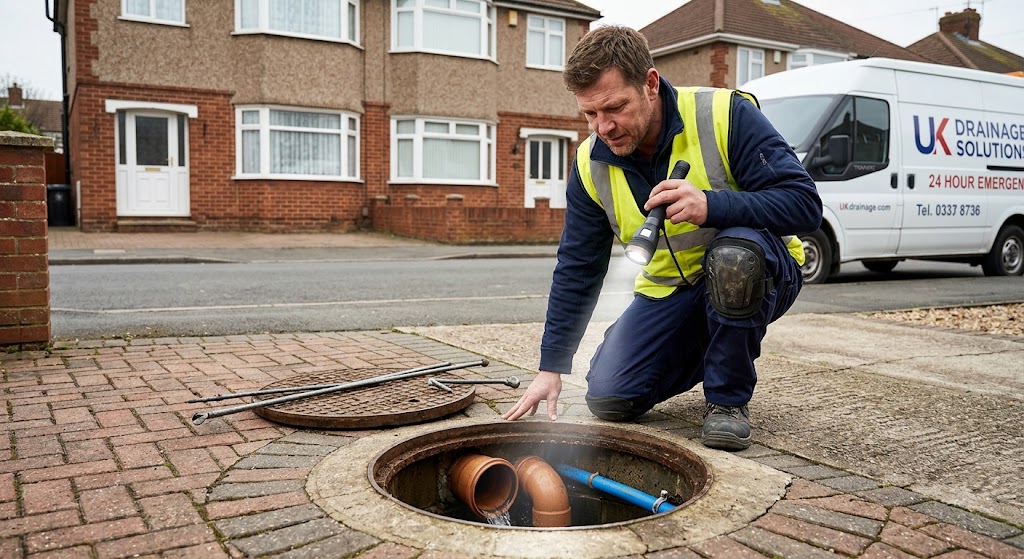
Drainage is one of the most in-demand trades in the UK, covering everything from emergency call-outs for blocked drains to long-term civil contracts involving excavation and sewer rehabilitation. Whether you are a drainage contractor setting your rates or a homeowner comparing quotes, this guide gives you a clear picture of what the market looks like in 2026. All figures are based on self-employed and sub-contract day rates, excluding VAT and materials unless stated.
For a broader view of trades pricing, see our UK tradesman day rates guide for 2026, which covers more than 30 trades in a single reference.
What does a drainage contractor do?
Drainage contractors deal with the installation, maintenance, repair, and rehabilitation of surface water and foul water drainage systems. Their work spans domestic properties, commercial buildings, and civil infrastructure such as road drainage and public sewers. Common tasks include:
- Unblocking drains using high-pressure water jetting or manual rodding
- CCTV surveys to locate cracks, root ingress, displaced joints, or collapsed pipes
- Drain relining (no-dig pipe rehabilitation using cured-in-place liner)
- Excavation and replacement of failed drain runs
- Soakaway installation and drainage field design for new builds
- Inspection chamber and manhole installation or repair
- Connection of rainwater goods and surface water drainage to existing systems
- Pre-purchase drain surveys for house buyers
Because drainage work overlaps significantly with groundwork, many drainage contractors also take on related civil work. See our groundworker day rate guide for rates on excavation, concrete, and associated groundwork tasks.
Drainage contractor day rates by UK region (2026)
Location is the single biggest driver of drainage contractor rates. The table below shows typical day rates for an experienced drainage operative working on a sub-contract or self-employed basis, excluding materials and VAT.
| Region | Day Rate (8 hrs) | Hourly Rate |
|---|---|---|
| London | £320 – £450 | £40 – £56 |
| South East | £290 – £400 | £36 – £50 |
| South West | £240 – £340 | £30 – £43 |
| Midlands | £230 – £340 | £29 – £43 |
| North West | £210 – £310 | £26 – £39 |
| North East & Yorkshire | £200 – £300 | £25 – £38 |
| Scotland | £210 – £310 | £26 – £39 |
| Wales | £200 – £290 | £25 – £36 |
These figures reflect labour only. When drainage contractors price directly for homeowners or commercial clients, they will add materials, plant hire (jetting units, CCTV cameras, excavators), and VAT where applicable. To work out what you should be charging based on your costs and target profit, use our free hourly rate calculator.
Day rate by job type (2026)
Not all drainage work is priced by the day. Many contractors use fixed prices for common reactive jobs, while larger planned works are quoted on a day rate or schedule of rates. The table below shows typical all-in pricing ranges for common drainage jobs, including labour, plant, and basic materials where relevant. These are national mid-range figures.
| Job Type | Typical Cost (2026) | Notes |
|---|---|---|
| Drain unblocking (simple) | £80 – £200 | Call-out plus up to 1 hr jetting; most reactive domestic jobs |
| CCTV drain survey | £150 – £400 | Per survey; price rises with drain length and report complexity |
| Drain relining | £60 – £120 per metre | Cured-in-place liner; access preparation extra |
| Excavation and drain replacement | £250 – £500 per metre | Includes excavation, new pipe, and reinstatement |
| Soakaway installation | £800 – £2,500 | Crate soakaway; larger or deeper installs at the top of range |
| Inspection chamber installation | £300 – £800 | Preformed plastic chamber; price varies with depth |
Day rate by experience level (2026)
Experience and specialist skills have a significant impact on what a drainage contractor can command. The gap between a trainee operative and a fully-qualified CCTV specialist can be more than £250 per day.
| Experience Level | Day Rate | Typical Profile |
|---|---|---|
| Trainee / Labourer | £140 – £180 | 0 to 2 years; CSCS card; works under supervision |
| Experienced Operative | £240 – £320 | 3 to 7 years; NVQ Level 2/3; jetting and basic survey work |
| CCTV / Specialist Operator | £300 – £450 | NADC-trained; owns or operates CCTV kit; survey reporting |
What affects drainage contractor rates?
Several factors push drainage rates up or down beyond the regional and experience benchmarks above:
- Plant and equipment ownership: Contractors who own high-pressure jetting units, CCTV crawlers, or drainage tankers charge more because they bring capital assets to site. Hiring in plant from a third party eats into margin and may be charged separately.
- Reactive versus planned work: Emergency call-outs, particularly overnight or at weekends, attract significant uplifts. Out-of-hours rates can be 50 to 100 per cent above standard day rates. Planned, scheduled work is priced lower because there is no urgency premium.
- Access difficulty: Work requiring confined space entry, traffic management, or breaking through paving or concrete adds cost. A straightforward drain in an open garden is straightforward; the same job under a driveway is not.
- Job duration: Short one-day jobs often cost more per day than week-long or month-long contracts. Contractors working on longer projects for a main contractor accept lower day rates in exchange for reliability and reduced sales overhead.
- Local demand: Areas with older housing stock, high rainfall, or a lot of new-build development drive higher demand for drainage contractors, which puts upward pressure on rates. Urban areas also tend to have higher operating costs (fuel, parking, waste disposal).
- Qualifications and insurance: Contractors holding confined spaces training, EUSR water hygiene cards, or working in sectors requiring public liability of £5 million or more can charge a premium. Clients paying for compliance expect to pay for it.
Day rate vs fixed price: which do drainage contractors prefer?
This is one of the most common pricing questions in the drainage trade, and the honest answer is that it depends on the job type.
Fixed pricing works well for: standard reactive jobs (drain unblocking, pre-purchase surveys, CCTV surveys). The scope is known, the time is predictable, and clients appreciate a clear number upfront. Most reputable drainage companies operate a fixed callout price for domestic unblocking work.
Day rate works better for: excavation and replacement work, large drainage schemes, or any project where the full extent of the problem is unknown until you start digging. Underground drainage is notorious for surprises: a drain that looks like a simple re-run on the surface can turn out to be a complex network of connecting runs, old clay pipes in poor condition, or a misconnection that needs rerouting.
From a contractor's perspective, sub-contracting to a main contractor is almost always day rate work. When dealing directly with residential clients, many experienced drainage contractors prefer to fix the price for smaller jobs (better for client trust and conversion) and use a day rate or schedule of rates for larger projects.
Whichever pricing method you use, structuring your quotes professionally makes a material difference to conversion rates. Read our guide on how to price a job as a tradesman in the UK for practical advice on building quotes that win work.
How to set your drainage contractor day rate
If you are setting your own rate as a self-employed drainage contractor, working backwards from your target annual income is the most reliable method. Start with what you need to take home after tax, add your running costs (van, fuel, insurance, tools, plant hire, phone, accountancy), add a profit margin, then divide by the number of billable days you can realistically work in a year.
Most self-employed tradespeople can bill around 200 to 220 days per year once you factor in holidays, sick days, admin, travel, and time spent quoting. Using 210 billable days as a baseline:
- Target take-home: £45,000/year requires roughly £270/day before tax and NI
- Target take-home: £55,000/year requires roughly £330/day before tax and NI
- Target take-home: £65,000/year requires roughly £390/day before tax and NI
These are rough guides only. Your actual liability will depend on your tax situation, whether you are operating as a sole trader or through a limited company, and whether you are inside or outside IR35 on any given contract. Use our hourly rate calculator to model your specific numbers.
Drainage contractor quoting tips for 2026
Winning drainage work at the right rate requires more than just knowing your numbers. Here are some practical pointers from experienced drainage contractors:
- Always do a site visit before quoting excavation work. No amount of phone conversation can replace seeing the access, the ground conditions, and the extent of the problem. Contractors who quote blind often underquote and lose margin on the job.
- Itemise your quotes. Clients are more likely to accept a higher total when they can see what they are paying for: labour, jetting machine, CCTV survey, report, reinstatement. A single lump sum invites comparison shopping; a detailed breakdown builds trust.
- Include assumptions and exclusions. State clearly what the quote covers: for example, "this price assumes single drain run up to 15m and easy access from garden. Additional runs and confined space work are charged at £X per hour." This protects your margin and reduces disputes.
- Photograph everything before you start. For insurance and dispute resolution, a photographic record of the drain condition before and after work is essential. It also helps justify the cost to clients who are surprised by what you find underground.
- Know your out-of-hours policy. Decide in advance what you will and will not take on as emergency call-outs, and price them accordingly. Reactive drainage work at 11pm on a Sunday should cost significantly more than a planned job on a Tuesday morning.
Frequently asked questions
What is the average day rate for a drainage contractor in the UK in 2026?
The national average day rate for a drainage contractor in the UK in 2026 is £250 to £350 per day (roughly 8 hours). Rates vary by region, with London and the South East reaching £320 to £450 per day, while North England and Wales sit closer to £200 to £300 per day.
How much does a CCTV drain survey cost in the UK?
A CCTV drain survey in the UK typically costs £150 to £400 per survey in 2026, depending on the length of the drain run, access difficulty, and whether a full written report is included. Specialists who own CCTV equipment charge a premium on top of their standard day rate.
Do drainage contractors charge a call-out fee?
Yes. Most drainage contractors charge a call-out fee for reactive work such as blocked drains. In 2026, call-out fees typically range from £80 to £200 for a simple unblocking job, with additional costs if the blockage requires high-pressure jetting or excavation.
Is it cheaper to hire a drainage contractor on a day rate or a fixed price?
For straightforward work such as drain jetting or a CCTV survey, a fixed price is usually clearer and easier to budget. For larger projects involving excavation or multiple drain runs, a day rate can work out cheaper because unforeseen complications are charged transparently rather than priced into a fixed quote.
What qualifications should a drainage contractor have?
Reputable drainage contractors in the UK typically hold a CSCS card, NVQ Level 2 or 3 in Drainage, and relevant confined spaces training if working in manholes or inspection chambers. For CCTV surveys, look for operatives trained to NADC or WRc standards. Any contractor working near public sewers should be familiar with the Water Industry Act.
How much does soakaway installation cost in the UK?
Soakaway installation in the UK costs between £800 and £2,500 in 2026, depending on the size of the soakaway, ground conditions, and the volume of water it needs to handle. Crate-style soakaways at the higher end of the range are more durable and longer-lasting than traditional rubble-filled pits.