Groundworker Day Rate UK 2026
Written by Tom Ellis · Senior Trades Editor
Last updated: August 2026
Quick Answer
A groundworker in the UK charges £180 to £320 per day in 2026, with an hourly rate of £22 to £40. London and the South East command the highest rates at £280 to £380 per day. Groundworkers specialising in drainage, foundations, or highway work typically charge at the upper end of the scale.
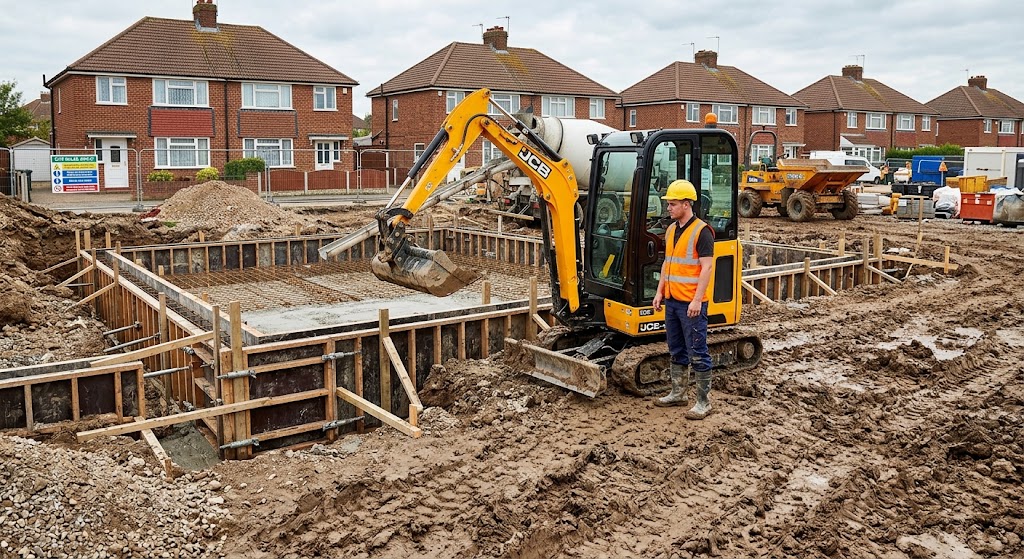
Groundwork is one of the most physically demanding and technically skilled areas of construction. Whether you are a groundworker trying to set a fair rate or a contractor budgeting for a project, understanding current market rates is essential. This guide covers day rates and hourly rates across the UK, broken down by region, experience level, and specialism, using data gathered from job listings, trade forums, and industry contacts in 2026.
For a broader view of trades pay across all disciplines, see our UK tradesman day rates guide for 2026, or use the hourly rate calculator to convert a day rate into an equivalent hourly figure based on your working hours.
What does a groundworker do?
Groundworkers carry out the foundational construction work that takes place below and at ground level before the main structure of a building or infrastructure project is erected. Their work is broad in scope and requires both physical capability and technical knowledge. Core tasks include:
- Excavation and earthmoving, both by hand and using plant machinery
- Installing drainage systems including foul water, surface water, and soakaways
- Laying concrete for strip, pad, and raft foundations
- Constructing retaining walls, kerbs, and edgings
- Road construction and highway reinstatement
- Site preparation, levelling, and compaction
- Shuttering and formwork for concrete pours
- Utility trench digging and backfilling
Many groundworkers are also qualified to operate plant machinery such as mini-diggers, dumper trucks, and compaction rollers, which significantly increases their day rate. A groundworker who can self-operate is considerably more valuable on site than one relying solely on hand tools.
Most groundworkers hold a CSCS card (Construction Skills Certification Scheme), and those working on highway projects often hold additional NRSWA (New Roads and Street Works Act) streetworks qualifications. These accreditations are not just formalities: they are frequently a contractual requirement on commercial sites and local authority work, and they justify premium rates.
Groundworker day rates by UK region (2026)
Location is one of the biggest drivers of groundworker rates. The cost of living, local demand, and the concentration of large construction projects all push rates up in certain areas. The South East corridor from London outward consistently commands the highest pay. Northern England, Wales, and Northern Ireland sit at the lower end of the national range, though rates have risen across all regions since 2024 due to material inflation and increased competition for skilled labour.
| Region | Day Rate | Hourly Rate |
|---|---|---|
| London | £280 – £380 | £35 – £48 |
| South East | £250 – £350 | £31 – £44 |
| South West | £200 – £290 | £25 – £36 |
| East of England | £210 – £300 | £26 – £38 |
| Midlands | £180 – £260 | £23 – £33 |
| North West | £170 – £250 | £21 – £31 |
| North East | £160 – £240 | £20 – £30 |
| Yorkshire & Humber | £165 – £245 | £21 – £31 |
| Scotland | £170 – £250 | £21 – £31 |
| Wales | £160 – £230 | £20 – £29 |
| Northern Ireland | £155 – £220 | £19 – £28 |
Rates reflect self-employed groundworkers on a labour-only basis in 2026. Figures are indicative ranges based on market data; individual rates vary with experience, plant qualifications, and project type.
Day rate by experience level
As with most trades, experience commands a premium in groundwork. A junior groundworker or groundworks labourer with limited site time will earn considerably less than a lead groundworker who can manage a small crew, read drawings, and self-operate plant machinery. The table below shows typical national average day rates by experience level in 2026.
| Experience Level | Years on Site | Day Rate | Hourly Rate |
|---|---|---|---|
| Junior / Groundworks Labourer | 0 – 2 years | £130 – £180 | £16 – £23 |
| Trained Groundworker | 2 – 5 years | £180 – £240 | £23 – £30 |
| Experienced Groundworker | 5 – 10 years | £240 – £300 | £30 – £38 |
| Senior / Lead Groundworker | 10+ years | £280 – £360 | £35 – £45 |
These figures represent national averages. Apply the regional multiplier from the table above to estimate realistic rates for your area. A senior groundworker in London, for instance, would comfortably command £350 to £420 per day on commercial sites.
Specialist groundwork rates
Groundwork covers a wide range of specialisms, and not all tasks carry the same rate. Drainage and foundation specialists invest heavily in training and equipment. Highway maintenance operatives require NRSWA streetworks tickets and, in many cases, chapter 8 traffic management qualifications. Piling operatives work with expensive equipment in technically demanding conditions. These factors push specialist rates well above the general groundwork average.
| Specialism | Day Rate | Typical Work |
|---|---|---|
| General Groundworks | £200 – £280 | Site clearance, excavation, backfilling |
| Drainage Installation | £260 – £360 | Foul drainage, surface water, soakaways |
| Concrete Foundations | £280 – £380 | Strip, pad, and raft foundations |
| Highway Maintenance | £280 – £400 | Road repairs, kerbing, utilities reinstatement |
| Demolition / Excavation | £240 – £340 | Structural demolition, machine operation |
| Piling Works | £300 – £420 | Mini-piling, driven piles, specialist access |
If you are pricing a job that involves specialist groundwork, factor in the higher labour rate alongside plant hire costs. Our guide on how to price a job as a tradesperson in the UK walks through the full costing process, including labour, materials, overheads, and margin.
What affects groundworker rates?
Several factors beyond region and experience influence what a groundworker charges or what a contractor should expect to pay:
Plant and equipment qualifications
A groundworker holding a CPCS (Construction Plant Competence Scheme) or NPORS card for 360-degree excavator or dumper operation will command a higher rate than a groundworker without plant qualifications. On many sites, being able to self-operate a mini-digger means the principal contractor can save on a separate plant operator cost, which makes a dual-skilled groundworker more attractive even at a premium day rate.
CSCS card type
CSCS cards are tiered. A blue skilled worker card (requiring an NVQ level 2 or equivalent) commands better rates than a green labourer card. Gold cards (NVQ level 3 or higher) are increasingly expected on larger commercial projects. Many main contractors will not allow non-CSCS workers on site at all, so holding the appropriate card is a prerequisite for accessing higher-paying work.
Project type and client
Commercial and public sector projects, such as local authority highways or housing association contracts, often pay higher day rates and offer more consistent work than private domestic jobs. On the other hand, domestic groundwork (driveways, garden drainage, extensions) is often priced by the job rather than by the day, and self-employed groundworkers can earn significantly more per day on a well-priced domestic contract.
Seasonal demand
Groundwork is highly weather-dependent. During periods of heavy rain or frost, excavations can become unsafe and concrete cannot be poured, disrupting schedules. Spring and summer are peak seasons, when demand for groundworkers rises and day rates may be pushed upward by competition. Experienced groundworkers in consistent demand can afford to hold firm on rates year-round; those newer to the trade may find winter work scarcer.
Self-employed vs employed status
Self-employed groundworkers operating under CIS (Construction Industry Scheme) typically charge higher day rates than directly employed groundworkers, reflecting the fact that they cover their own tools, insurance, vehicle, and any periods without work. If you are comparing a labour agency rate with a self-employed rate, the self-employed figure will almost always appear higher even when the net cost to the contractor is similar or lower once agency margins are removed.
Browse the Sleepless Tradesman rates section for current data across a range of trade types, updated regularly from active job listings.
Groundworker vs labour-only rates
The term "labour-only" is important when comparing groundworker quotes. A labour-only rate means the groundworker provides their skills and time but not materials, plant hire, or waste disposal. A full supply-and-fix or supply-and-lay price bundles some or all of these costs together.
Most day rates quoted for groundworkers are labour-only. When budgeting a project, you should add:
- Plant hire (mini-digger: £200 to £350 per day, including delivery)
- Aggregate, concrete, drainage pipe, and fittings
- Skip hire or waste disposal (£250 to £500 per skip depending on region and size)
- Temporary works or shoring if excavations exceed 1.2 metres
- Traffic management on highway works
A groundworker quoting a day rate and offering to use your hired plant is typically the most cost-efficient arrangement for longer projects. For small domestic jobs such as a single drainage run or a soakaway installation, many groundworkers will include the cost of a small machine in their fixed-price quote.
When comparing labour-only groundwork quotes against package quotes from a groundwork contractor, make sure you are comparing like for like. A contractor supplying all plant, materials, and waste removal at £4,000 may represent better value than a labour-only rate of £240 per day plus £1,500 in plant hire, materials, and skip costs over a five-day project.
Frequently asked questions
What is the average groundworker day rate in the UK in 2026?
The average groundworker day rate in the UK in 2026 is between £200 and £280, with an hourly equivalent of around £25 to £35. Rates vary significantly by region, experience level, and specialism.
How much do groundworkers charge per hour in the UK?
Groundworkers typically charge £22 to £40 per hour in the UK in 2026. Junior groundworkers and labourers sit at the lower end (£18 to £24), while experienced or specialist groundworkers, particularly in London, can reach £45 or more.
Why are groundworker rates higher in London?
London rates are higher due to the elevated cost of living, greater demand from large-scale residential and commercial projects, and the need to factor in travel and parking costs. London groundworkers typically charge £280 to £380 per day.
Do groundworkers charge more for drainage or foundations work?
Yes. Specialist groundworkers focusing on drainage systems, concrete foundations, or highway maintenance command a premium, typically £280 to £400 per day, reflecting the additional skill, equipment knowledge, and responsibility involved.
What is the difference between a groundworker and a labourer?
A groundworker is a skilled tradesperson who carries out earthworks, drainage, foundations, and highway construction. A labourer assists on site and is not required to hold a CSCS card or trade qualifications. Groundworker day rates are considerably higher, reflecting this difference in skill and responsibility.
Should I hire a groundworker on a day rate or fixed price?
For straightforward, defined tasks such as digging out a driveway or installing a soakaway, a fixed price offers more budget certainty. For larger projects with variable ground conditions or unknown scope, a day rate is more common. Many groundworkers will offer both depending on the job.
Looking for more rates information? See our complete UK tradesman day rates guide or use the free hourly rate calculator to work out what to charge for your time.