How Much Does Damp Proofing Cost in the UK? [2026 Prices]
Written by Tom Ellis · Senior Trades Editor
Last updated: August 2026
Quick Answer
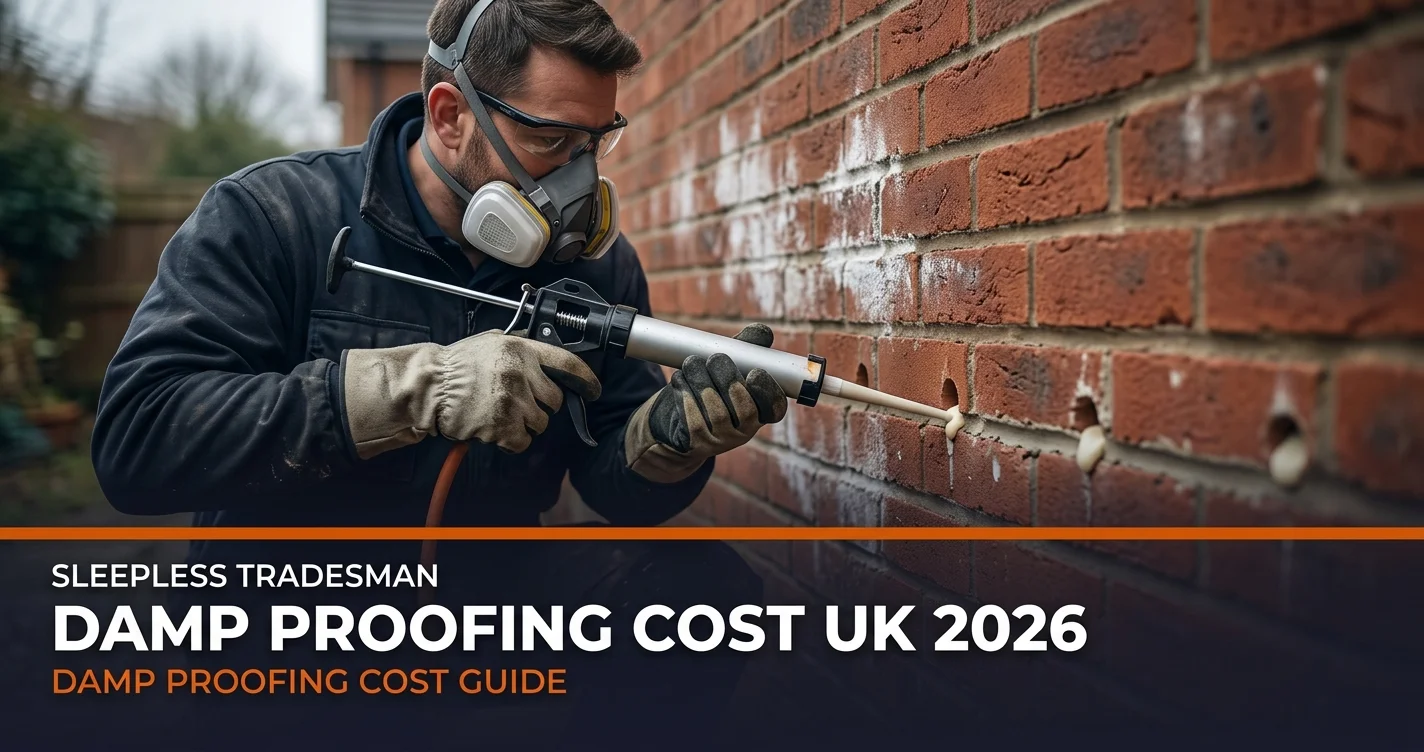
Chemical DPC injection (the most common treatment) costs £250-800 per wall or £600-2,500 for a typical terrace house. Basement tanking costs £3,000-10,000 for a full room. Add £300-800 per room for mandatory replastering after treatment. Most reputable specialists offer 10-20 year guarantees. A professional survey (£150-300) is essential before committing to any treatment.
Understanding Damp Proofing Costs in the UK
Damp is one of the most commonly misdiagnosed and consequently mistreated property problems in the UK. Getting the diagnosis right before any work is carried out is every bit as important as choosing the correct treatment, because treating the wrong type of damp wastes money and leaves the underlying problem unresolved.
In 2026, the cost of damp proofing in the UK ranges from a few hundred pounds for a single-wall chemical injection up to tens of thousands for comprehensive basement waterproofing. The most significant driver of cost is not the treatment itself but the extent of the affected area and what needs to happen to the fabric of the building afterwards, particularly replastering, which is almost always required.
Cost by Treatment Type
The table below shows typical costs for the main damp proofing treatments used in UK residential properties in 2026. These figures cover labour and materials but exclude replastering, which is a separate cost and is almost always required after chemical DPC injection.
| Treatment Type | Typical Cost | Notes |
|---|---|---|
| Chemical DPC injection (per wall) | £250-800 | Most common rising damp treatment |
| Chemical DPC injection (3-bed terrace) | £600-2,500 | Multiple walls, excludes replastering |
| Basement tanking (per m²) | £40-80/m² | Applied to walls and floor |
| Basement tanking (full room) | £3,000-10,000 | Depends on room size and condition |
| Cavity drainage membrane (per m²) | £60-100/m² | Alternative to tanking for basements |
| Electro-osmotic damp proofing | £500-3,000 | Less invasive than injection |
| Dry rot treatment (per affected area) | £500-2,000 | Often discovered during damp surveys |
| Replastering after treatment (per room) | £300-800 | Almost always required; budget for this |
| Professional damp survey | £150-300 | Many specialists offer this free |
Rising Damp vs Penetrating Damp vs Condensation
Before spending any money on damp proofing, you need to know which type of damp you are dealing with. The three main types have different causes, symptoms and treatments, and specialist companies sometimes diagnose rising damp when the real problem is penetrating damp or condensation, because chemical injection is the most profitable treatment to recommend.
Rising damp
Rising damp occurs when groundwater travels upward through the porous material of walls. It typically affects the lower metre or so of walls and leaves a characteristic horizontal tide mark, often with white salt deposits (efflorescence). It usually indicates a failed or absent damp proof course. Treatment: chemical DPC injection.
Penetrating damp
Penetrating damp enters horizontally through external walls due to defective pointing, cracked render, leaking gutters, or around poorly sealed windows and doors. Damp patches appear after heavy rain and can occur at any height on a wall. Treatment: identify and fix the external defect first. Chemical injection will not resolve penetrating damp. Where cracked or failed external render is the cause, see our rendering cost guide for what external wall render repair and replacement costs in the UK.
Condensation
Condensation is the most common form of damp in UK homes and is caused by warm, moist air meeting cold surfaces. It typically presents as black mould on cold walls, window reveals, and in corners. Treatment: improve ventilation, heating and insulation. Chemical injection is not a treatment for condensation.
Regional Cost Variation
The table below shows typical costs for a chemical DPC injection treatment on a 3-bed semi-detached house (excluding replastering) by region in 2026.
| Region | Chemical DPC (3-bed semi) |
|---|---|
| London | £1,200-3,500 |
| South East | £900-2,800 |
| South West | £700-2,400 |
| East Anglia | £650-2,200 |
| Midlands | £600-2,000 |
| North West | £550-1,900 |
| North East | £500-1,700 |
| Yorkshire | £550-1,800 |
| Wales | £500-1,700 |
| Scotland | £550-1,900 |
| Northern Ireland | £480-1,600 |
What Affects the Cost of Damp Proofing?
1. Type of damp and treatment required
Rising damp treated with chemical injection is relatively straightforward and cost-predictable. Basement waterproofing (tanking or cavity drainage) is significantly more expensive because it involves larger surface areas and more complex installation. Misdiagnosis that leads to the wrong treatment being applied is both costly and ineffective.
2. Extent of the affected area
A single affected wall costs far less to treat than multiple walls throughout a property. The number of linear metres of wall requiring DPC injection, or the square meterage of a basement requiring tanking, is the primary driver of material and labour costs.
3. Replastering requirements
After chemical DPC injection, the existing plaster must be removed and replaced with specialist renovation plaster. This is not optional. The existing plaster contains hygroscopic salts from the rising damp that will continue to draw moisture even after the damp course has been treated. Budget £300-800 per room for this additional work.
4. Structural damage and associated repairs
Long-standing damp can cause timber decay, dry rot and wet rot in floor joists, skirting boards and window frames. These repairs are separate from the damp proofing work itself and can add significantly to the total project cost. Dry rot treatment costs £500-2,000 per affected area.
5. Access and disruption
Basement waterproofing in a property that is lived in requires more careful management of dust and disruption than treatment in an empty building. Contractors may charge a premium for works that require furniture to be moved, floors to be covered, or rooms to be vacated for extended periods.
6. Guarantee length and specialist accreditation
Property Care Association (PCA) registered specialists typically charge more than unregistered contractors, but their guarantees are backed by the association and are meaningful to mortgage lenders and future buyers. A 20-year guarantee from a PCA member is worth considerably more in practice than a 10-year guarantee from an unregistered trader.
What to Check Before Hiring a Damp Proofing Specialist
- Check whether the specialist is registered with the Property Care Association (PCA), which sets standards for damp proofing and timber treatment contractors in the UK.
- Get at least two or three written quotes and ask each specialist to confirm in writing the type of damp they have diagnosed and why.
- Be cautious of a free survey that immediately recommends expensive chemical injection, particularly if no moisture meter readings or detailed diagnosis is provided. Consider paying for an independent RICS survey for a second opinion.
- Ask specifically whether replastering is included in the quote or is an additional cost. Many quotes exclude it, leading to significant budget surprises.
- Check that the guarantee is transferable to future owners of the property, as this is important for resale purposes.
- Verify that the contractor carries public liability insurance and ask to see their insurance certificate.
See also: Tradesman insurance in the UK: what cover do you need?
Is Damp Proofing Worth It?
Yes, in almost all cases. Untreated damp causes progressive structural damage, creates conditions for mould growth that affects air quality and health, and significantly reduces a property's saleability. Mortgage lenders routinely require damp to be treated as a condition of advancing a mortgage offer, meaning unresolved damp can block a sale entirely.
The cost of treatment is substantially lower than the cost of the structural damage that prolonged damp causes. Saturated plaster, rotting joists and deteriorating masonry are all far more expensive to address than treating the damp that caused them in the first place.
For homeowners considering a sale, a properly treated and guaranteed damp problem, with documentation from a PCA-registered specialist, removes a significant objection from buyers and surveyors. It typically more than covers its cost in the sale price achieved.
Having trouble recovering costs from a customer? Read our guide on what to do when a customer won't pay in the UK.
Get a Free Quote Estimate
Connect with vetted local damp proofing specialists and get competitive quotes for your property.
Get free damp proofing quotesFrequently Asked Questions
How much does damp proofing cost in the UK?
Chemical DPC injection, the most common treatment, costs £250-800 per wall or £600-2,500 for a typical terrace house. Basement tanking costs £3,000-10,000 for a full room. Replastering after treatment adds £300-800 per room and should always be budgeted for separately.
Is a damp proofing survey worth it?
Yes. A professional damp survey costs £150-300 and is essential before committing to any treatment. Many specialists offer free surveys, but an independent surveyor can give an impartial diagnosis. Misidentifying the type of damp leads to ineffective treatment and wasted money.
What is the difference between rising damp and penetrating damp?
Rising damp travels upward through walls from the ground and leaves a tide mark and salt deposits on the lower portion of walls. Penetrating damp enters horizontally through defects in the external envelope, such as cracked render or leaking gutters. Each requires a different treatment, and one cannot be treated by the solution designed for the other.
How long does damp proofing last?
Chemical DPC treatments carry 10-20 year guarantees from reputable PCA-registered specialists. Cavity drainage systems can last 25 years or more. No treatment is permanent if structural changes or defects reintroduce the cause of damp.
Do I need to replaster after damp proofing?
In most cases, yes. After chemical DPC injection the existing salt-contaminated plaster must be removed and replaced with specialist renovation plaster. This adds £300-800 per room and should be budgeted from the outset.
Does damp proofing add value to a property?
Yes. Unresolved damp reduces a property's value and can block mortgage offers. Evidence of properly treated damp with a transferable guarantee from a PCA-registered specialist is viewed positively by surveyors and removes a significant objection for buyers.