How Much Does Rendering Cost in the UK? [2026 Prices]
Written by Tom Ellis · Senior Trades Editor
Last updated: August 2026
Quick Answer
Sand and cement render costs £25-45/m², monocouche (through-colour) render costs £35-60/m², and silicone render costs £45-70/m². For a 3-bed semi with 60-100m² of render area, expect to pay £2,500-6,000 including materials. Scaffolding (usually required) adds £400-1,200. Pebbledash removal and re-render costs £50-80/m².
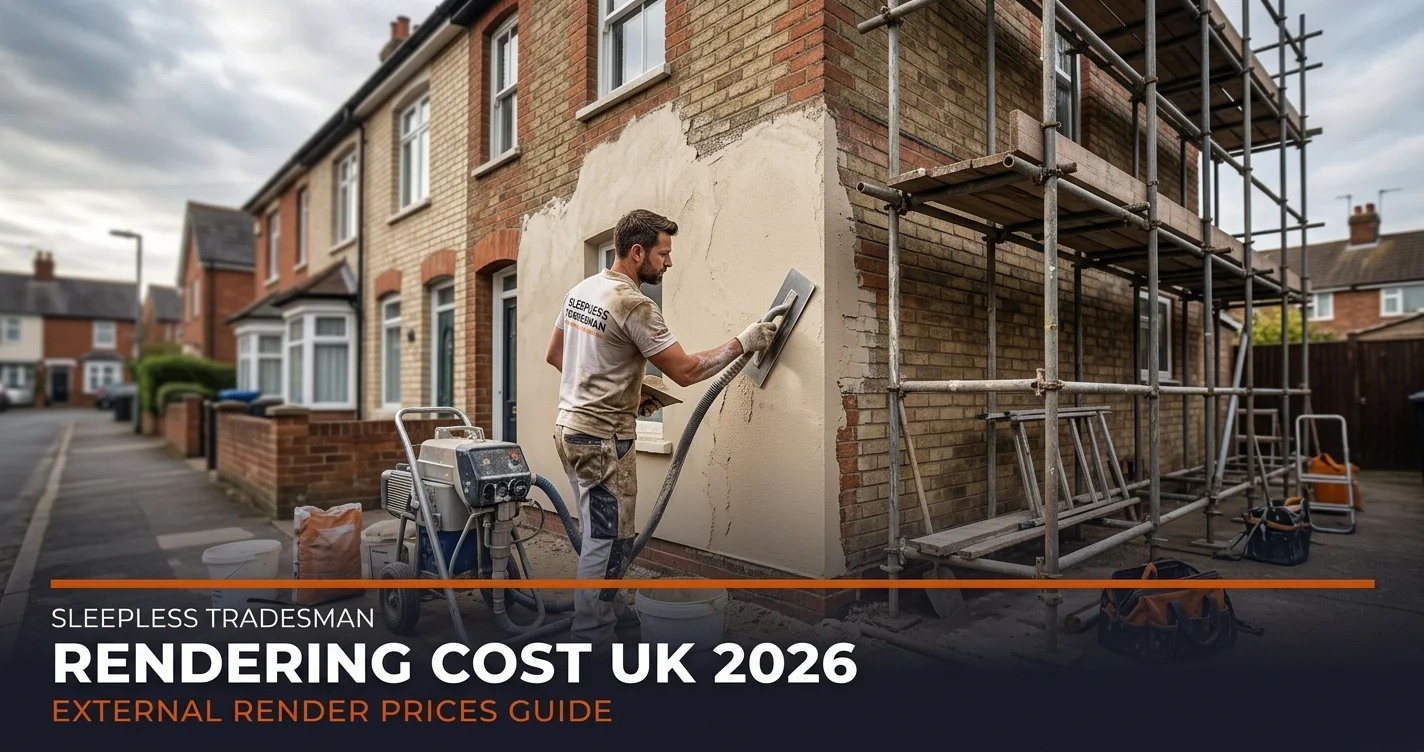
External Rendering Costs in the UK 2026
External rendering transforms the appearance of a property and provides a durable weatherproof skin over the underlying masonry. It is one of the most impactful improvements you can make to the exterior of a house and, when done well, can last 25-30 years with minimal maintenance. In 2026, UK homeowners have a wider choice of render products than ever, from traditional sand and cement through to through-colour monocouche systems and flexible silicone renders that resist cracking and repel water.
Getting accurate quotes requires knowing the render type you want, the area to be covered, and the condition of the existing external surface. This guide covers all of those variables so you can approach renderers with realistic price expectations.
Cost by Render Type
The table below shows the typical cost per m² for the main render types available in the UK in 2026, including labour and materials. These figures assume a clean substrate in reasonable condition. Significant preparation work, such as pebbledash removal or masonry repair, is priced separately.
| Render Type | Cost per m² | Key Benefit |
|---|---|---|
| Sand and cement render | £25-45/m² | Lowest upfront cost, widely available |
| Monocouche (through-colour) | £35-60/m² | No painting required, lower long-term maintenance |
| Silicone render | £45-70/m² | Flexible, hydrophobic, very durable finish |
| K-Rend (coloured silicone) | £50-75/m² | Premium through-colour silicone system |
| Pebbledash removal and re-render | £50-80/m² | Most expensive; removal is labour-intensive |
Cost by House Size
The table below shows typical total project costs by house size for sand and cement render (the most common choice), including scaffolding. Monocouche and silicone add 30-60% to the render cost element.
| Property Type | Render Area | Typical Total Cost |
|---|---|---|
| 2-bed terraced | 40-60m² | £1,500-3,500 |
| 3-bed semi-detached | 60-100m² | £2,500-6,000 |
| 4-bed detached | 100-160m² | £4,500-11,000 |
| Scaffolding (additional) | All sizes | £400-1,200 |
Note: render area is not the same as floor area. A terraced house with two external faces (front and rear) has a much smaller render area than a detached house with four exposed sides.
Regional Cost Variation
Labour rates for rendering vary considerably across the UK. The table below shows the typical cost per m² for sand and cement render (labour and materials) by region.
| Region | Sand and Cement (per m²) |
|---|---|
| London | £38-58/m² |
| South East | £32-52/m² |
| South West | £28-48/m² |
| East Anglia | £26-45/m² |
| Midlands | £25-42/m² |
| North West | £23-40/m² |
| North East | £22-38/m² |
| Yorkshire | £22-38/m² |
| Wales | £22-38/m² |
| Scotland | £24-42/m² |
| Northern Ireland | £20-36/m² |
What Affects the Cost of Rendering?
1. Condition of the existing surface
The single biggest variable in a rendering quote is what the substrate looks like when the renderer arrives. Sound, flat blockwork or brickwork in good condition needs only cleaning and a PVA bonding coat before rendering begins. Surfaces with significant cracks, spalling, loose pebbledash, or organic growth need additional preparation that is charged by time or by the area affected.
2. Render system chosen
The choice between sand and cement, monocouche, silicone, and K-Rend is the most significant driver of material cost. Sand and cement is roughly half the material cost of a premium K-Rend or silicone system. However, when you factor in the ongoing cost of repainting a sand and cement render every 5-8 years, the whole-life cost difference narrows considerably.
3. Scaffolding requirements
A full external render on a two-storey or taller property requires scaffolding for safe access and to allow the renderer to work at a consistent height and angle. Scaffolding costs £400-1,200 depending on the size of the property and how many sides are being rendered. The scaffolding cost is fixed regardless of whether the renderer completes the job quickly or slowly, so bundling other external work such as gutter replacement or fascia board painting into the same scaffold hire can improve overall value significantly.
4. Regional labour rates
Rendering is a skilled trade and day rates vary materially by region. London and South East rates are 50-70% higher than Northern England and Wales for the same specification of work. See the regional table above for specific comparisons.
5. Number of coats and thickness
Traditional sand and cement render is applied in two or three coats: a scratch coat, a browning coat, and a final finishing coat. Each coat must cure before the next is applied, extending the time on site. Monocouche systems are typically a single-coat application and can be completed more quickly, which partially offsets their higher material cost.
6. Complexity of the elevation
Flat, regular walls render quickly and cheaply per m². Elevations with many window openings, bay windows, quoins, corbels, or decorative features take longer to cut in neatly around and are charged at a higher rate. Render beads, corner beads and stop beads at all openings and edges are additional materials but essential for a neat, crack-resistant finish.
How to Find a Reliable Renderer
Rendering is a skilled trade where poor workmanship is expensive to correct. Poorly applied render cracks, delaminate from the substrate, or allow water ingress behind the surface. Choosing the right contractor is as important as choosing the right render system.
- Get at least three written quotes from specialist renderers. Avoid builders who offer rendering as an add-on to other work unless they can demonstrate specific rendering experience.
- Ask to see recent examples of comparable work, ideally on properties in your area where you can inspect the finish yourself rather than relying on photographs.
- Check that the renderer is familiar with the specific system you have chosen. Monocouche and K-Rend products have manufacturer training programmes; ask whether the renderer has been trained on the specific product.
- Ensure public liability insurance is in place and ask to see the certificate. Rendering involves working at height, and any damage to adjacent properties during scaffolding erection or rendering work needs to be covered.
- Clarify in writing what preparation work is included in the quote, including crack repair, cleaning, and application of bonding agents. These are frequently the source of disputes where the final cost exceeds the quoted price.
- Ask about the curing time and whether there are restrictions on painting after the render is applied. Sand and cement render typically needs 4-6 weeks before painting.
See also: painter and decorator day rates UK 2026 if you are planning to paint the render once it has cured, and our guide to tradesman day rates across all trades in the UK.
Is Rendering Worth It?
For most homeowners, rendering is an excellent investment, particularly on properties with ageing or unattractive masonry. The visual transformation of a freshly rendered house is dramatic. Kerb appeal is consistently identified by estate agents as one of the most powerful factors in achieving a strong sale price and attracting more viewings, and rendering delivers kerb appeal more effectively than almost any other single exterior improvement.
Beyond aesthetics, a sound render system protects the underlying masonry from water ingress, freeze-thaw damage, and UV degradation. In exposed locations, particularly in the west of the UK where driving rain is common, a well-applied hydrophobic render system can significantly extend the life of the masonry beneath it.
The return on investment varies by location. In areas where rendered properties are the norm, an un-rendered house in poor decorative condition can sell at a material discount to comparable rendered properties on the same street. In areas where brick is the dominant external finish, a rendered house is less clearly advantaged, though the condition of the exterior still matters significantly to buyers and valuers.
For homeowners with pebbledash exteriors, the cost of removal and re-rendering is higher but the transformation is typically even more dramatic, and the improvement to saleability can be substantial in markets where pebbledash is viewed negatively by buyers.
Get a Free Quote Estimate
Connect with vetted local rendering specialists and get competitive quotes for your property.
Get free rendering quotesFrequently Asked Questions
How much does rendering cost in the UK?
Sand and cement render costs £25-45/m², monocouche costs £35-60/m², and silicone render costs £45-70/m². For a 3-bed semi with 60-100m² of render area, the total cost is typically £2,500-6,000 including materials. Scaffolding adds £400-1,200.
What is the cheapest type of external render?
Sand and cement render is the cheapest at £25-45/m². However, it requires painting every 5-8 years, which adds to the long-term maintenance cost. Monocouche render costs more upfront but does not need painting, making it more cost-effective over a 10-15 year period.
Does rendering a house add value?
Yes. Fresh external render improves kerb appeal, which estate agents consistently identify as one of the most influential factors in achieving a strong sale price. Rendering also protects underlying masonry from water ingress. Most homeowners recoup a significant proportion of the cost in added property value.
How long does external render last?
Sand and cement render lasts 20-30 years with maintenance including repainting every 5-8 years. Silicone and K-Rend products can last 25-30 years without painting. Lifespan depends heavily on the quality of the original application and the exposure of the property.
Do I need scaffolding to render my house?
For a full external render on a two-storey or taller property, scaffolding is almost always required. It adds £400-1,200 to the total cost. Consider bundling other exterior work such as gutter replacement or fascia painting into the same scaffold hire to improve value.
Can I remove pebbledash and re-render?
Yes. Pebbledash removal and re-render costs £50-80/m² because removal is labour-intensive and can disturb underlying masonry. If the pebbledash is in reasonable condition, it can sometimes be rendered over directly, which is cheaper, but this depends on the substrate and any existing movement cracks.