Tree Surgeon Day Rate UK 2026
Written by Tom Ellis · Senior Trades Editor
Last updated: August 2026
Quick Answer
Tree surgeons charge £280 to £600 per day in the UK in 2026, or £35 to £75 per hour for shorter engagements. A solo operative in the national average sits at £280 to £450 per day. London and the South East reach £380 to £600 per day. Rates rise sharply with NPTC certification, job complexity, and whether a team is required for larger or higher-risk trees.
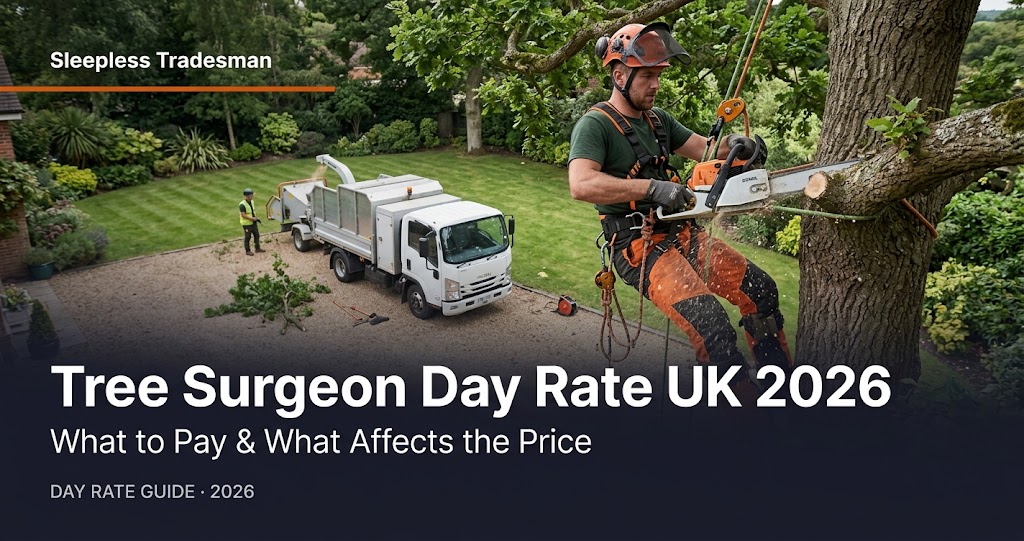
Tree surgery is a specialist, physically demanding, and genuinely hazardous trade. Rates reflect the cost of professional-grade equipment, public liability insurance, certification, and the skill required to work safely at height with cutting machinery. This guide breaks down current 2026 day rates by UK region, job type, and experience level, so you know what to expect whether you are a homeowner getting quotes or a tree surgeon working out your own pricing. For a wider picture across the trades, see our full UK tradesman day rate guide for 2026.
What does a tree surgeon do?
A tree surgeon, or arborist, is a trained specialist in the care, maintenance, and removal of trees and large shrubs. Their work ranges from routine maintenance such as crown thinning and pollarding to high-risk operations including felling large trees close to buildings, aerial chainsaw work at height, and emergency storm-damage response.
The trade sits at the intersection of horticulture, construction, and working-at-height risk management. A competent tree surgeon will assess the structural integrity of a tree before work begins, plan a controlled felling or dismantling sequence, and ensure all debris is safely cleared. Many also hold chainsaw and aerial rescue certifications, which are required for certain classes of work on commercial or local authority contracts.
Beyond removal, tree surgeons carry out crown reduction (cutting the canopy back to reduce spread and height), crown lifting (removing lower limbs to raise the canopy), deadwooding, stump grinding, and hedge management. Each task carries its own risk profile and requires specific equipment, which is why pricing varies considerably from job to job.
Tree surgeon day rates by UK region
Geography is one of the biggest single factors in tree surgeon day rates. Labour costs, living costs, and competitive market conditions all vary across UK regions. The table below shows current 2026 ranges for a solo tree surgeon (climber) on a standard day.
| Region | Day Rate | Hourly Rate |
|---|---|---|
| London | £380-£600 | £48-£75 |
| South East (excl. London) | £320-£520 | £40-£65 |
| South West | £280-£440 | £35-£55 |
| Midlands | £280-£420 | £35-£53 |
| North West (Manchester/Liverpool) | £260-£400 | £33-£50 |
| Yorkshire and Humber | £240-£380 | £30-£48 |
| Scotland | £260-£400 | £33-£50 |
| Wales | £240-£360 | £30-£45 |
These figures are for a single qualified climber. Travel time, fuel, and chip or timber disposal can add meaningfully to the day total, particularly outside urban areas where disposal sites or skips are further away. For jobs requiring a cherry picker or crane lift, expect a significant additional hire cost on top of the labour rate.
Tree surgery costs by job type
Many tree surgery jobs are quoted per tree or per task rather than per day, particularly for domestic clients. The table below gives typical all-in price ranges for common jobs in 2026, including labour and basic site clearance but excluding additional skip hire or specialist machinery unless stated.
| Job Type | Typical Price Range | Notes |
|---|---|---|
| Crown reduction (small tree, up to 5m) | £200-£400 | Single tree, light access |
| Crown reduction (large tree, 10m+) | £400-£900 | May need team of two |
| Tree felling (small, up to 5m) | £150-£400 | Includes basic clearance |
| Tree felling (large, 15m+) | £800-£2,500 | Sectional dismantling, team required |
| Stump grinding | £100-£400 | Per stump; larger stumps at upper end |
| Pollarding | £200-£600 | Depends on canopy size and access |
| Crown lifting | £150-£400 | Raising lower canopy, easier access |
| Hedge trimming (large established) | £200-£600 | Per session; length and height dependent |
These per-job prices assume standard residential access. Restricted access (narrow gardens, trees close to buildings or power lines, or conservation areas requiring prior council approval) will increase the price. Trees protected by a Tree Preservation Order (TPO) require local authority consent before any work, and some councils charge a processing fee that sits with the client, not the surgeon.
Day rate by experience and certification
Certification makes a substantial difference to what a tree surgeon can charge and, equally, what work they are legally permitted to carry out. NPTC (now Lantra Awards) chainsaw certificates are the industry standard for chainsaw handling; City and Guilds arboriculture qualifications cover broader tree care competency. The table below reflects 2026 market rates for different experience and qualification bands.
| Level | Day Rate | Typical Role |
|---|---|---|
| Unqualified ground labourer | £130-£180 | Chipping, dragging, general clearance |
| City and Guilds Level 2 Arboriculture | £250-£380 | Ground chainsaw work, basic climbing |
| City and Guilds Level 3 Arboriculture | £320-£480 | Experienced climber, lead operative |
| NPTC/Lantra CS certs (CS30, CS31, CS38) | £280-£450 | Ground and aerial chainsaw, certified climber |
| NPTC Level 3 + CS40 aerial chainsaw + AA membership | £350-£600 | Senior arborist, contract lead, consultant |
Many self-employed tree surgeons hold a mix of qualifications built up over several years. When calculating your own day rate, factor in the annual cost of certificate renewal, continuing professional development, and Arboricultural Association membership (if applicable), as these are real overheads that need to be recouped through your pricing. The Sleepless Tradesman hourly rate calculator can help you work backwards from your target annual income to a sustainable day or hourly rate.
What affects tree surgeon rates?
Several variables can push a quote above or below the standard range. Understanding these helps both clients and tree surgeons set realistic expectations before work begins.
- Tree size and species: A mature oak or beech over 20 metres requires sectional dismantling, a team of at least two, and specialist rigging equipment. Smaller ornamental trees are far quicker to handle and will be priced accordingly.
- Access constraints: Narrow side passages, soft ground (preventing machinery access), or proximity to structures such as greenhouses, fences, or house walls all increase difficulty and therefore price.
- Debris disposal: Wood chip and timber removal, skip hire, and tipping fees are often quoted separately. If you want timber retained as logs, this can reduce the removal element of the cost.
- Insurance requirements: Commercial and local authority work typically requires public liability cover of £5 million to £10 million. Higher coverage limits mean higher premiums, which feed into contractor rates.
- Seasonal demand: Winter months often see heavier volumes of storm work and fallen tree emergencies. Emergency call-outs typically attract a premium of 20 to 50 percent above standard day rates.
- Specialist machinery: A tracked stump grinder, a spider lift for difficult access, or a crane-assisted removal all carry daily hire costs of £300 to £1,000 or more on top of the operative's own rate.
- Conservation area or TPO status: Work on protected trees requires prior consent from the local planning authority. Delays in obtaining consent, or restrictions on the scope of work permitted, can affect pricing and scheduling.
If you are pricing jobs as a self-employed tree surgeon, consider reading our guide on how to price a job as a tradesman in the UK for a step-by-step approach to building quotes that cover your overheads and protect your margins.
Solo tree surgeon vs team rates
Whether a job requires one person or a team depends mainly on the height and weight of timber involved, the risk level, and the timeline the client needs.
A solo tree surgeon working alone is only practical for smaller trees, ground-level chainsaw work such as stump grinding, or straightforward hedge work where no aerial component is required. UK industry guidance from the Arboricultural Association and the HSE recommends that aerial chainsaw work should not be undertaken entirely alone, as a ground worker is needed to manage ropes, debris, and emergency response.
A standard two-person crew (one climber, one ground worker) costs roughly £450 to £750 per day in total at national average rates, rising to £600 to £1,000 per day in London and the South East. While higher in headline cost, a two-person team will complete most medium to large tree jobs in a single day where a solo operative might take two days, often making the team the more cost-effective choice per job.
Larger contractors running three-person crews (senior climber, second climber or qualified ground operative, and a labourer) will typically quote at £700 to £1,200 per day nationally. These teams are suited to commercial sites, large estates, or high-volume residential contracts. If you are comparing quotes, make sure you are comparing like for like: a lower headline price from a solo operative may still result in a higher overall cost if the job takes an extra day.
Working at height is a significant risk factor in this trade. For context on how other height-related trades price their work, see our scaffolder day rate guide for 2026.
Setting your own tree surgeon day rate
For self-employed tree surgeons working out what to charge, the market rates above give a useful range, but your actual rate needs to cover your specific cost base. Key overheads to factor into a tree surgery business include:
- Public liability insurance: £800 to £2,500 per year depending on cover level and turnover
- Chainsaw and equipment maintenance: chains, bars, saw servicing, climbing gear inspection and replacement
- Vehicle costs: a chipper-capable van or trailer, fuel, insurance, and servicing
- Chipper hire or ownership: a decent 6-inch drum chipper costs £5,000 to £15,000 to buy or £80 to £200 per day to hire
- Certification renewal and CPD: NPTC certificates require periodic renewal and assessment fees
- Waste disposal: green waste tip passes, or a commercial waste carrier licence if you charge for disposal
A working year for a self-employed tree surgeon typically runs to around 200 to 220 billable days once you account for weather loss, certification days, vehicle downtime, and unpaid admin. Use the hourly rate calculator to arrive at a figure that reflects your real costs, not just the market average.
Frequently asked questions
What is the average tree surgeon day rate in the UK in 2026?
The national average for a solo tree surgeon (qualified climber) is £280 to £450 per day. London and the South East are at the top of the range, reaching £380 to £600 per day. Wales and parts of Northern England sit at the lower end, typically £240 to £380 per day.
How much does a tree surgeon charge per hour in the UK?
Most tree surgeons charge £35 to £75 per hour. Hourly billing tends to be used for short or difficult-to-scope jobs. For anything expected to take more than three or four hours, contractors usually quote a day rate or fixed job price instead.
Do tree surgeons charge more if they hold NPTC certificates?
Yes, certification commands a clear premium. An NPTC-certified climber with CS40 aerial chainsaw competency and Arboricultural Association membership will typically sit at £350 to £600 per day. An unqualified ground labourer carries out support work only and is usually charged at £130 to £180 per day.
How much does tree felling cost in the UK?
Felling a small tree (up to 5 metres) typically costs £150 to £400 including basic clearance. A large tree over 15 metres, requiring sectional dismantling and a team, costs £800 to £2,500. Location, access, and whether timber is taken away all affect the final price.
Is it cheaper to hire a solo tree surgeon or a team?
A solo operative is cheaper per head at around £280 to £450 per day, but for any medium to large tree a two-person team (typically £450 to £750 per day combined) will finish the job faster. On a per-job basis, a team is usually the better value, and for aerial work it is also the safer option.
What qualifications should a tree surgeon have?
Look for NPTC (Lantra Awards) chainsaw certificates: CS30 and CS31 for ground-based chainsaw use, CS38 for chainsaw maintenance, and CS40 for aerial chainsaw work. City and Guilds Level 2 or Level 3 Arboriculture provides a broader competency framework. Arboricultural Association membership (Approved Contractor or Registered Consultant) is a further mark of professional standing. Always check for current public liability insurance of at least £5 million.