MOT Tester Day Rate UK 2026: Earnings, Test Fees and Running a DVSA Test Station
Written by Tom Ellis · Senior Trades Editor
Last updated: August 2026
Quick Answer
A self-employed MOT tester running their own DVSA-authorised Class 4 test station in the UK can generate between £350 and £660 per day from MOT test fees alone in 2026, based on testing 8 to 12 vehicles at £40 to £55 per test. The DVSA maximum fee for a standard Class 4 car MOT is £54.85. Employed MOT testers working for a garage or fleet operator typically earn the equivalent of £32 to £48 per hour, or £240 to £370 per day.
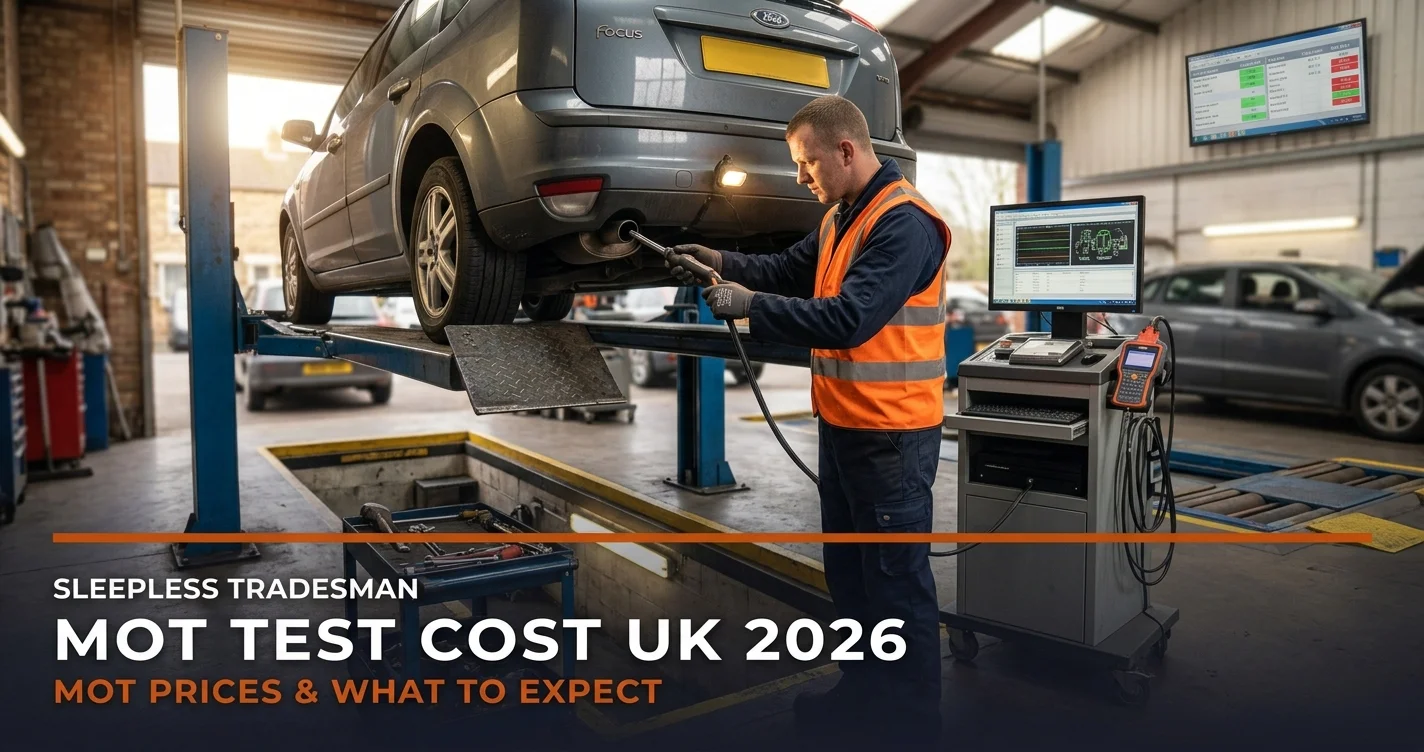
What drives MOT tester earnings in 2026?
MOT testing occupies a unique position in the automotive trades. It is a heavily regulated activity governed by DVSA (Driver and Vehicle Standards Agency), which means the process is standardised, the fee is capped by government, and the qualification requirements are prescribed and enforced. This structure means the MOT tester role is fundamentally different from most other automotive trade positions, where rates are set freely by market forces.
There are two distinct routes to earning as an MOT tester in 2026. The first is the employed or contractor route, where the tester works within a garage, dealership, or fleet workshop that holds Authorised Examiner (AE) status. In this model, the tester earns a salary or day rate set by the employer, typically in the range of £32 to £48 per hour nationally. The structured nature of the MOT role and the fact that the tester cannot set their own test fee means employed testers tend to earn slightly less than an equivalent skilled mechanic who can charge for diagnostic and repair work freely.
The second and often more profitable route is to operate your own DVSA-authorised test station, either as a standalone MOT bay or as part of a broader automotive repair business. In this model, the earning potential is substantially higher because the tester captures the full test fee income, which can run to £350 to £660 per day in test fees alone before any associated repair, servicing, or advisory follow-up work is counted. For a comparison of how automotive trade rates sit in the broader context, the UK tradesman day rates guide for 2026 covers the full picture across trades.
The MOT is also a powerful driver of ancillary revenue. Vehicles that arrive for testing and fail on advisories or defects need repair work, and a garage that can carry out that repair in-house captures both the test fee and the repair margin. For many independent garages, the MOT is deliberately priced at or close to the DVSA maximum to attract volume, with the real profitability coming from the servicing and repair work that the MOT relationship generates over the lifetime of the customer.
MOT tester rates by region (2026)
The figures below reflect employed and contractor-level MOT tester day rates across the UK. These are labour rates rather than test fee revenue, and apply to testers working within a garage or fleet employer rather than running their own station.
| Region | Hourly Rate | Day Rate (8 hrs) |
|---|---|---|
| London | £42 to £58/hr | £336 to £464/day |
| South East | £38 to £52/hr | £304 to £416/day |
| South West | £33 to £46/hr | £264 to £368/day |
| East Anglia | £31 to £44/hr | £248 to £352/day |
| Midlands | £31 to £44/hr | £248 to £352/day |
| North West | £30 to £42/hr | £240 to £336/day |
| North East | £28 to £40/hr | £224 to £320/day |
| Yorkshire | £30 to £42/hr | £240 to £336/day |
| Wales | £28 to £40/hr | £224 to £320/day |
| Scotland | £30 to £42/hr | £240 to £336/day |
| Northern Ireland | £27 to £38/hr | £216 to £304/day |
Rates are indicative benchmarks for employed or contractor MOT testers in 2026. Station owner earnings from test fee revenue are substantially higher and depend on throughput and local pricing.
MOT tester rates by experience level
The table below applies standard experience multipliers to the national baseline of £38 per hour for a qualified MOT tester with 3 to 7 years of post-qualification experience. Station owners are included at the senior end of the table to reflect the equivalent value of their daily test fee income relative to employed tester rates.
| Experience Level | Multiplier | Typical Hourly Rate |
|---|---|---|
| Trainee MOT tester | 0.6x | ~£23/hr |
| 1 to 3 years qualified | 0.8x | ~£30/hr |
| 3 to 7 years (baseline) | 1.0x | £38/hr |
| 7 to 15 years | 1.15x | ~£44/hr |
| Station owner / 15+ years | 1.3x equiv. | ~£50/hr equiv. |
Calculated from a national employed tester baseline of £38/hr. Station owner equivalent is based on test fee revenue per hour, not a directly comparable labour rate.
What affects an MOT tester's earnings?
Test throughput and vehicle class mix
For a station owner, daily revenue from MOT testing is directly linked to how many vehicles pass through the bay. A Class 4 car test takes approximately 45 minutes, which means a single tester working productively can complete 8 to 10 tests per day, with efficient throughput management allowing up to 12. At a fee of £40 to £55 per test, the maths produce a daily test fee income of £320 to £660. The vehicle class mix also matters: Class 7 van tests and Class 5 minibus tests attract higher maximum fees than Class 4 car tests, and heavy vehicle MOT classes (Class 6 and above) can generate £150 to £300 per test with the right specialist equipment.
Ancillary repair and servicing revenue
The real profit driver for most MOT stations is not the test fee itself but the advisory and failure repair work that follows. A vehicle that fails on brake pads, a blown bulb, a worn tyre, or a failed suspension component needs immediate repair, and a station that can carry out that work in-house captures significant additional revenue on top of the test fee. Many successful MOT stations pair the testing operation with a full servicing capability, making the MOT a customer acquisition tool rather than the primary profit centre.
Fleet and lease company contracts
Fleet and lease company accounts provide guaranteed volume and predictable scheduling. Fleet contracts often come with slightly discounted test fees in return for exclusivity or priority booking, but the consistency of throughput they provide makes them highly valuable for a station owner managing labour and bay utilisation. A station with two or three fleet accounts can build a reliable base load of vehicle throughput that makes the operation financially resilient even in quieter retail periods.
Running costs and DVSA compliance
Station owners carry specific overhead costs that employed testers do not. The DVSA annual authorisation fee for the test station, lift and equipment maintenance to DVSA-required calibration standards, MOT testing software subscription, and premises costs all sit above and beyond the standard automotive business overheads. DVSA compliance is non-negotiable: a station that fails inspection risks suspension of its authorisation, which halts revenue entirely. Annual mandatory DVSA online training for all testers is a fixed commitment that applies regardless of whether the tester is employed or self-employed.
How to structure your MOT tester earnings
- Decide which route fits your situation. If you are employed or contracting, use the regional rate table above to benchmark your current rate and identify whether you are in line with the market. If you are planning to open your own station, model your throughput carefully before committing. Use the day rate calculator to understand what your break-even throughput looks like.
- Set your test fee relative to the DVSA maximum. The DVSA maximum for a Class 4 car MOT is £54.85. Most stations charge £40 to £55. Setting your fee at or near the maximum is appropriate in areas where demand is high and competition is limited. In more competitive markets, a slightly lower fee can attract volume, with the expectation that advisory and repair revenue makes up the margin.
- Build ancillary services into your operation. The stations that earn most per square metre are those where the MOT is paired with oil changes, tyre fitting, brake work, and basic servicing. Each advisory note a vehicle leaves with is a potential return visit for repair revenue.
- Pursue fleet accounts systematically. Fleet accounts provide predictable volume and scheduling that makes labour planning much easier. Approach local fleet operators, taxi firms, courier depots, and lease company networks directly with your pricing and available slots.
- Keep DVSA compliance costs in your cost model. Equipment calibration, maintenance, software subscriptions, and mandatory training are not optional. Build these into your annual cost model and factor them into your pricing. For a broader guide to pricing as a tradesperson in the automotive sector, see how to price a job as a tradesman.
Specialisms and premium opportunities for MOT testers
While the MOT test itself is a standardised and capped-fee activity, there are meaningful ways to add value and generate higher earnings through specialism and associated services.
Class 7 van testing
Class 7 tests for vans up to 3,500kg have a higher DVSA maximum fee than Class 4 car tests. Stations that can efficiently test vans and light commercials attract fleet operators, sole traders, and delivery businesses that need reliable and efficient testing for their working vehicles. Van tests are slightly more complex than car tests and take a little longer, but the fee premium compensates.
Class 5 minibus testing
Class 5 minibus testing covers vehicles with 13 to 16 passenger seats and attracts a higher maximum fee than standard car testing. Schools, care organisations, sports clubs, and community groups that operate minibuses need regular testing, and a station qualified to carry out Class 5 tests can build a niche in this market.
Heavy vehicle MOT (Class 6 and above)
Heavy vehicle MOT classes require specialist testing equipment and DVSA-approved facilities, but the fee per test is substantially higher, ranging from £150 to £300 or more depending on vehicle class. Stations that invest in the equipment and qualification to test HGVs, buses, and coaches operate in a market segment with significantly fewer competitors and higher per-test revenue.
Fleet and lease contracts
Fleet and lease company contracts provide guaranteed volume at a known fee. While the per-test fee under a fleet contract may be slightly below the maximum, the reliability of throughput and the reduced marketing cost of serving a contracted client makes fleet work highly attractive for station owners who want predictable revenue.
Frequently asked questions
How much does an MOT tester earn per day in the UK?
An employed MOT tester in the UK earns the equivalent of £32 to £48 per hour, or £240 to £370 per day in 2026. London-based employed testers typically earn more, at £42 to £58 per hour. MOT testing is regulated by DVSA and the structured nature of the role means employed tester rates tend to be slightly below those of an equivalent skilled mechanic, reflecting the fact that the tester cannot set their own fee or take on additional diagnostic or repair work during testing hours.
How much can a self-employed MOT tester earn running their own station?
A self-employed MOT tester running their own DVSA-authorised Class 4 test station can generate between £350 and £660 per day from MOT fees alone in 2026, based on testing 8 to 12 vehicles at £40 to £55 per test. Additional revenue from associated servicing, oil changes, tyres, and brake pads can substantially increase daily earnings above the test fee income alone.
What is the maximum MOT test fee a garage can charge in 2026?
The DVSA maximum fee for a standard Class 4 car MOT in 2026 is £54.85. Garages may charge less than this but cannot legally charge more for a standard Class 4 test. Most garages charge between £40 and £55. The maximum fee for Class 5 minibuses and Class 7 vans is higher, and heavy vehicle MOT tests have their own separate fee structure.
What qualifications do I need to become an MOT tester in the UK?
To become an MOT tester in the UK you need to pass the DVSA MOT Tester nomination assessment for each vehicle class you intend to test. You must be nominated by an Authorised Examiner (AE), either the business you work for or your own registered test station. Annual DVSA online training is mandatory to maintain your tester status. Class-specific qualifications are required for different vehicle classes, such as Class 1 and 2 motorcycles, Class 5 minibuses, and Class 7 vans.
Is running your own MOT test station profitable?
Yes, running your own MOT test station can be highly profitable, particularly when combined with ancillary repair and servicing work. The MOT drives footfall and customer relationships, while the associated repairs, advisories, and servicing generate the higher-margin revenue. The main costs are the DVSA annual authorisation fee, lift and equipment maintenance, testing software, and premises. A well-run station testing 8 to 12 vehicles per day generates substantial test fee revenue before any repair work is counted.
How many MOTs can a tester complete in a day?
A Class 4 MOT test takes approximately 45 minutes to complete, which means a single tester working a full day can comfortably complete 8 to 10 tests. Some efficient testers with good vehicle throughput management achieve 12 per day. DVSA sets expectations around test quality and thoroughness, so the focus should be on consistent, accurate testing rather than maximising speed. Class 7 van tests take slightly longer than Class 4 car tests.
Work out what you need to earn from your MOT station
Use the free calculators to model your throughput, test fee income, and break-even cost per day for your test station.
Related guides
- UK tradesman day rates 2026 - full breakdown of day rates across all major trades and automotive roles
- Tradesman insurance UK - what cover MOT station owners and employed testers need and what it costs