Loft Conversion Cost UK 2026: £20,000-80,000 by Type (Velux, Dormer, Hip-to-Gable, Mansard)
Written by Tom Ellis · Senior Trades Editor
Last updated: July 2026
Quick Answer
A loft conversion in the UK costs £20,000-65,000 in 2026 depending on the type. A basic Velux conversion costs £20,000-30,000. A full dormer conversion costs £35,000-50,000. A hip-to-gable conversion costs £40,000-55,000. Mansard and L-shaped conversions are the largest, typically £55,000-80,000. London adds 25-40%.
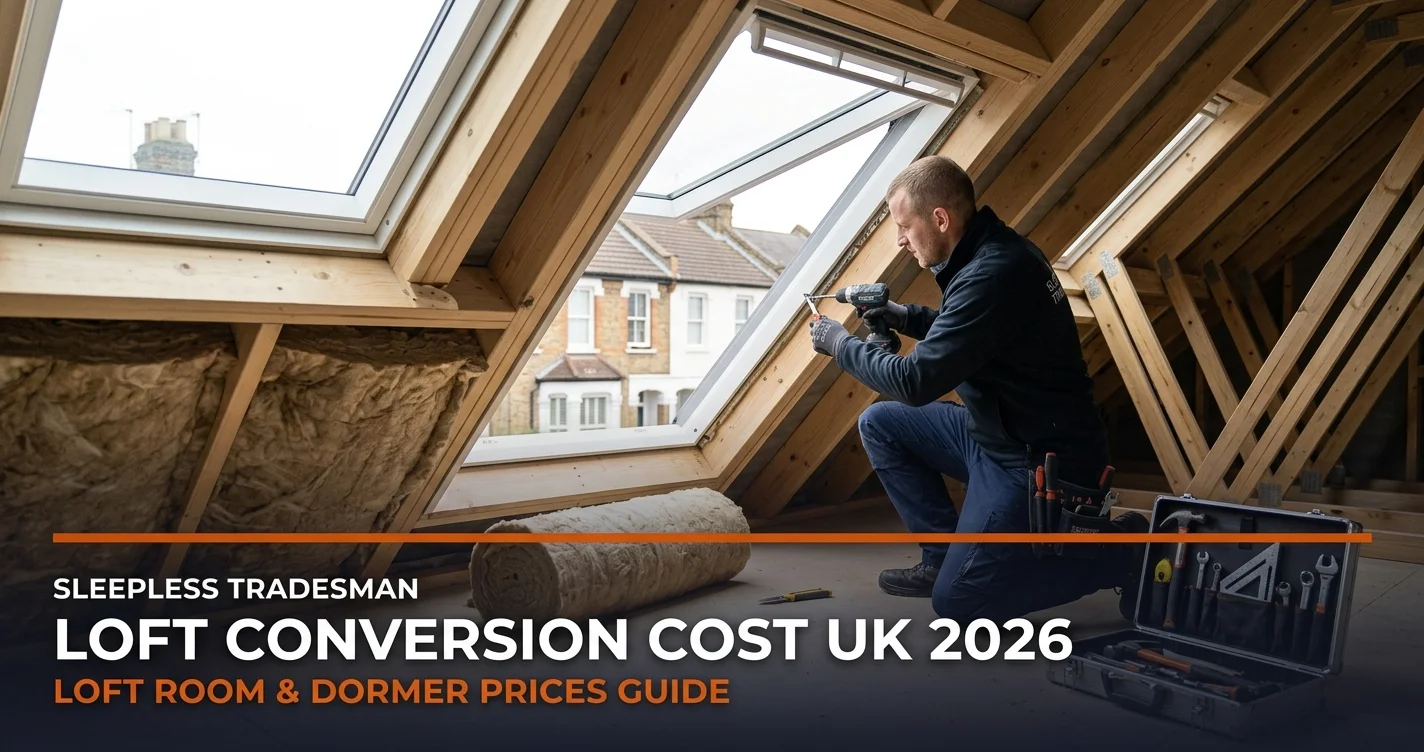
A loft conversion is one of the most popular and cost-effective home improvement projects in the UK. Rather than going through the expense and disruption of moving to a larger property, many homeowners choose to convert the unused space above their heads into a bedroom, home office, en-suite, or playroom. When done well, a loft conversion adds usable living space, increases the value of a property, and transforms how a home functions for the family living in it.
The challenge is that loft conversion costs vary enormously. A simple Velux conversion on a Victorian terrace in the Midlands is a very different job to a full mansard conversion on a four-storey townhouse in Islington. The type of conversion, the size and shape of the existing roof, the number of rooms being created, whether planning permission is required, and the location of the property all push the final figure up or down significantly.
This guide gives clear, up-to-date 2026 cost ranges for every major type of loft conversion in the UK. Whether you are a homeowner budgeting for a project or a builder or carpenter pricing up work for a client, these figures are based on actual market rates for UK tradespeople in 2026. Prices reflect the full cost of a completed conversion including structural works, roofing, electrics, plumbing, plastering, and building regulations sign-off. Professional fees for architects and structural engineers are listed separately under exclusions.
If you are a tradesman working on loft conversions and want to understand how your day rate compares to other builders in your area, see our builder day rate guide for 2026 benchmarks across all regions. For a personalised estimate, try our loft conversion cost calculator.
Loft Conversion Costs UK 2026: By Type
The table below shows the typical total cost range for each loft conversion type in 2026. These are all-in figures covering labour and materials for a standard conversion outside London. See the regional variation section below for adjustments by area.
| Conversion Type | Typical Cost (2026) |
|---|---|
| Velux / rooflight conversion | £20,000-30,000 |
| Dormer conversion | £35,000-50,000 |
| Hip-to-gable conversion | £40,000-55,000 |
| L-shaped dormer | £45,000-65,000 |
| Mansard conversion | £55,000-80,000 |
Note: These ranges assume a standard two to three-bedroom residential property with one loft room and no en-suite. Adding an en-suite bathroom adds £5,000-10,000. A Juliet balcony adds £3,000-6,000. All figures include VAT at 20%.
What Is Included in These Costs
The price ranges above are intended to represent the full build cost for a completed, habitable loft room ready to furnish. A reputable loft conversion company or main contractor should include all of the following in their quotation:
- Structural works and steels: Most loft conversions require steel beams (typically referred to as RSJs) to support the new floor and transfer loads to the existing structure. The size and number of steels required depends on the span and the conversion type.
- Roof alterations: For dormers, hip-to-gable, and mansard conversions, significant roof carpentry is required. This includes removing or altering existing rafters, constructing dormer cheeks, fitting new roof coverings, and ensuring the weathertight envelope is maintained throughout the build.
- Staircase: Access from the floor below is a building regulations requirement. A new staircase, typically a straight or space-saving spiral stair, is included in the build. The specification of the stair affects cost: a simple straight flight in pine is at the lower end, while a bespoke oak or glass-balustrade stair adds to the price.
- Insulation: Building regulations require adequate thermal and acoustic insulation between the loft and the rooms below, and at the roof slope or ceiling level. Spray foam, rigid board, or mineral wool insulation is fitted as part of the conversion.
- Electrics and plumbing: First and second fix electrical works, including lighting, sockets, and smoke detection. Plumbing first fix for any en-suite or radiator extension from the existing heating circuit.
- Plastering and decoration: Skim plastering to all walls and ceilings, ready for decoration. First fix decoration (mist coat and one undercoat) is sometimes included; a full specification finish may cost extra.
- Velux windows or dormer windows: Supply and installation of the windows appropriate to the conversion type. Velux-brand centre-pivot rooflights are the standard for a rooflight conversion. Timber-framed or UPVC casement windows are typical for dormers.
- Building regulations sign-off: Applications to and inspections by the local authority building control (or an approved inspector) to certify that the works comply with Part A (structure), Part B (fire safety), Part L (energy efficiency), and other relevant parts of the Building Regulations.
What Is Not Included
The following costs are typically separate and should be budgeted for on top of the build cost:
- Architect and structural engineer fees (£1,500-5,000): An architect produces the drawings for planning or building regulations. A structural engineer calculates the beam sizes and connection details. For a straightforward dormer, you may need only a structural engineer. For a mansard or complex project, a full architect-led design service is usually required.
- Planning permission fees if required (£206): The householder application fee for planning permission in England is currently £206. Wales, Scotland, and Northern Ireland have different fee structures. If planning is not required (permitted development), this cost does not apply.
- Furniture and fitted wardrobes: The room is handed over as a plastered, decorated, carpeted shell. Fitted furniture, wardrobes, and beds are not included.
- Party wall surveyor costs if required: If the property is terraced or semi-detached and the works affect the party wall (which is common for certain structural alterations), a Party Wall Agreement with the adjoining neighbour is required under the Party Wall Act 1996. Party wall surveyor fees vary but typically run to £800-2,000 per side.
Key Factors That Affect the Price
Two loft conversions on identical houses in the same street can come in at very different prices. Here are the main variables that push costs up or down:
1. Conversion type
This is the single biggest driver of price. A Velux conversion involves minimal structural intervention: the existing roof structure is largely left in place, and rooflights are cut in. A mansard conversion, by contrast, involves rebuilding almost the entire rear (and sometimes front) roof slope at a near-vertical pitch, which is a substantial structural and roofing project. Each step up the complexity ladder adds roughly £10,000-20,000 to the baseline cost.
2. Current loft head height
The floor-to-ridge measurement of the existing loft determines what is possible without significant structural alteration. The minimum for a habitable room under building regulations is approximately 2.2m at the ridge, with 1.9m over a meaningful floor area. Properties with lower ridges may require the ridge to be raised (which has planning implications) or a different type of conversion than originally planned, both of which increase cost.
3. Number of rooms and en-suite
A single bedroom with no en-suite is the baseline. Adding a shower room or en-suite brings in plumbing first fix, waste runs, tiling, sanitaryware, and a ventilation fan: typically £5,000-10,000 extra depending on how far the waste needs to run. A full bathroom rather than a shower room adds a further £1,500-3,000.
4. London and South East premium
Labour costs in London and the South East are substantially higher than the national average. A job that costs £40,000 in the East Midlands may cost £55,000-58,000 in inner London for the same specification. This reflects both higher tradesperson rates and higher material delivery and access costs in densely built urban areas.
5. Planning permission
Most loft conversions do not require planning permission under permitted development rights. However, mansard conversions almost always require a full planning application because they change the roofline significantly. Properties in conservation areas, listed buildings, and all flats require planning permission regardless of the conversion type. Planning adds time (8-12 weeks minimum for a decision) and professional fees, but the application fee itself is modest at £206.
6. Structural engineer fees
Every loft conversion requires structural engineering input to size the steels and certify the floor and roof designs. Structural engineer fees for a straightforward dormer run from £500-1,500. For a more complex job, fees can reach £2,000-3,500. These fees are usually separate from the build contract and are paid directly by the homeowner or included in an architect-led package.
Regional Price Variation
Where your property is located has a significant effect on what a loft conversion costs. The figures in the cost table above represent a national average. Here is how prices vary by region in 2026:
| Region | Adjustment vs National Average |
|---|---|
| Inner London | +30% to +40% |
| Outer London and Home Counties | +20% to +30% |
| South East (Surrey, Sussex, Kent, Hants) | +15% to +20% |
| South West and East of England | +5% to +10% |
| Midlands | At or near national average |
| North of England (Manchester, Leeds, Yorkshire, Newcastle) | -5% to -10% |
| Wales and Scotland | -5% to -10% |
These are broad regional adjustments. Prices within a region also vary: a rural property in the South West may be cheaper than one in Bristol city centre, and costs in a London borough like Tower Hamlets or Hackney often exceed even the inner London average because of access restrictions and dense housing stock. The most reliable way to understand what a conversion costs in your specific location is to get three or four quotes from local contractors who regularly work in that postcode area.
How to Get Accurate Quotes for a Loft Conversion
Getting accurate, comparable quotes for a loft conversion is harder than it sounds. Builders and loft conversion specialists price jobs in different ways: some include VAT, some exclude it; some include structural engineer fees, some do not; some use an allowance for a staircase while others price a specific model. Here is how to make sure the quotes you receive are genuinely comparable:
Get structural drawings first
Ideally, instruct an architect or structural engineer to produce a set of drawings before you approach builders for price. A builder quoting without drawings is estimating blind: the final price is very likely to change once steels are designed and floor build-ups are specified. Drawings level the playing field and make quotes genuinely comparable.
Request itemised quotes
Ask every contractor to break down their price by trade or work package: structural works, roof works, carpentry, first fix electrics, first fix plumbing, plastering, second fix electrics, second fix plumbing, decoration, and building control fees. An itemised quote lets you see exactly where the money is going and makes it much easier to compare quotes that come in at different totals.
Confirm what is and is not included
Before signing any contract, confirm in writing whether the quote includes VAT, building regulations fees, scaffolding, skip hire, and structural engineer fees. A quote of £38,000 excluding VAT becomes £45,600 once VAT is added: a substantial difference that catches people out.
Check references and insurance
A loft conversion is a significant structural project. Ask to see the contractor's public liability insurance certificate (minimum £2m, preferably £5m cover), and speak to at least one previous client for a job of similar scope. A contractor who is reluctant to provide references should be treated with caution.
Use our calculator for a baseline figure
Before approaching contractors, use our loft conversion cost calculator to generate a personalised estimate based on your property type, conversion type, and location. This gives you a realistic budget benchmark before you spend time getting quotes. If you are also planning a ground floor extension, our house extension cost calculator covers those costs separately.
For tradespeople working in this sector, understanding what the full project costs helps you position your own rates correctly. Whether you are a carpenter fitting the staircase and dormers, or an electrician doing the first and second fix, use our hourly rate calculator to check whether you are pricing competitively for your region and experience level.
Frequently Asked Questions
Do I need planning permission for a loft conversion?
Most loft conversions are permitted development and do not need planning permission, as long as the extension does not exceed 40m³ for terraced houses or 50m³ for detached and semi-detached properties, does not extend above the existing ridge line, and the materials match the existing house. Mansard conversions almost always require planning permission because they alter the roofline significantly. Conservation areas, listed buildings, and flats always require planning permission regardless of the conversion type. If you are unsure whether your project falls within permitted development, your local authority planning department can provide a pre-application opinion. Alternatively, an architect or planning consultant can advise during the design stage.
How long does a loft conversion take?
A basic Velux conversion typically takes 4-6 weeks from start to building regulations sign-off. A full dormer conversion usually takes 8-12 weeks. A mansard conversion is the most complex and can take 12-16 weeks or longer for a large property. These timescales cover the construction phase only: add several weeks before work starts for structural drawings, building regulations application, and contractor procurement. If planning permission is required, add at least 8-12 weeks for the planning process before any work can begin on site. Your builder should provide a programme of works at the start of the project so you know what to expect at each stage. Unforeseen structural issues, such as rotten timbers or undersized existing joists, can extend the programme and add to the cost.
Does my loft have enough headroom for a conversion?
The minimum headroom for a habitable loft conversion under building regulations is approximately 2.2m at the ridge, with at least 1.9m over a significant proportion of the floor area. The key measurement to take before instructing anyone is the floor-to-ridge height in the existing loft: measure from the top of the existing ceiling joists to the underside of the ridge board. If you have less than 2.0m at the ridge, a Velux conversion is unlikely to be viable, and you would need a dormer, a hip-to-gable alteration, or a full mansard to create adequate usable space. Some older properties with steeply pitched roofs have surprisingly generous ridge heights: a Victorian terrace with a 45-degree pitch can often accommodate a Velux conversion with excellent headroom. A structural engineer or experienced loft conversion specialist can assess the potential of your specific loft during an initial site visit, which most reputable companies offer free of charge.
Does a loft conversion add value to a house?
Yes, and in most parts of the UK it is one of the highest-return home improvement investments available. A loft conversion typically adds 10-20% to a property value. London properties, where space is at a premium, often see higher returns: converting a 3-bed terrace into a 4-bed by adding a loft bedroom and en-suite can add £50,000-80,000 to the market value in many London postcodes, which exceeds the build cost. Outside London, the return depends heavily on the local housing market and whether there is strong demand for 4-bed properties in the area. In some northern markets, a 3-bed semi converted to a 4-bed may see more modest value uplift. The quality of the finish also matters: a poorly finished conversion with inadequate head height or an awkward staircase is less likely to add its full potential value. Getting the design right and using a reputable contractor are both essential to maximising the return on investment.
What is the cheapest type of loft conversion?
A Velux conversion, also called a rooflight conversion, is the cheapest option at £20,000-30,000 in 2026. It works within the existing roofline: rather than building out a dormer or altering the roof structure, rooflights are cut directly into the existing roof slope. Because there is no dormer to build, the structural works are minimal, and planning permission is not required in most cases under permitted development rights. The limitation of a Velux conversion is headroom: the usable floor area at full standing height is determined by the existing ridge height, so it suits properties with a high original ridge. Victorian and Edwardian terraces with steeply pitched roofs are often ideal candidates. If the existing ridge is lower, a dormer conversion is usually necessary to create enough usable space to justify the cost, even though it costs more.
Ready to start your loft conversion?
Compare quotes from trusted local tradespeople and get your project moving.
Get free loft conversion quotes