Locksmith Day Rate UK 2026: £280–£380/Day by Region and Work Type
Written by Tom Ellis · Senior Trades Editor
Last updated: August 2026
Quick Answer
A self-employed locksmith in the UK charges between £280 and £380 per day in 2026, with a national average of around £300 for a standard 8-hour day. Hourly rates typically run from £35 to £50. Emergency call-outs and out-of-hours work attract significant premiums, with many locksmiths charging £100 to £200 or more as a call-out fee regardless of time spent on the job.
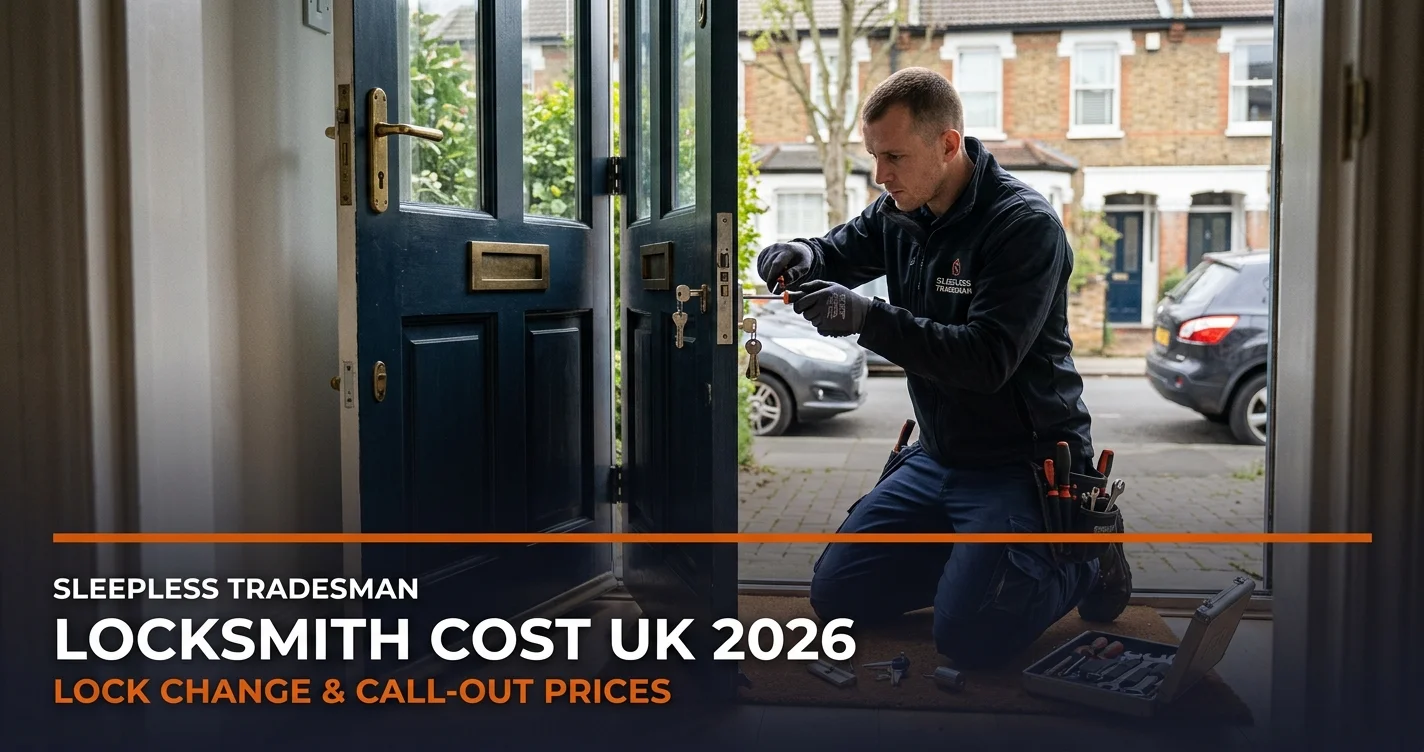
What Drives Locksmith Rates in 2026?
Locksmithing sits in a unique position among the trades. Unlike most construction trades, demand is relatively immune to seasonal swings and economic downturns. People get locked out, lose keys, and need security upgrades regardless of what is happening in the housing market. That consistent demand, combined with the specialist skills and equipment required, keeps locksmith rates firmly in the mid to upper range for the trades sector.
At the national level, the average self-employed locksmith charges around £38 per hour or £300 per day. But that figure covers a wide range of work. A standard residential lock change during business hours is priced very differently from an emergency commercial call-out at midnight, or a specialist access control installation across a multi-site business. Geography also plays a significant role: a locksmith in central London can charge 30 percent or more above the national average, while those working in the North East, Wales, or Northern Ireland will typically sit 15 to 20 percent below it.
The emergency element of locksmithing also sets it apart from most trades. A significant proportion of locksmith revenue comes from call-out fees rather than hourly labour. Many locksmiths charge a fixed call-out fee of £100 to £200 on top of their hourly rate, which can make a one-hour emergency job considerably more lucrative than a standard 8-hour working day on a residential contract.
For context on how locksmith rates compare to other trades, see our UK tradesman day rates guide. The figures in this guide are based on self-employed day and hourly rates rather than employment or agency rates, and do not include materials or parts unless stated.
Locksmith Rates by Region
The table below shows typical locksmith rates across the UK for standard daytime work. These figures do not include call-out fees or out-of-hours premiums, which are covered in the specialisms section below. The national average baseline is £38 per hour.
| Region | Hourly Rate | Day Rate (8 hrs) |
|---|---|---|
| London | £45–60/hr | £360–480 |
| South East | £40–55/hr | £320–440 |
| South West | £35–48/hr | £280–384 |
| East Anglia | £33–46/hr | £264–368 |
| Midlands | £33–45/hr | £264–360 |
| North West | £32–44/hr | £256–352 |
| North East | £30–42/hr | £240–336 |
| Yorkshire | £32–44/hr | £256–352 |
| Wales | £30–42/hr | £240–336 |
| Scotland | £32–44/hr | £256–352 |
| Northern Ireland | £30–42/hr | £240–336 |
Rates are indicative for 2026 and cover standard daytime labour only. Call-out fees and out-of-hours premiums are not included in the day rate figures above.
Locksmith Rates by Experience Level
Experience is a major factor in what rate a self-employed locksmith can charge. A newly qualified locksmith competing for residential work is in a very different position from someone with ten years of commercial security experience and an MLA membership. The table below applies the standard experience multipliers to the national average of £38 per hour.
| Experience Level | Multiplier | Typical Hourly Rate |
|---|---|---|
| Apprentice / Trainee | 0.6x | ~£23/hr |
| 1–3 years | 0.8x | ~£30/hr |
| 3–7 years (baseline) | 1.0x | ~£38/hr |
| 7–15 years | 1.15x | ~£44/hr |
| 15+ years / Senior Locksmith | 1.3x | ~£49/hr |
These figures reflect standard labour rates. A highly experienced locksmith in London specialising in commercial security or safe installation could realistically charge £60 to £80 per hour on the right contracts, particularly when combined with MLA membership and a track record with insurers and property managers.
What Affects Your Day Rate as a Self-Employed Locksmith?
A sustainable locksmith business needs a day rate that covers costs, provides a decent income, and reflects the value of the specialist skills involved. Several factors feed into where that rate should sit.
Overhead Costs
Self-employed locksmiths carry a specific set of overheads that need factoring into the rate. A reliable van is essential for reaching emergency call-outs quickly, and fuel costs are significant if you cover a large area. Tool costs are also notable: a quality set of picks, a key cutting machine, a key programmer for vehicle work, and CCTV or access control equipment represent a substantial capital outlay. Public liability insurance is particularly important for locksmiths because of the elevated risk of false accusations on burglary-related jobs. A DBS (criminal record) check is required by many commercial clients and some insurers. MLA membership carries an annual fee but is widely regarded as essential for building a credible, long-term business.
The Value of Professional Membership
The locksmith industry in the UK is currently unregulated, meaning anyone can legally call themselves a locksmith. That makes professional membership more valuable, not less, as it gives clients a meaningful signal of competence and trustworthiness. MLA membership requires passing an inspection and adhering to a code of conduct. Membership can open access to insurance-approved contractor lists, estate agent frameworks, and commercial property management contracts that are not available to unaffiliated locksmiths. For rate-setting purposes, MLA members can typically justify charging 10 to 15 percent above local non-member rates.
Call-Out Structure and Emergency Pricing
The structure of your pricing matters as much as the headline rate. Most experienced locksmiths operate a separate call-out fee for emergency and out-of-hours jobs, typically £100 to £200, charged in addition to the hourly or job rate. This compensates for travel time, availability costs, and the premium service of responding at short notice. Setting this structure clearly in advance avoids difficult conversations at the door and ensures your emergency work is consistently profitable.
Local Demand and Competition
Urban locksmiths in high-density areas typically see more emergency call-outs and benefit from shorter travel times between jobs. Rural locksmiths often cover larger geographic areas but may face less competition and can sometimes charge a travel premium. Checking what other locksmiths in your area charge is a useful sense-check, though competing purely on price in an unregulated industry tends to attract the most difficult customers and the lowest-margin jobs.
How to Set Your Day Rate: Step by Step
Setting your rate correctly from the start is more important in locksmithing than in many trades, because your pricing structure needs to cover both standard hourly work and emergency call-outs as distinct revenue streams.
- Calculate your target income. Work out what you need to take home after tax. As a sole trader you will pay income tax and Class 4 National Insurance on your profits, so your gross earnings need to be meaningfully higher than your net target.
- Estimate your billable days. Locksmiths typically have around 200 to 220 billable days per year once you account for holidays, admin, and non-chargeable travel. Emergency call-outs are priced separately and can be additional revenue on top of your standard day rate.
- Add your overhead costs. Total your annual business costs including van, tools, insurance, DBS check, MLA membership, and fuel. Divide by your billable days to get a daily overhead figure to add to your labour rate.
- Set your call-out fee separately. Price emergency and out-of-hours work as a distinct charge rather than trying to blend it into your hourly rate. A clear call-out fee of £100 to £200 for emergencies, rising to £150 to £300 for overnight and bank holiday work, is standard practice.
- Check local market rates. Use our day rate calculator and check local job boards and competitor websites to sense-check your rates against the local market.
Our hourly rate calculator walks you through the income and overhead calculation step by step and gives you a suggested rate based on your inputs. The guide on how to increase your day rate is also worth reading if you are looking to move your rates upward without losing clients. It is also worth reviewing your tradesman insurance and understanding how to price a job accurately so that fixed-price quotes remain profitable.
Locksmith Specialisms and Premium Rates
Locksmithing encompasses a wide range of work types, and rates vary considerably depending on the complexity and urgency of the job. Here is how the main work categories typically price up relative to standard residential locksmith rates.
- +Emergency Call-Outs
Emergency lock-out jobs are the highest-margin work a locksmith can take on. Most locksmiths charge a fixed call-out fee of £100 to £200 on top of the hourly rate for the work itself. Out-of-hours and overnight call-outs attract the highest premiums, with some locksmiths charging a fixed emergency rate of £200 to £350 for a standard lock change after midnight. The key is to have a transparent, consistent pricing structure that clients understand in advance.
- +Commercial Security Installations
Commercial clients, including landlords, letting agents, retail premises, and office buildings, typically offer more consistent and higher-value work than residential call-outs. Commercial security installs, including multi-point locking systems, door closers, and electronic access points, attract a premium of 20 to 30 percent over standard residential rates. Contracts with commercial property managers can provide reliable recurring revenue alongside the less predictable emergency work.
- +Safe Opening and Installation
Safe work is a specialist area that requires dedicated training and, in many cases, manufacturer certifications. Opening a safe non-destructively is a high-skill job that can command a 30 to 40 percent premium over standard locksmith rates, and in some cases is priced on a fixed job basis rather than hourly. Safe installation work for businesses and homeowners is also well-paid, particularly where fire-rated or security-rated safes are involved.
- +Access Control and CCTV
Many locksmiths have expanded into access control and CCTV installation as natural adjacencies to their core trade. Keypad entry systems, fob-based access, and networked CCTV installations attract a 15 to 25 percent premium over standard locksmith rates. The equipment and technical knowledge required justify the higher charge, and these jobs often lead to ongoing maintenance contracts.
- +Auto Locksmith Work
Vehicle entry and key programming is a separate specialism within the trade, requiring dedicated diagnostic equipment and knowledge of vehicle security systems. Auto locksmith rates typically run 10 to 20 percent above general locksmith rates. The initial equipment cost is significant, but the work is in consistent demand and often commands high fixed-job fees regardless of time spent.
- +Burglary Repair and Boarding Up
Post-burglary call-outs involve replacing damaged locks, frames, and door furniture, and sometimes emergency boarding up. This work typically charges at standard locksmith rates for the labour, but materials are passed on separately and the insurance-backed nature of the jobs can mean faster payment. Locksmiths on insurance-approved lists can access a steady flow of this work, particularly in urban areas with higher crime rates.
Frequently Asked Questions
How much does a locksmith charge per day in the UK in 2026?
A self-employed locksmith in the UK charges between £280 and £380 per day in 2026, with a national average of around £300 for a standard 8-hour day. Rates vary by region, with London locksmiths charging £360 to £480 per day and more affordable areas such as the North East and Northern Ireland typically running £240 to £336 per day. These figures cover standard daytime labour and do not include call-out fees for emergency work.
What is the average locksmith call-out charge in the UK?
Most self-employed locksmiths charge a call-out fee of £100 to £200 on top of their hourly rate, regardless of the time spent on the job. Emergency and out-of-hours work attracts higher call-out fees, and some locksmiths charge a fixed emergency rate for evenings, weekends, and bank holidays rather than an hourly rate. The call-out fee covers travel costs, availability, and the specialist equipment that must be carried at all times.
Why do locksmiths charge a call-out fee on top of their hourly rate?
The call-out fee covers the time and cost of travelling to the job, the risk of the job taking longer than expected, and the specialist equipment a locksmith must carry at all times. For emergency work, it also compensates for being on call and available outside normal working hours. Many locksmiths would not be able to offer a rapid response service profitably without a call-out fee structure, since travel time is a significant part of the cost on short jobs.
Do locksmiths charge more at weekends and evenings?
Yes. Most self-employed locksmiths charge a premium for out-of-hours work, typically 50 to 100 percent above their standard rate for evenings, weekends, and bank holidays. Emergency call-outs during unsociable hours are among the highest-paying work a locksmith can take on, with some locksmiths charging £150 to £250 or more for a late-night emergency job. Having a clear, published out-of-hours pricing structure avoids disputes and sets expectations before you arrive on site.
How do I set my day rate as a self-employed locksmith?
Start with your target annual income after tax, add your overheads (van, tools, insurance, DBS check, MLA membership, fuel), and divide by your expected billable days, typically around 200 per year. That gives you your minimum daily rate. Then check local market rates and adjust based on your experience and specialist skills. Emergency call-out fees should be priced separately on top of your standard day rate. Our hourly rate calculator can help you work through the numbers.
Is MLA membership worth it for a self-employed locksmith?
MLA (Master Locksmiths Association) membership is widely regarded as the most credible professional standard in the UK locksmith industry and can justify a rate premium of 10 to 15 percent. It opens doors to commercial contract work, insurance-backed jobs, and referrals from estate agents and property managers that are not easily accessible to non-members. The annual membership fee is typically recouped quickly if you actively use the accreditation to win higher-value clients. In an unregulated industry, professional membership is one of the most effective ways to differentiate yourself from less qualified competitors.
Work Out Your Rate in Minutes
Use our free tools to calculate your hourly rate and day rate based on your actual overheads and target income as a self-employed locksmith.
Related Guides