Body Shop and Panel Beater Day Rate UK 2026: £280 to £400/Day by Region and Skill Level
Written by Tom Ellis · Senior Trades Editor
Last updated: August 2026
Quick Answer
A self-employed panel beater or body shop technician in the UK charges between £280 and £400 per day in 2026, with a national average of around £320 for an 8-hour day. Hourly rates typically run from £35 to £55. Specialist paint technicians, ADAS recalibration technicians, and those with smart repair (SMART) qualifications can command rates at the top of this range, while entry-level bodywork repair sits toward the lower end.
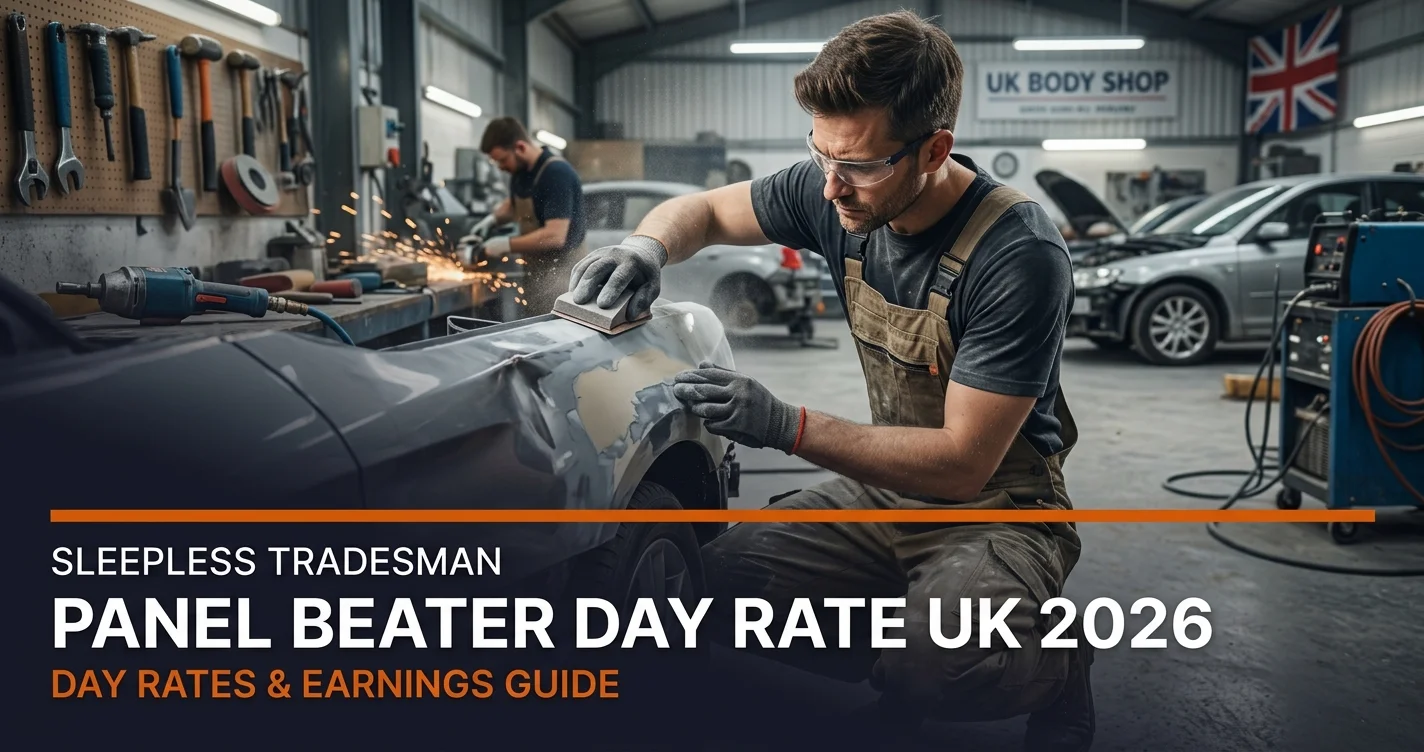
What drives body shop and panel beater rates in 2026?
Panel beating and body shop work sits at a different point in the automotive trades landscape than mechanical repair. The skill set is distinct, the equipment is expensive, and the work demands a combination of metalworking precision, material science knowledge, and aesthetic judgement that takes years to develop. A technician who can reshape a crumpled door skin, achieve a perfect panel gap, and blend paint so seamlessly that you cannot identify the repaired area is performing a craft, and the rates in 2026 reflect that.
The national average of £40 per hour for an experienced body shop technician reflects someone with a solid trade background, their own or shared access to a spray booth, appropriate tooling, and a steady flow of insurance or private client work. Working five days per week across a 44-week year at this rate generates a turnover of around £70,400, before overhead costs are deducted. After spray booth rental, tooling depreciation, paint and materials, van costs, insurance, and accountancy, a self-employed body shop technician at this level would typically take home somewhere between £45,000 and £60,000 per year, depending on how they have structured their business and how efficiently they manage materials.
Several factors push rates above that midpoint. Technicians with formal accreditations such as ATA Body category or IMI qualifications can justify a 10 to 20 percent premium over unqualified competitors, because those credentials carry weight with insurers, fleet operators, and customers who want verified quality. Specialists in ADAS recalibration, structural repair on modern vehicles, or classic car restoration command the highest rates in the sector.
The split between traditional workshop body shop work and mobile SMART repair is also an important feature of this trade. Mobile SMART technicians working from a well-equipped van carry lower fixed overheads than a workshop and can be highly profitable, particularly when working on fleet contracts or in affluent areas with high demand for cosmetic repair services. For a comparison of how these rates sit relative to the wider trades market, the UK tradesman day rates guide for 2026 covers all major trades.
Panel beater and body shop rates by region (2026)
The figures below show typical hourly and day rates for self-employed or contractor-level body shop technicians across the UK, adjusted for regional cost of living and demand. Rates reflect a technician with 3 to 7 years of experience. More experienced technicians or those with specialist skills will sit toward the top of each range.
| Region | Hourly Rate | Day Rate (8 hrs) |
|---|---|---|
| London | £48 to £68/hr | £384 to £544/day |
| South East | £43 to £60/hr | £344 to £480/day |
| South West | £37 to £52/hr | £296 to £416/day |
| East Anglia | £35 to £49/hr | £280 to £392/day |
| Midlands | £37 to £52/hr | £296 to £416/day |
| North West | £36 to £50/hr | £288 to £400/day |
| North East | £32 to £46/hr | £256 to £368/day |
| Yorkshire | £36 to £50/hr | £288 to £400/day |
| Wales | £32 to £46/hr | £256 to £368/day |
| Scotland | £36 to £50/hr | £288 to £400/day |
| Northern Ireland | £30 to £44/hr | £240 to £352/day |
Rates are indicative benchmarks for 2026. Actual rates depend on experience, accreditation, specialism, and local market conditions.
Body shop and panel beater rates by experience level
Experience is one of the primary drivers of where a body shop technician sits within the rate range. The table below applies the standard multiplier framework to the national baseline of £40 per hour for a technician with 3 to 7 years of qualified experience.
| Experience Level | Multiplier | Typical Hourly Rate |
|---|---|---|
| Apprentice / Trainee | 0.6x | ~£24/hr |
| 1 to 3 years | 0.8x | ~£32/hr |
| 3 to 7 years (baseline) | 1.0x | £40/hr |
| 7 to 15 years | 1.15x | ~£46/hr |
| 15+ years / Senior Specialist | 1.3x | ~£52/hr |
Calculated from a national average of £40/hr. Regional adjustments apply on top of experience multipliers. Specialism premiums are additional.
What affects your rate as a self-employed body shop technician?
Overhead costs
Body shop work carries some of the highest overhead costs in the automotive trade. Spray booth access is the biggest single cost for paint technicians, with rental or shared use typically running from £200 to £600 per week depending on location and facility quality. Specialist tooling, including panel beating hammers, dollies, stud welders, dent pulling equipment, and measuring jigs, represents a significant capital investment. Paint and materials should be recharged separately to clients on top of labour, and polishing equipment and consumables add further cost. Workshop rental, van costs, public liability and professional indemnity insurance, and paint training and certification renewals all need to be factored into your rate. A body shop technician running a small independent workshop typically carries overhead costs of £15,000 to £30,000 per year before paying themselves, which is why rates need to sit at or above the national average to generate a worthwhile income.
Accreditations and certifications
The body shop sector has a well-established set of industry credentials that carry genuine market value. ATA (Automotive Technician Accreditation) in the Body category, IMI Accreditation, and paint manufacturer certifications from ICI Autocolor, BASF Glasurit, or Standox all signal professional competence to insurers and fleet operators who make panel repair decisions at volume. Thatcham Research certification for structural repair on newer vehicles is increasingly sought after as more insurers require it for approved repairer network membership. ADAS calibration training has moved from optional to near-essential for any technician carrying out work on vehicles with advanced driver assistance systems.
Insurance work vs direct client work
The nature of your client base has a direct impact on the rates you can achieve. Insurance work often comes with insurer-set labour rates that may be capped below what you would charge a direct private customer. Many body shops accept insurance work because it provides predictable volume and a steady workflow, but the margin per job is typically tighter than direct work. Body shop technicians who build a strong direct client base, particularly in classic vehicle restoration or high-end private repair, tend to achieve higher average rates and are less exposed to insurer pricing decisions.
SMART vs traditional workshop
The shift toward mobile SMART repair is one of the most significant structural changes in the body shop sector in recent years. Technicians who can carry out door ding removal, bumper scuff repair, and alloy wheel refurbishment from a well-equipped van often achieve higher net earnings than those working in a fixed workshop, because the fixed cost base is substantially lower. Mobile SMART operators serving affluent residential areas or fleet depot accounts can build very profitable businesses at lower gross rates, because nearly all of the day rate flows through to margin rather than being absorbed by facility costs. To understand how your daily rate needs to be structured around your costs, use the day rate calculator.
How to set your rate as a body shop technician
- Start with your regional baseline. Use the regional rate table above to identify the typical range for your area and experience level. If you are in the Midlands with 5 years of experience, your baseline is around £40/hr. Use the hourly rate calculator to work backwards from your desired take-home income.
- Calculate your overhead cost per day. List all fixed and variable annual costs: spray booth rental or workshop costs, tooling depreciation, paint consumables, van, insurance, and accountancy. Divide the annual total by your expected billable days (typically 190 to 210 for a full-time sole trader). This daily overhead figure is the floor you need to cover before earning any profit.
- Separate labour from materials. Always quote paint and materials separately from your labour rate. Bundling materials into a day rate makes it harder to track profitability and can lead to undercharging when material costs change. Present clients with a clear labour charge alongside a separate materials line on every quote.
- Apply specialism premiums. Structural repair, ADAS recalibration, classic vehicle work, and SMART repair all attract premiums above your standard labour rate. Do not apply your base bodywork rate to specialist jobs that require additional skill, equipment, or time.
- Review annually and benchmark against insurers. If you carry out insurance work, track what the major insurers are paying and compare it with your target rate. Where there is a significant gap, consider shifting your marketing toward direct client work where you control the price. A guide to how to price a job as a tradesman covers the broader quoting process in detail.
Specialisms and premium rates in body shop work
Body shop work covers a wide range of disciplines, and different specialisms attract meaningfully different rates. Understanding where your skills sit in the premium hierarchy helps you make better decisions about where to invest in training and equipment.
SMART repair (mobile cosmetic repair)
Small to Medium Area Repair Technology covers door ding removal, bumper scuffs, stone chips, and minor paintwork defects. Mobile SMART technicians working from a van can charge premium rates of £50 to £70 per hour precisely because they come to the customer and minimise inconvenience. High demand in fleet management, car rental, and private car ownership makes this a strong specialism for independent operators.
Alloy wheel refurbishment
Alloy wheel refurbishment is a growing add-on with strong margins, whether carried out as a mobile service or in a fixed workshop. An experienced alloy wheel technician can refurbish several wheels per day at £50 to £80 per wheel, making it a very productive specialism relative to the time invested. The equipment investment is manageable and the demand from private customers and dealerships is consistent.
Structural repair and welding
Structural repair, including sill replacement, floor pan work, and chassis repair, requires welding skills and structural knowledge that not all body shop technicians possess. This specialism adds 20 to 30 percent to the base rate and is increasingly associated with Thatcham Research certification requirements for approved repairer networks. Technicians qualified to carry out structural repair on modern unibody vehicles are in sustained demand.
ADAS recalibration
Advanced Driver Assistance Systems recalibration is now required after many types of structural repair, windscreen replacement, and front-end collision repair. Body shop technicians who can offer in-house ADAS calibration retain the revenue that would otherwise be subcontracted out. This adds significant value per job and positions the technician as a more complete repair solution for insurers and fleet operators.
Classic and specialist vehicle bodywork
Classic vehicle restoration and specialist bodywork commands a premium of 25 to 40 percent over standard repair rates. Customers commissioning restoration work are selecting on the basis of skill and reputation rather than price, which means a well-regarded classic vehicle body shop can hold and increase rates with far less price sensitivity than the mainstream insurance repair market. This is one of the highest-margin areas of body shop work for technicians with the right background and portfolio.
Frequently asked questions
How much does a panel beater charge per day in the UK in 2026?
A self-employed panel beater in the UK charges between £280 and £400 per day in 2026, with a national average of around £320 for an 8-hour day. Hourly rates typically run from £35 to £55, with London rates reaching £48 to £68 per hour. Technicians with specialist skills such as structural repair, ADAS calibration, or classic vehicle restoration will sit at or above the top of these ranges.
What is the difference between a panel beater and a SMART repairer?
A traditional panel beater works in a fixed workshop carrying out full bodywork repairs including structural repair, welding, reshaping panels, and complete refinishing. A SMART (Small to Medium Area Repair Technology) technician specialises in smaller cosmetic repairs such as door dings, bumper scuffs, and stone chips, typically from a mobile van. SMART repair technicians often have lower overheads and can charge premium rates of £50 to £70 per hour for their specialist skills, making mobile SMART a very profitable model for the right technician.
Do body shop technicians charge more for insurance work?
Not always. Insurance work rates are often set or capped by insurers, which can mean labour rates below what the technician would charge direct clients. Many body shops handle insurance work for the volume and predictability it provides, but supplement this with direct private client work charged at full market rates. Some technicians deliberately avoid insurance work and focus solely on direct customers where they control pricing.
How much do alloy wheel refurbishment technicians charge?
Alloy wheel refurbishment is a growing specialism with strong margins. Mobile alloy wheel refurbishment technicians typically charge £50 to £80 per wheel for a full refurbishment and can complete several wheels per day. Day earnings from alloy wheel work alone can comfortably reach £300 to £500 for an experienced technician with a well-equipped van.
What qualifications does a panel beater need to charge premium rates?
The key qualifications for premium body shop rates include ATA (Automotive Technician Accreditation) Body category, IMI Accreditation in vehicle body repair, and paint manufacturer certifications such as ICI Autocolor, BASF Glasurit, or Standox. ADAS calibration training is increasingly valuable after structural repairs, and Thatcham Research certification is recognised for structural repair work on newer vehicles.
Is ADAS calibration worth adding as a body shop technician?
Yes, ADAS calibration is increasingly worth adding. Modern vehicles with forward-facing cameras, radar sensors, and parking sensors require recalibration after any structural repair or windscreen replacement. Calibration adds significant revenue per job, and the equipment cost is now accessible enough that many body shops are investing in it. Technicians who can offer in-house ADAS calibration avoid subcontracting the work and keep that margin within the business.
Work out exactly what you need to charge
Use the free calculators to build your rate from your actual income target, overhead costs, and working days.
Related guides
- UK tradesman day rates 2026 - full breakdown of day rates across all major trades
- Tradesman insurance UK - what cover body shop technicians need and what it costs
- How to price a job as a tradesman - step-by-step guide to quoting and pricing work profitably