What Is AI Remote Quoting? The Feature No Other Trade App Has
Discover AI remote quoting - the game-changing feature that lets customers describe their jobs with photos while you generate professional quotes from anywhere.
Written by Tom Ellis · Senior Trades Editor
Last updated: 26 May 2026
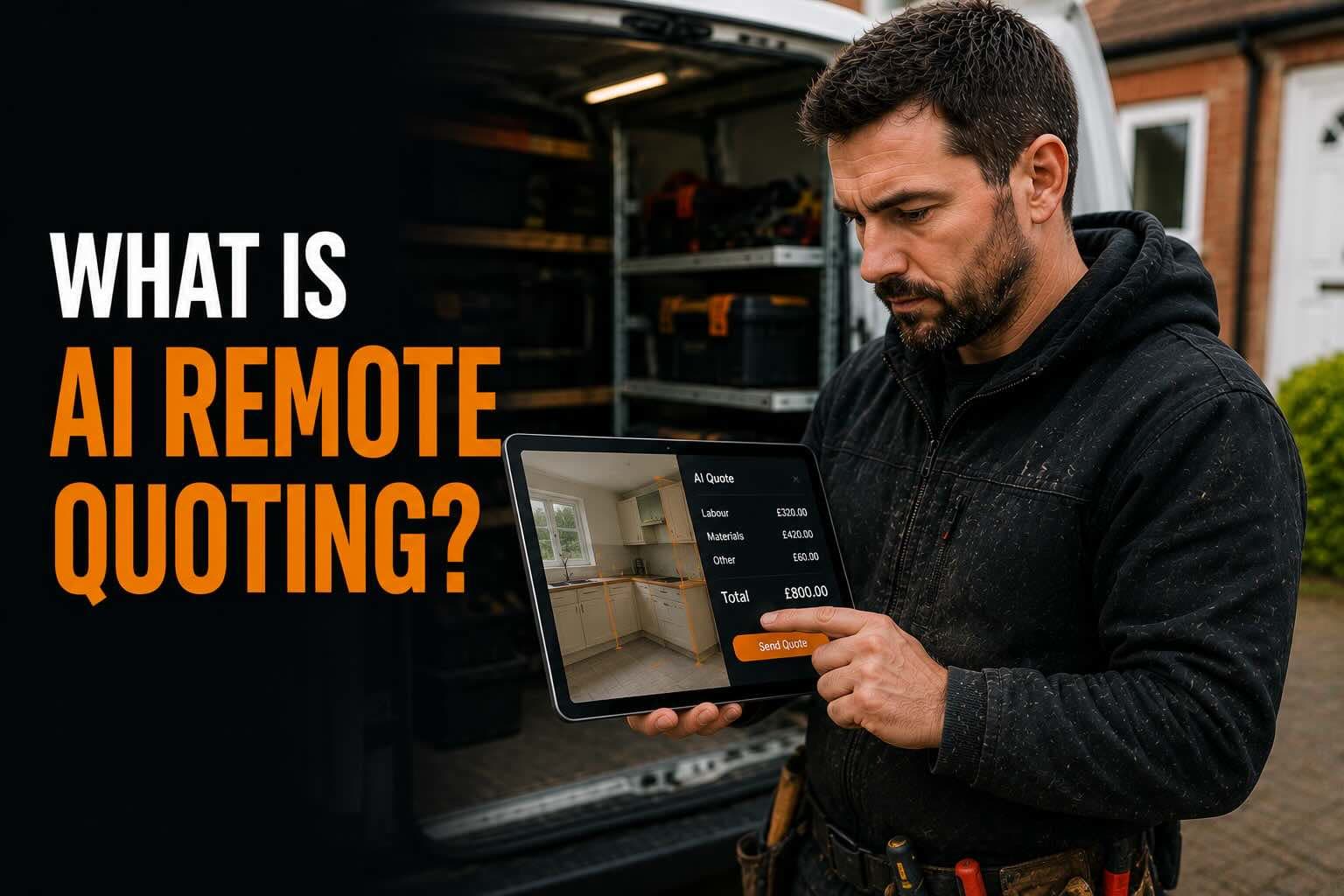
The trades industry has seen countless apps promising to revolutionise how we work, but most focus on the same basic features: scheduling, invoicing, and customer management. However, there's one groundbreaking feature that's changing the game entirely: AI remote quoting. This technology allows tradespeople to generate accurate, professional quotes without ever setting foot on the customer's property.
If you're tired of driving across town for initial consultations that don't convert, or losing potential customers because you can't quote quickly enough, AI remote quoting might be the solution you've been waiting for. Let's explore what this technology is, how it works, and why it's becoming an essential tool for forward-thinking tradespeople.
Understanding AI Remote Quoting Technology
AI remote quoting combines artificial intelligence with photo analysis to create accurate job estimates based on customer-submitted information. Unlike traditional quoting methods that require site visits, this technology processes images, descriptions, and measurements to generate professional quotes remotely.
The process typically works like this: customers receive a link where they can describe their project in detail, upload multiple photos from different angles, and provide measurements or specific requirements. The AI then analyses this information against industry standards, material costs, and labour requirements to produce a comprehensive quote.
This isn't just a simple calculator or template system. Advanced AI remote quoting systems can identify materials, assess job complexity, factor in access issues visible in photos, and even suggest potential complications that might arise during the work. The technology has evolved to understand context - for example, recognising that a bathroom renovation in a Victorian terrace will have different challenges compared to the same work in a modern new-build.
The key advantage is speed and convenience for both tradesperson and customer. While you're finishing up one job, the AI can be processing photos and generating quotes for three more potential projects. This parallel processing capability means you're never leaving money on the table while tied up with on-site work.
How Remote Quote Systems Work for Tradespeople
The beauty of AI remote quoting lies in its simplicity from the tradesperson's perspective. Once set up, the system handles the heavy lifting while you focus on actual trade work. Here's how a typical workflow operates:
When a potential customer contacts you, instead of scheduling a site visit immediately, you send them a secure link. This link takes them to a user-friendly interface where they describe their project using plain English - no technical jargon required. They upload photos showing the work area from multiple angles, highlight specific issues or requirements, and provide any measurements they can manage.
The AI processes this information in real-time, cross-referencing current material prices, considering labour requirements for your trade, and factoring in complexity indicators visible in the photos. Within minutes, you receive a detailed breakdown including materials list, labour estimates, timeline projections, and potential complications to discuss with the customer.
What makes this particularly powerful for busy tradespeople is the ability to handle multiple quotes simultaneously. While traditional quoting might limit you to 2-3 site visits per day, AI remote quoting allows you to process 10+ potential jobs in the same timeframe. This doesn't replace all site visits - complex or high-value projects still benefit from in-person assessment - but it filters out unsuitable jobs and pre-qualifies genuine prospects.
The technology also learns from your feedback. If you consistently adjust estimates for certain types of work, the AI adapts its calculations to better match your pricing approach and local market conditions.
Benefits of AI Remote Quoting for Modern Trades
The advantages of implementing AI remote quoting extend far beyond simple time savings, though that alone can be transformative for most tradespeople. Let's examine the key benefits:
Dramatically increased quote volume: Traditional methods might allow 3-4 quotes per day maximum. With AI remote quoting, you can process 15-20 initial quotes in the same timeframe, dramatically expanding your potential customer base.
Pre-qualification of genuine customers: By requiring customers to invest time describing their project and taking photos, you naturally filter out time-wasters. Serious customers will complete the process; casual enquirers typically won't bother.
Reduced fuel costs and travel time: Eliminating unnecessary site visits can save hundreds of pounds monthly in fuel costs alone, not to mention the time value of reduced travel.
24/7 quote generation capability: The AI works around the clock, processing customer submissions while you sleep and having quotes ready for your review first thing in the morning.
Improved customer experience: Modern customers expect quick responses. Being able to provide detailed quotes within hours rather than days gives you a significant competitive advantage.
Better documentation from the start: Having photos and detailed descriptions before you even meet the customer means better preparation and more accurate final pricing.
Perhaps most importantly, AI remote quoting allows you to be more selective with your time. Instead of rushing between multiple site visits, you can focus on the most promising opportunities and dedicate proper attention to each potential project.
Photo Analysis: The Game-Changing Component
The real magic in AI remote quoting happens with photo analysis technology. This isn't simply about storing images - the AI actually examines photos to extract meaningful information about the job scope and potential challenges.
Modern photo analysis can identify building materials, assess room dimensions, spot potential complications like uneven walls or difficult access, and even recognise architectural styles that might indicate hidden challenges. For example, when analysing photos of a kitchen renovation, the AI might identify original Victorian features that suggest potential plumbing complications, or spot signs of previous DIY work that could complicate the installation.
The technology works best when customers provide comprehensive photo sets. Smart systems guide customers through the photo-taking process, suggesting specific angles and asking for close-ups of particular areas. This structured approach ensures the AI has sufficient information for accurate analysis.
One particularly impressive capability is damage assessment from photos. Whether it's storm damage to roofing, water damage in bathrooms, or wear patterns on flooring, AI can often provide surprisingly accurate assessments of repair requirements just from high-quality images.
For tradespeople, this means arriving at jobs with a much clearer understanding of what you're walking into. The AI-generated analysis serves as a preliminary site survey, highlighting potential issues and helping you prepare the right tools and materials.
Setting Up Remote Quoting for Your Business
Implementing AI remote quoting requires choosing the right platform and configuring it to match your business needs. The setup process typically involves several key steps:
First, you'll need to customise the quote parameters for your specific trade. This includes setting your labour rates, markup preferences, common material costs, and typical time allowances for different types of work. Better systems allow for regional price variations and can integrate with local supplier databases for current material pricing.
Next comes creating your customer-facing quote request interface. This should be branded with your company details and designed to gather the specific information you need for accurate quotes. Different trades require different information - a bathroom fitter needs different details compared to a roofer or electrician.
The system should integrate with your existing business processes. Quality AI remote quoting platforms will export data in formats that work with your accounting software, CRM systems, or project management tools.
Training is crucial, both for yourself and your customers. You'll need to understand how to interpret AI-generated analyses and adjust quotes based on your experience. Your customers need clear guidance on how to describe their projects and take useful photos.
Testing the system with a few low-risk projects helps identify any adjustments needed before rolling it out more widely. This trial period allows you to fine-tune the AI's understanding of your pricing approach and local market conditions.
Why Traditional Trade Apps Miss This Feature
Most existing trade management apps focus on post-sale activities: scheduling existing jobs, managing invoices, tracking payments, and basic customer relationship management. While these features are important, they don't address one of the biggest challenges tradespeople face: efficiently generating quotes for potential work.
The reason most apps avoid AI remote quoting is complexity and cost. Developing effective photo analysis technology requires significant investment in artificial intelligence research and ongoing refinement. Many app developers prefer simpler solutions that are easier to build and maintain.
Traditional approaches also reflect older business models where site visits were considered essential for every quote. This made sense when labour was cheaper and customers were more willing to wait days or weeks for quotes. However, modern market conditions demand faster, more efficient approaches.
Another factor is the technical challenge of creating AI that understands the nuances of different trades. A system sophisticated enough to analyse electrical work photos is very different from one that can assess plumbing or roofing projects. Most app developers don't have the trade expertise needed to build truly useful analysis tools.
The result is a market flooded with basic scheduling and invoicing apps, but very few solutions that actually help tradespeople win more work or operate more efficiently during the crucial quoting phase.
Success Stories: Remote Quoting in Action
Early adopters of AI remote quoting report dramatic improvements in their business efficiency and customer acquisition rates. Consider a typical bathroom renovation specialist who previously spent entire mornings driving to three site visits, often to discover jobs that weren't suitable or customers who weren't serious.
With AI remote quoting, the same tradesperson now processes 8-10 initial enquiries before breakfast. The AI pre-qualifies customers, provides detailed scope analyses, and flags potential complications. Site visits are reserved for the most promising opportunities, and when they do occur, both parties are much better prepared.
Electricians using remote quoting report particular success with smaller domestic jobs - socket installations, light fittings, consumer unit upgrades. These projects are well-suited to photo analysis, and customers appreciate getting quick, accurate quotes without needing to take time off work for site visits.
Roofers have found the technology especially valuable for insurance work and storm damage assessments. Photos often provide sufficient information for initial quotes, and the AI can identify damage patterns that might not be obvious to untrained customers.
The common thread across all these success stories is improved conversion rates. When customers invest time in providing detailed information and photos, they're psychologically more committed to proceeding with the work. Combined with faster quote turnaround times, this leads to significantly more won work.
The Future of Trade Quoting Technology
AI remote quoting is just the beginning of a broader transformation in how tradespeople interact with customers and manage their businesses. Current technology focuses primarily on photo analysis and basic project scoping, but future developments promise even more sophisticated capabilities.
Augmented reality integration could allow customers to use their smartphones to take measurements automatically, eliminating one source of inaccuracy in remote quotes. Machine learning will continue improving the AI's ability to recognise complex situations and unusual requirements.
Integration with Building Information Modelling (BIM) and property databases could provide additional context for quotes, automatically factoring in building age, construction methods, and known characteristics of specific developments or architectural styles.
Predictive analytics might eventually warn of potential complications before they arise, based on patterns identified across thousands of similar projects. This could dramatically improve quote accuracy and reduce unexpected costs during project execution.
The technology will also become more collaborative, allowing multiple trades to contribute to complex multi-discipline projects through shared AI analysis and coordination tools.
Frequently Asked Questions
How accurate are AI-generated quotes compared to traditional site visits?
AI remote quoting accuracy depends heavily on photo quality and customer-provided information. For straightforward jobs, accuracy rates of 85-95% are common, comparable to quick site visits. Complex or unusual projects still benefit from in-person assessment, but the AI provides an excellent starting point that reduces site visit time.
What types of trade work are best suited to remote quoting?
Standardised jobs with visible work areas perform best: bathroom renovations, kitchen installations, flooring, painting, basic electrical work, and roofing repairs. Projects requiring extensive hidden work assessment (like major plumbing behind walls) still need traditional site visits for accurate pricing.
Do customers trust quotes generated from photos alone?
Customer acceptance is surprisingly high, especially when the process is transparent about how the AI works and what limitations exist. Customers appreciate the speed and convenience, and the detailed breakdown of how conclusions were reached builds confidence in the accuracy.
How much time can remote quoting save per week?
Most tradespeople report saving 6-10 hours weekly on quote-related travel and site visits. This time can be redirected to actual work or processing more quote requests, typically resulting in 30-50% more quotes generated per week.
What happens if the AI quote is significantly wrong?
Quality systems include feedback mechanisms that help the AI learn from discrepancies. Over time, the accuracy improves for your specific market and working methods. Most platforms also include disclaimers about final pricing being subject to site verification for complex or high-value projects.
Transform Your Quoting Process Today
AI remote quoting represents a fundamental shift in how tradespeople can approach customer acquisition and business growth. By eliminating the traditional bottleneck of site visit scheduling, you can respond to more opportunities, serve customers better, and focus your time on the work that actually generates revenue.
If you're ready to explore how this technology could transform your business, Sleepless Tradesman offers comprehensive AI remote quoting alongside other business management features. The platform's photo analysis capabilities and customer-facing quote request system can help you process more opportunities while maintaining the quality and professionalism your customers expect. Check out the savings calculator to see the potential impact on your business efficiency and profitability.
Ready to work smarter?
Join thousands of tradespeople using AI to save time on quotes, invoices, and job planning.
Try Sleepless Tradesman FreeRelated Guides
Free resources from our UK tradesperson guide library