AI Photo Analysis for Job Sites: How Technology is Transforming Construction
Discover how AI photo analysis is revolutionising job site assessment for tradespeople, from accurate quotes to spotting hidden issues before they become problems.
Written by Tom Ellis · Senior Trades Editor
Last updated: 26 May 2026
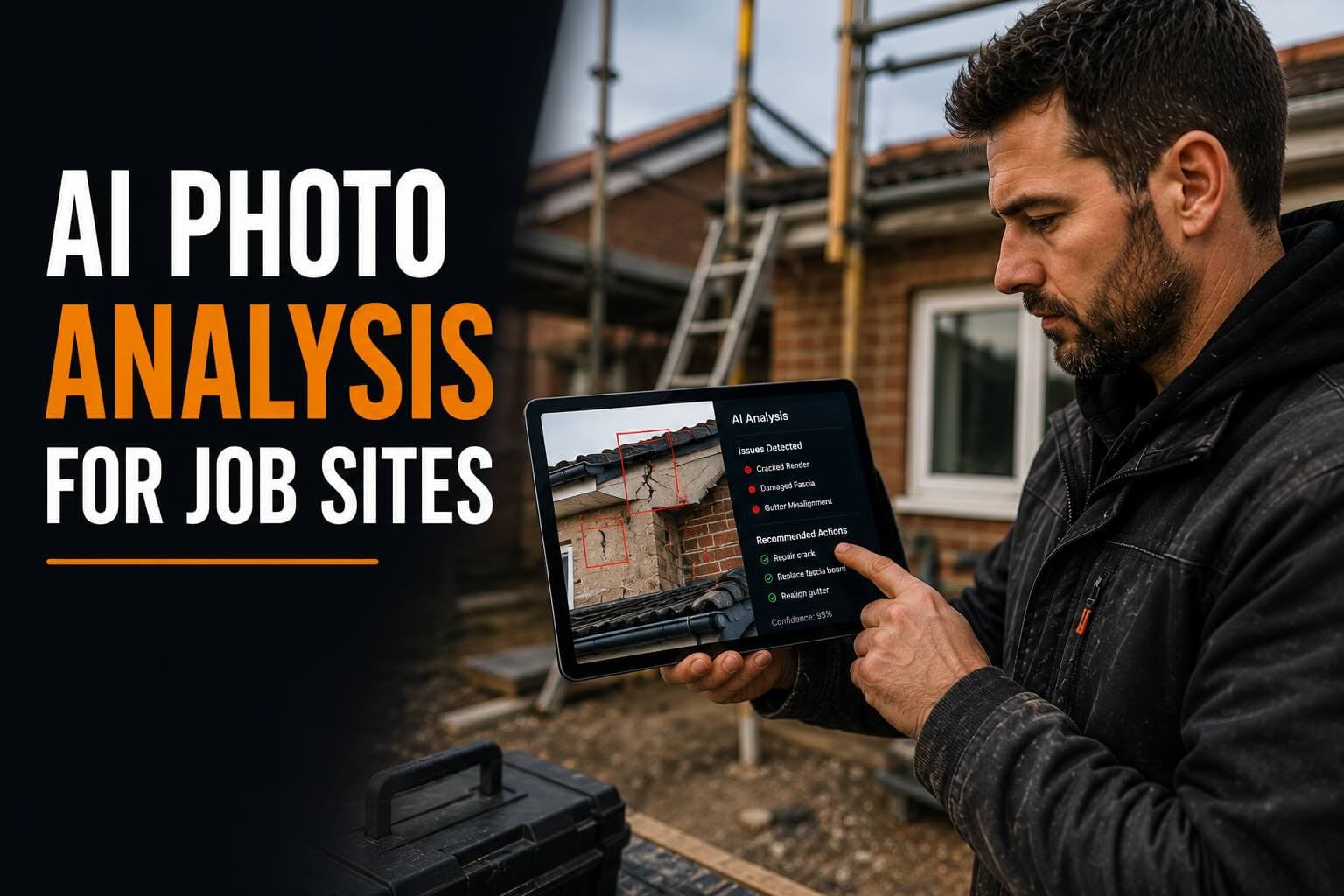
The construction industry has always relied on visual inspection to assess jobs, identify problems, and prepare accurate quotes. But what if a single photograph could tell you more about a job site than a traditional walkthrough? Welcome to the world of AI photo analysis for job sites—a game-changing technology that's transforming how tradespeople work.
From automatically identifying structural issues to calculating material quantities from a single image, AI construction photos analysis is becoming an indispensable tool for modern tradespeople. Let's explore how this technology works and why it's becoming essential for staying competitive in today's market.
How AI Photo Analysis Actually Works on Job Sites
AI photo analysis uses computer vision and machine learning algorithms to interpret visual information in construction photographs. When you upload a photo of a job site, the AI system processes multiple layers of data simultaneously.
The technology can identify structural elements like walls, ceilings, flooring, and fixtures. It recognises materials such as brick, timber, plasterboard, or tiles, and can even detect their condition. More sophisticated systems can estimate dimensions, spot potential issues like damp patches or electrical problems, and suggest appropriate solutions.
For example, when analysing a bathroom renovation photo, the AI might identify the existing suite, note water damage around the shower area, calculate the approximate square footage, and suggest materials needed for the job. This level of detail from a single photograph would traditionally require multiple site visits and extensive note-taking.
The accuracy has improved dramatically in recent years. Modern AI systems are trained on millions of construction images, allowing them to recognise patterns and anomalies that might escape even experienced tradespeople during a quick initial survey.
Identifying Problems Before They Become Expensive Issues
One of the most valuable applications of AI construction photos analysis is early problem detection. The technology excels at spotting subtle signs that human eyes might miss, especially in poor lighting conditions or when viewing images on mobile devices.
Damp and moisture issues are particularly well-suited to AI detection. The systems can identify discolouration patterns, water stains, and even early signs of mould that might not be immediately obvious in person. This early detection capability can save both tradespeople and customers thousands of pounds by addressing issues before they escalate.
Structural problems are another area where AI photo analysis shines. Cracks in walls, sagging ceilings, or uneven floors can indicate serious underlying issues. The AI can measure and categorise these problems, helping you determine whether they're cosmetic concerns or signs of structural damage requiring specialist attention.
Electrical and plumbing issues also show visual symptoms that AI can detect. Old wiring, inadequate electrical installations, or signs of previous water damage can all be flagged automatically, ensuring these critical safety concerns aren't overlooked during the quoting process.
Streamlining Quote Preparation with Visual Intelligence
Accurate quoting has always been one of the biggest challenges in the trades. Too low, and you lose money on the job. Too high, and you lose the customer. AI photo analysis is helping tradespeople strike the right balance by providing more accurate initial assessments.
The technology can estimate material quantities directly from photographs. For a tiling job, it might calculate the square footage of surfaces to be covered, identify the type of existing tiles that need removal, and even suggest appropriate adhesives based on the substrate visible in the image.
Labour time estimates become more accurate when the AI can identify potential complications upfront. A seemingly straightforward plastering job might reveal underlying issues in the photographs that would extend the timeline—information that's crucial for accurate pricing.
This enhanced accuracy in initial assessments reduces the need for multiple site visits, saving time and fuel costs. It also means fewer unpleasant surprises once work begins, leading to better customer relationships and more predictable job outcomes. The Sleepless Tradesman platform integrates this photo analysis capability directly into its quoting workflow, allowing tradespeople to generate professional estimates that account for visual findings.
Enhancing Customer Communication Through Visual Evidence
One of the often-overlooked benefits of AI photo analysis is how it improves customer communication. When the AI identifies specific issues or requirements in a photograph, you can present this information to customers with clear visual evidence.
Instead of simply telling a customer they need additional work, you can show them exactly what the AI has identified and explain why it's necessary. This transparency builds trust and helps justify pricing decisions that might otherwise seem arbitrary.
For insurance work, AI analysis provides documented evidence of damage and required repairs. This can be particularly valuable when dealing with insurance adjusters who need clear justification for claimed work. The AI's objective analysis removes the perception of bias that might arise from tradesperson assessments alone.
Remote consultations become much more effective when combined with AI photo analysis. Customers can upload photos of their requirements, and you can provide detailed feedback and preliminary quotes without leaving your workshop. This capability has become increasingly important as more customers expect digital-first interactions.
The Technology Behind Construction Photo AI
Understanding the technology helps appreciate both its capabilities and limitations. Modern AI photo analysis systems use convolutional neural networks (CNNs) specifically trained on construction and building images.
These networks learn to recognise patterns at multiple levels—from basic shapes and textures to complex combinations that indicate specific problems or opportunities. The training process involves feeding the system millions of labelled images until it can accurately identify features without human guidance.
Image preprocessing is crucial for accurate analysis. The AI adjusts for lighting conditions, image quality, and perspective to ensure consistent results across different camera types and shooting conditions. This preprocessing allows the system to work effectively with everything from professional photography to quick smartphone snaps.
The most advanced systems also incorporate contextual understanding. They don't just identify individual elements but understand how these elements relate to each other. For example, the AI might recognise that moisture damage near a window suggests a specific type of repair approach, or that certain electrical installations indicate the building's age and likely compliance requirements.
Real-World Applications Across Different Trades
Every trade can benefit from AI photo analysis, though the specific applications vary significantly. Electricians use it to assess existing installations, identify outdated components, and spot safety hazards that might not be immediately obvious. The AI can recognise different types of consumer units, wiring methods, and even estimate the age of installations based on visual cues.
Plumbers find particular value in the technology's ability to identify pipe materials, joint types, and signs of water damage. A single photograph of a bathroom can reveal information about the existing plumbing configuration, potential access issues, and likely complications that would affect job pricing.
Builders and general contractors use AI analysis for comprehensive site assessments. The technology can identify structural elements, assess building conditions, and even suggest sequences for renovation work based on what's visible in the photographs.
Decorators and painters benefit from the AI's ability to assess surface conditions, identify preparation requirements, and calculate coverage areas. The system can spot issues like previous paint failures, surface damage, or preparation shortcuts that would affect the quality of the finished work.
For those interested in seeing the time and cost savings this technology can provide, the savings calculator demonstrates the potential impact on different types of businesses.
Integration with Modern Business Workflows
The real power of AI photo analysis emerges when it's integrated into comprehensive business management systems. Standalone photo analysis tools provide useful information, but integration with quoting, invoicing, and project management systems creates a seamless workflow that saves significant time.
Modern platforms can take AI analysis results and automatically populate quote templates with relevant materials, labour estimates, and compliance requirements. This integration eliminates the manual transcription that often introduces errors and delays in the quoting process.
Mobile integration is particularly important for tradespeople who are often working on-site. The ability to capture photographs, receive AI analysis, and generate quotes directly from a smartphone or tablet transforms how business development happens. You can provide preliminary quotes while still on-site with the customer, dramatically improving conversion rates.
The technology also enables better project documentation. AI-analysed photos become part of the project record, providing before-and-after comparisons and evidence of work completed. This documentation is valuable for warranty claims, insurance purposes, and building relationships with repeat customers.
Overcoming Common Challenges and Limitations
While AI photo analysis is powerful, understanding its limitations ensures realistic expectations and proper use. Image quality remains crucial—poorly lit, blurry, or low-resolution photos will produce less accurate results. The AI performs best with clear, well-lit images that show relevant details without obstructions.
Angle and perspective matter significantly. A straight-on shot of a wall provides much more useful information than an angled view that distorts proportions. Most systems work best when photographs are taken systematically, covering all relevant areas from appropriate viewpoints.
The technology excels at identifying visible issues but cannot detect problems hidden behind surfaces. AI analysis should complement, not replace, traditional assessment methods for complex jobs where concealed work is likely.
Contextual understanding continues to improve, but the AI may sometimes misinterpret unusual situations or non-standard installations. Professional judgment remains essential for interpreting AI results and identifying when additional investigation is needed.
For comprehensive guidance on getting the most from these technologies, the FAQ section covers common questions about implementation and best practices.
The Future of AI in Construction Assessment
The technology continues to evolve rapidly, with new capabilities emerging regularly. Thermal imaging analysis is becoming more common, allowing AI to detect insulation problems, electrical hotspots, and hidden moisture issues that aren't visible in standard photographs.
3D reconstruction from multiple photographs is another developing area. Instead of analysing single images, future systems will create detailed 3D models of spaces, enabling more accurate measurements and better visualisation of proposed changes.
Integration with augmented reality (AR) is on the horizon, potentially allowing tradespeople to overlay AI analysis results directly onto live camera feeds. This could revolutionise site surveys by highlighting problems and opportunities in real-time.
Machine learning improvements mean the systems become more accurate over time, learning from successful projects and user feedback. As more tradespeople adopt these technologies, the collective knowledge base grows, benefiting the entire community.
Frequently Asked Questions
How accurate is AI photo analysis for construction jobs?
Modern AI systems achieve 85-95% accuracy for standard construction elements and common issues. Accuracy improves with better image quality and clear lighting conditions. The technology is most reliable for visible surface conditions and standard building elements.
What types of photos work best with AI analysis?
Clear, well-lit photographs taken straight-on work best. Multiple angles of the same area improve accuracy. Photos should show the full context of work areas without excessive shadows or obstructions. Standard smartphone cameras provide sufficient quality for most applications.
Can AI replace physical site surveys?
AI photo analysis is excellent for preliminary assessments and identifying obvious issues, but cannot replace comprehensive physical surveys for complex jobs. It's best used as a complement to traditional methods, particularly for initial quotes and remote consultations.
How does AI handle unusual or non-standard construction?
While AI systems are trained on diverse construction types, unusual installations or heritage buildings may require human interpretation. The technology works best on standard residential and commercial construction but continues to improve with exposure to diverse building types.
What equipment do I need for AI photo analysis?
Most systems work with standard smartphones or digital cameras. Good lighting is more important than expensive equipment. Some platforms offer dedicated mobile apps that guide photo capture for optimal AI analysis results.
Making AI Photo Analysis Work for Your Business
Implementing AI photo analysis doesn't require massive changes to existing workflows. Start by identifying jobs where visual assessment is particularly important—renovations, insurance work, or complex quotes where multiple site visits are common.
The technology works best when integrated into broader business management systems. Rather than using standalone tools, consider platforms that combine photo analysis with quoting, invoicing, and customer management capabilities.
Training your team on effective photo capture techniques improves results significantly. Simple guidelines about lighting, angles, and coverage areas ensure the AI receives the information it needs for accurate analysis.
Customer education is also valuable. When customers understand how photo analysis improves accuracy and service delivery, they're more willing to provide the quality images needed for effective assessment.
For tradespeople looking to streamline their quoting process while improving accuracy, Sleepless Tradesman offers comprehensive AI photo analysis integrated with professional business management tools. The technology is transforming how smart tradespeople assess jobs, communicate with customers, and build more profitable businesses.
Ready to work smarter?
Join thousands of tradespeople using AI to save time on quotes, invoices, and job planning.
Try Sleepless Tradesman FreeRelated Guides
Free resources from our UK tradesperson guide library