How to Set Up as a Self-Employed Gas Engineer in the UK: Step-by-Step Guide 2026
Written by Tom Ellis · Senior Trades Editor
Last updated: August 2026
Quick Answer
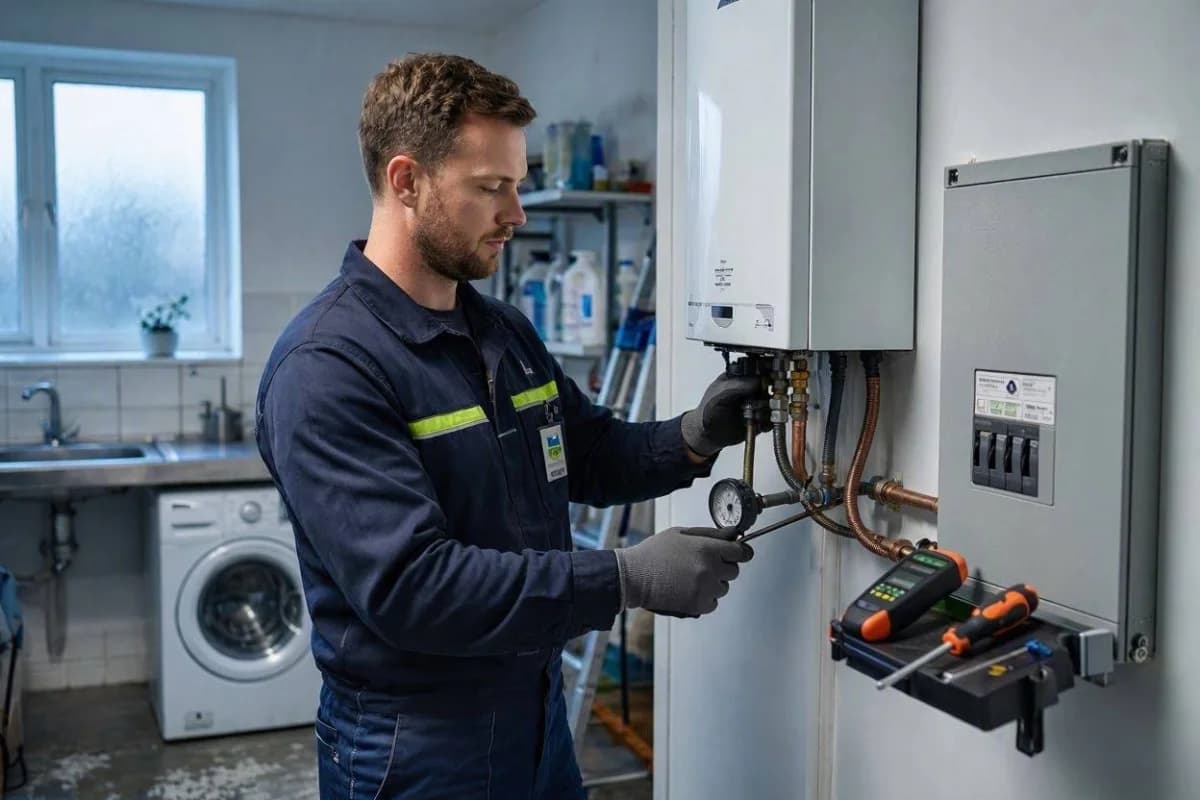
Self-employed gas engineers are among the highest-earning sole traders in the UK trades sector. A gas engineer with strong boiler service and repair skills, Gas Safe registration, and a growing base of landlord and homeowner clients can realistically earn £50,000 to £80,000 net per year within three to five years of going self-employed. The mandatory certification requirements (ACS qualifications and Gas Safe registration) ensure competition is controlled, which keeps day rates and call-out fees high. This guide walks through every step of going self-employed as a gas engineer in 2026, including costs, paperwork, pricing strategy, and how to build the recurring contract income that makes the biggest difference to annual earnings. Setting up in other trades follows a similar pattern — if you work in carpentry or joinery, see our parallel guide on how to set up as a self-employed joiner in the UK.
Quick wins
- Get your Gas Safe card before you take a single self-employed job. Working on gas without it is a criminal offence under the Gas Safety (Installation and Use) Regulations 1998.
- Target landlords early: each landlord client with five or more properties can generate 5 to 10 boiler services and CP12 certificates per year on a single account.
- Annual service contracts at £90 to £120 per property are your most reliable revenue. Aim for 80 to 100 contract properties in your first two years.
- Use Gas Safe certificate software (see our best software for gas engineers UK guide) to issue certificates on-site and reduce admin time to under 10 minutes per job.
- Professional indemnity insurance is separate from public liability. You need both if you design or specify heating systems, not just fit them.
What self-employed gas engineers earn in the UK
According to data from the Gas Safe Register and trade body surveys published in 2025 and 2026, self-employed gas engineers in the UK charge between £70 and £120 per hour depending on location and specialism. In London and the South East, hourly rates regularly reach £120 to £150 for boiler installations and complex central heating work. In the North West, Yorkshire and the Midlands, typical day rates sit between £300 and £450 for a full day of service and repair work.
A self-employed gas engineer running a mix of boiler services, landlord CP12 inspections, and occasional boiler installations can expect to bill between 4 and 6 jobs per day on service days. At £90 per boiler service, that is £360 to £540 per day from service work alone. Boiler installations on modern combi systems typically bill at £1,800 to £3,500 including parts in 2026, with engineer labour accounting for £600 to £1,200 of that figure. See our separate guide on gas engineer hourly rates UK 2026 for a full breakdown by region and job type.
Step 1: Hold current ACS qualifications and check your Gas Safe status
Before you can register with the Gas Safe Register as a self-employed engineer, you must hold valid ACS (Accredited Certification Scheme) qualifications. ACS assessments are delivered by awarding bodies including BPEC (British Plumbing Employers Council) and City and Guilds (now part of Weston College Group for many practical assessments). The core domestic gas qualifications you need are CCN1 (core domestic gas safety), CENWAT (central heating boilers and water heaters), and CKR1 (gas cookers and hobs). If you plan to work on domestic appliances including fires and wall heaters, you will also need HTR1.
ACS certificates are valid for five years. The Gas Safe Register will not accept expired ACS qualifications. If your certificates are approaching renewal, book your reassessment through an approved ACS assessment centre before you start trading self-employed. BPEC assessment centres are located across the UK including in Manchester, Birmingham, Glasgow, Cardiff, Leeds, Bristol, and London. In 2026, a full ACS reassessment for domestic gas (CCN1, CENWAT, CKR1, HTR1) costs between £450 and £700 depending on the centre. Allow one to two days for the practical assessment.
If you are moving from employment to self-employment, your existing ACS qualifications remain valid and carry over. Your Gas Safe registration, however, is employer-linked if you were previously on a company card. You will need to apply for a new individual Gas Safe registration in your own name before you carry out any gas work for yourself.
Step 2: Register with the Gas Safe Register before doing any gas work
Gas Safe registration is a legal requirement under the Gas Safety (Installation and Use) Regulations 1998. Any business or individual carrying out gas work in the UK, Isle of Man, or Guernsey without Gas Safe registration is committing a criminal offence and can face an unlimited fine or up to six months in prison. There is no grace period once you go self-employed.
The annual Gas Safe registration fee for a sole trader in 2026 starts at £112 for a single engineer with one licence category. Most domestic gas engineers will need multiple categories (domestic natural gas, LPG, unvented hot water systems if applicable) which increases the fee. A typical domestic engineer with two or three ACS categories pays between £150 and £250 per year for Gas Safe registration. You can register online at gassaferegister.co.uk and you will receive your Gas Safe ID card within five to seven working days.
Your Gas Safe card shows your licence categories, your individual Gas Safe ID number, and your card expiry date. Always carry it on site. Homeowners and landlords have the legal right to check that any engineer working in their property is Gas Safe registered, and the Gas Safe Register has a public check tool at gassaferegister.co.uk that consumers use regularly. For a full step-by-step on the registration process, see our dedicated guide on Gas Safe registration: how to register and what it costs.
Step 3: Register as self-employed with HMRC
You must register as self-employed with HMRC by 5 October in the tax year after you first start trading. If you start work in September 2026, you must register by 5 October 2027. In practice, register as soon as you take your first self-employed job to avoid any risk of a late registration penalty. You can register online at gov.uk/register-for-self-assessment. The process takes around 10 minutes and you will receive your Unique Taxpayer Reference (UTR) by post within 10 working days.
Most gas engineers start out as sole traders rather than limited companies. As a sole trader your Self Assessment tax return covers both Income Tax and Class 4 National Insurance. You will also need to register for Class 2 National Insurance separately if your profits exceed £12,570 per year. If your annual turnover exceeds £90,000 (the VAT threshold in 2026), you must also register for VAT. Many gas engineers with landlord clients hit the VAT threshold faster than expected, so plan for VAT registration from year two onwards.
For advice on whether to operate as a sole trader or form a limited company from the start, see our guide on sole trader vs limited company for tradespeople. As a gas engineer, the additional tax planning flexibility of a limited company becomes relevant once you are earning above approximately £50,000 per year in profit.
Step 4: Take out public liability and professional indemnity insurance
Public liability insurance (PLI) is not a legal requirement for self-employed gas engineers in the UK, but it is effectively mandatory in practice. Most letting agents, property management companies, and large landlords will not use an engineer who cannot show proof of at least £2 million in public liability cover. Many local authorities and housing associations require £5 million or £10 million for approved contractor work.
In 2026, public liability insurance for a self-employed gas engineer with £2 million cover typically costs between £180 and £350 per year through specialist providers including Tradesman Saver, Simply Business, and PolicyBee. Cover with £5 million limit costs between £280 and £480 per year. Gas engineers should also consider professional indemnity insurance (PI) if they design or specify heating systems, which covers you against claims arising from incorrect advice or design errors. PI insurance for gas engineers costs between £200 and £500 per year for £500,000 to £1 million of cover.
Tools and equipment cover (also called plant and tools insurance) protects your van contents and equipment against theft and damage. Gas engineers typically carry flue analysers, pressure gauges, leak detectors, and hand tools worth £2,000 to £5,000 or more. A named tools policy covering up to £5,000 adds approximately £100 to £200 per year to your premium. For a full breakdown of what cover gas engineers need, see our guide on tradesman insurance UK 2026: what cover do you need.
Step 5: Build your customer paperwork: Gas Safe certificates, CP12 records, and service records
Gas engineers are legally required to issue a Gas Safety Record (commonly called a CP12 for landlords) for every gas appliance they inspect, service, or commission. A CP12 (Landlord Gas Safety Record) under the Gas Safety (Installation and Use) Regulations 1998 must be issued annually for every rental property with a gas appliance. Landlords must provide a copy to their tenants within 28 days of the inspection and must keep a copy for at least two years.
For homeowner clients, you should issue a boiler service record (sometimes called a service report) for every boiler service visit. This protects both you and the customer: if a fault develops after your visit, a detailed service record shows the condition of the appliance at the time of service and what work was carried out. It also gives you a record to follow up for annual service reminders.
When you commission or install a new boiler or gas appliance, you must notify the work to Building Control under Part J of the Building Regulations. As a Gas Safe registered engineer, you are a competent person and can self-certify this work. Your Gas Safe registration covers the self-certification process, and you complete the notification through the Gas Safe Register portal after installation. Failure to notify can result in a fine and may cause problems when the homeowner sells the property.
Field service management software designed for gas engineers automates certificate creation, service record keeping, and annual service reminders. See our guide on the best software for gas engineers UK 2026 for a comparison of platforms including Commusoft, Joblogic, and Tradify.
Step 6: Set your rates for boiler services, repairs, and installations
Pricing is where many newly self-employed gas engineers undercharge, especially in their first year. The Gas Safe Register and trade surveys consistently show that self-employed gas engineers who price their work correctly from day one earn significantly more than those who discount to win jobs. The following benchmarks reflect market rates in 2026.
Boiler service (annual): £80 to £120 in most of England and Wales, £100 to £150 in London. Allow 45 to 60 minutes per service. At £95 per service and six jobs per day, you gross £570 per day. See our detailed guide on boiler service cost UK 2026: what to charge customers for pricing by boiler type, region, and bundling strategy.
CP12 landlord gas safety check: £60 to £100 per property when combined with a boiler service, £80 to £120 as a standalone check. Landlords with multiple properties can be offered a volume discount of 10 to 15 percent in exchange for a block booking of all their properties at the start of each season.
Boiler repair call-out: A call-out fee of £60 to £90 covers the first 30 to 45 minutes, with additional labour charged at £70 to £100 per hour. Parts are charged at trade cost plus a markup of 20 to 40 percent. Clearly stated call-out fees on your website and when booking reduce disputes. Never quote a fixed repair price before diagnosing the fault.
Boiler installation: A Worcester Bosch or Vaillant combi boiler swap on an existing system (same location, like-for-like replacement) typically bills at £1,800 to £2,800 including the boiler in 2026. A system boiler with unvented cylinder upgrade ranges from £3,000 to £5,500. A full heating system installation on a new extension or new build can reach £8,000 to £15,000. Always quote installations in writing on a fixed-price or detailed estimate basis, including a clear scope of work, to avoid post-job disputes.
Step 7: Build a recurring customer base through service contracts and landlords
Recurring revenue is the key difference between a self-employed gas engineer who earns £35,000 to £45,000 per year and one who earns £65,000 to £80,000. Boiler service contracts and landlord annual safety check agreements provide guaranteed work in your diary before the season begins, reduce reliance on paid advertising, and smooth out the seasonal peaks and troughs that affect gas engineers in winter versus summer.
Annual service contracts work as follows: the homeowner pays a fixed annual fee (typically £90 to £120 per year for a standard combi boiler service) and you commit to servicing their boiler at an agreed time each year. Some engineers include one priority call-out per year in the contract price, which adds perceived value without significantly increasing cost if call-outs are rare. A base of 80 service contracts at £100 per year generates £8,000 per year in guaranteed revenue before you have taken a single reactive call.
Landlords are the most valuable recurring clients for a gas engineer. A single landlord with a portfolio of 10 properties generates 10 CP12 inspections plus boiler services per year, typically worth £1,000 to £1,500 annually. Letting agents are the most efficient route to landlord work at scale: introduce yourself to local letting agents in your area (covering towns and cities near you), offer a responsive service guarantee with same-day or next-day availability for urgent repairs, and confirm your Gas Safe registration number and insurance details in writing. Many letting agents in cities such as Manchester, Leeds, Bristol, Sheffield, Birmingham, and Edinburgh will add a reliable gas engineer to their approved contractor list within a few weeks if you make contact directly.
Local SEO (optimising your Google Business Profile for your service area) also drives consistent homeowner enquiries without ongoing advertising cost. Ensure your Google Business Profile is verified, shows your Gas Safe registration number, lists your service area towns and postcodes, and has at least 10 to 15 recent reviews. Engineers with strong local search visibility in areas including Leeds, Nottingham, Southampton, and Newcastle often report that Google generates 30 to 50 percent of their new enquiries without any paid spend.
Start-up costs summary for a self-employed gas engineer UK 2026
The table below shows the typical one-off and annual costs to set up and operate as a self-employed gas engineer in the UK. All figures are 2026 estimates.
| Item | One-off cost | Annual cost | Notes |
|---|---|---|---|
| ACS reassessment (if needed) | £450 to £700 | Every 5 years | BPEC or City and Guilds centre |
| Gas Safe registration | £112 to £250 | £112 to £250 | Sole trader, 1 to 3 categories |
| Public liability insurance (£5m) | - | £280 to £480 | Tradesman Saver, Simply Business |
| Professional indemnity insurance | - | £200 to £500 | If you design/specify systems |
| Tools and equipment cover | - | £100 to £200 | Up to £5,000 tools cover |
| Gas Safe certificate software | - | £180 to £480 | Commusoft, Tradify, Joblogic |
| Accountant (sole trader) | - | £400 to £900 | Self Assessment filing support |
| Van (if needed) | £8,000 to £25,000 | Finance/lease alternative | Van finance from £200 to £500/month |
| Typical year 1 total (excl. van) | £450 to £950 | £1,160 to £2,310 | Recoverable within first 5 days |
Manage your gas certificates, service records, and customer reminders in one place
Sleepless Tradesman is built for UK gas engineers. Issue CP12 certificates on site, send annual service reminders automatically, and keep your landlord clients organised without the admin overhead.
Try Sleepless Tradesman freeMethodology and disclosure
Pricing figures in this guide are drawn from Gas Safe Register publications, BPEC course schedules, broker comparison data from Tradesman Saver and Simply Business, and trade forum data collected between January and August 2026. All figures are indicative and will vary by region, qualifications held, and individual insurer pricing. Sleepless Tradesman is a job management platform for UK tradespeople. This guide was last reviewed August 2026.
Frequently asked questions
Can I work as a self-employed gas engineer without Gas Safe registration?
No. Carrying out gas work without Gas Safe registration is a criminal offence under the Gas Safety (Installation and Use) Regulations 1998. You can be prosecuted, fined, and banned from working on gas. There are no exemptions for newly self-employed engineers: you must hold a valid Gas Safe registration card before you carry out any gas work, including work for friends or family. Gas Safe registration cannot be transferred from a former employer; you must apply in your own name.
How long does it take to become Gas Safe registered as a sole trader?
If your ACS qualifications are in date and you have all documents ready, Gas Safe registration for a sole trader typically takes 5 to 7 working days from submitting your application online. Your ID card will arrive by post. In urgent cases, the Gas Safe Register offers a same-day or next-day card service for an additional fee. The application requires proof of ACS qualification certificates, identity documents, and your public liability insurance certificate.
Do I need CIPHE membership as a self-employed gas engineer?
CIPHE (Chartered Institute of Plumbing and Heating Engineering) membership is optional for gas engineers. It is not required for Gas Safe registration or to work legally. However, CIPHE membership (from around £175 per year in 2026) can improve your credibility with commercial clients and some local authorities. It also provides access to technical guidance and CPD resources, which is useful if you plan to expand into commercial gas or complex heating system design.
What is the difference between an ACS qualification and Gas Safe registration?
ACS (Accredited Certification Scheme) qualifications are practical and theoretical competency assessments issued by awarding bodies such as BPEC and City and Guilds. They certify that you are competent to work on specific types of gas appliances. Gas Safe registration is the legally required scheme run by the Gas Safe Register on behalf of the Health and Safety Executive (HSE) that gives you the right to carry out gas work commercially. You cannot be Gas Safe registered without valid ACS qualifications, and having ACS qualifications alone does not give you the legal right to carry out gas work without also being Gas Safe registered. Both are required.
How much can a self-employed gas engineer earn in the UK?
A self-employed gas engineer in the UK can realistically earn £50,000 to £80,000 net per year within three to five years of going self-employed, according to Gas Safe Register and trade body data from 2025 to 2026. Engineers in London and the South East earning £90 per hour or more on boiler installation work can exceed £80,000 net in strong years. The key variables are how many boiler service contracts you hold (recurring income), your boiler installation volume, and whether you have landlord clients who provide year-round work across multiple properties.
Do self-employed gas engineers need to charge VAT?
You must register for VAT once your annual turnover exceeds £90,000 (the 2026 threshold). Gas engineers who grow a strong landlord book and combine boiler installation work with services often reach the VAT threshold faster than expected, sometimes within 18 to 24 months of going self-employed. Once registered, you charge 20% VAT on most gas services to non-domestic clients. Domestic energy saving work (such as installing a first heating system in a new build or certain insulation work) may qualify for a reduced 5% VAT rate under HMRC rules. Speak to an accountant before you hit the threshold to plan your VAT registration timing.
Related guides
- Best software for gas engineers UK 2026
- Gas engineer hourly rate UK 2026: what to charge
- Gas Safe registration: how to register and what it costs
- Sole trader vs limited company for tradespeople
- Tradesman insurance UK 2026: what cover do you need?
- Boiler service cost UK 2026: what to charge customers
- How to set up as a self-employed electrician in the UK
- How to set up as a self-employed plumber in the UK
- How to set up as a self-employed builder in the UK