How Much Does a Plumber Cost in Glasgow? [2026]
Written by Tom Ellis · Senior Trades Editor
Last updated: July 2026
Last updated: July 2026 · Glasgow, Scotland
Quick Answer
Last updated: July 2026 · Glasgow, Scotland
Glasgow plumbers charge £35–60 per hour or £160–300 per day for standard work in 2026. Emergency callout fees run from £85–175, on top of hourly labour. Glasgow rates are typically 15–20% below the UK national average, making it one of the more affordable major cities for plumbing and heating work.
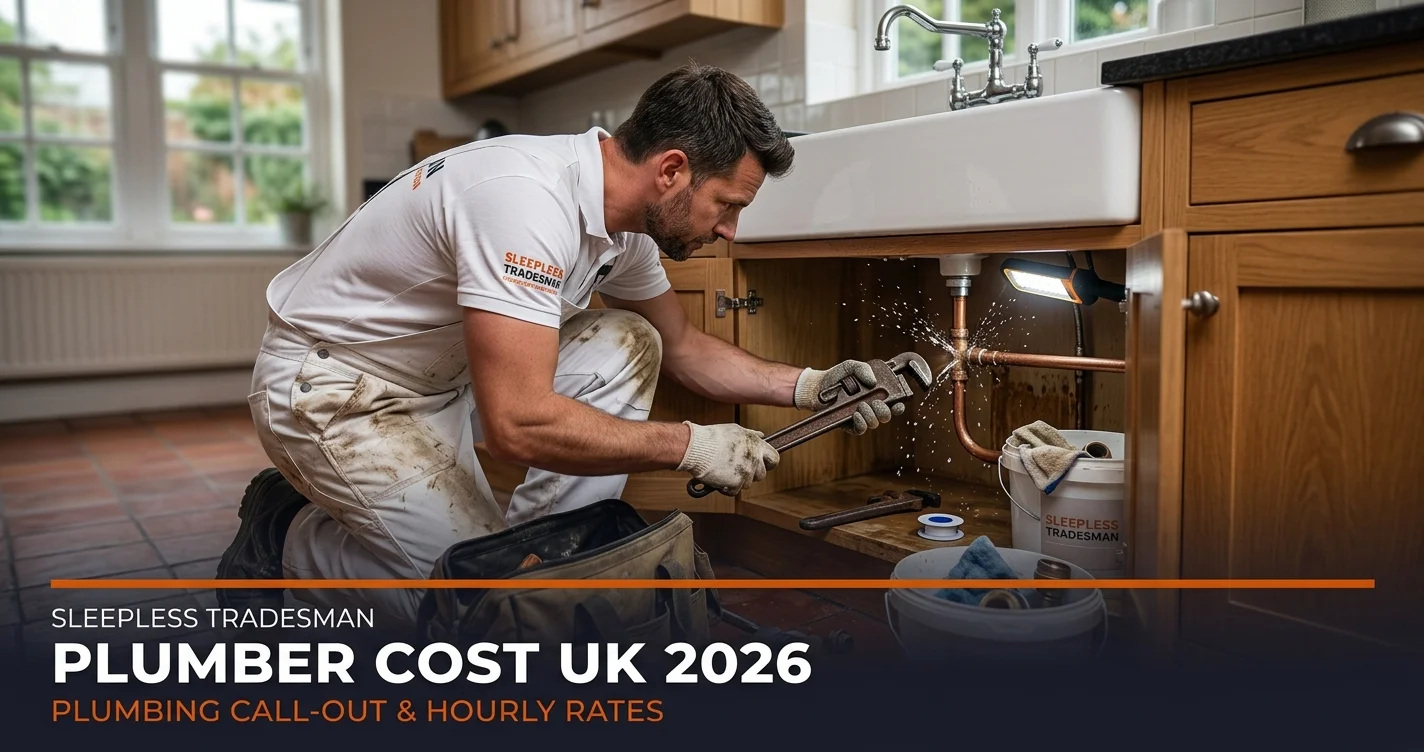
Plumber Rates in Glasgow 2026
The table below summarises current plumber rates in Glasgow compared with the UK national average. Prices reflect labour only and exclude materials, VAT, and any specialist certification surcharges.
| Rate Type | Glasgow 2026 | UK National Average |
|---|---|---|
| Day rate | £160–300 | £180–350 |
| Hourly rate | £35–60 | £40–70 |
| Emergency / out-of-hours callout | £85–175 | £100–200 |
| Standard callout / first-hour minimum | £50–90 | £55–100 |
Common Plumber Job Costs in Glasgow 2026
The figures below are labour-inclusive estimates for typical plumbing and heating jobs in Glasgow. Material costs vary and are generally charged separately unless stated otherwise. Always request an itemised written quote before work begins.
| Job Type | Typical Cost in Glasgow | Notes |
|---|---|---|
| Boiler service | £65–110 | Gas Safe engineer required; annual service recommended |
| Leaking tap repair | £70–130 | Washers and cartridges usually included |
| Toilet installation | £90–200 | Labour only; supply of toilet unit extra |
| Radiator add / replace | £130–340 | Includes draining and refilling system; radiator cost extra |
| Bathroom suite installation (labour only) | £500–1,300 | Full fit-out; sanitary ware supplied separately |
| Burst / leaking pipe repair | £70–220 | Higher end if pipe is concealed in wall or floor |
| Boiler replacement (combi, like-for-like) | £1,400–2,250 | Includes boiler unit, labour, and flue; requires Gas Safe engineer |
| Power flush central heating | £300–540 | Price depends on number of radiators; inhibitor included |
What Affects Plumber Costs in Glasgow?
Several local factors influence what you will pay for plumbing work in Glasgow:
- Tenement property access: Glasgow has an exceptionally large stock of traditional sandstone tenement buildings. Work in these properties — especially shared close drainage, original lead pipework, or communal systems — requires specialist knowledge and often takes longer than equivalent jobs in modern builds. Expect higher quotes for tenement plumbing.
- Gas Safe certification: Any plumber carrying out gas work must hold Gas Safe registration, and this is reflected in their rates. Gas Safe engineers typically charge more than non-certified plumbers, but the premium is non-negotiable for safety and legal compliance.
- Scottish Building Standards compliance: Glasgow operates under Scottish Building Standards, administered by the local authority. Certain plumbing works require a building warrant, adding time and cost. Your plumber should be familiar with Glasgow City Council building control requirements.
- Energy efficiency retrofit demand: The Scottish Government has ambitious heat decarbonisation targets, driving strong demand for heat pump installations and insulation upgrades. Engineers with heat pump qualifications (MCS-certified) command a premium but may qualify your home for grant funding through schemes such as Home Energy Scotland.
- Time of year: Demand for boiler repairs peaks in October–December as heating systems are switched on after the summer. Booking routine work in spring or summer typically secures a better rate and faster availability.
- Emergency vs. scheduled: An out-of-hours emergency callout at 2am on a Sunday will always cost significantly more than the same job booked in advance for a Tuesday morning. If the problem can wait safely, always book during business hours.
- Sole trader vs. firm: Independent sole-trading plumbers based in areas like Govan, Springburn, or the East End generally charge less than established central-city firms. The trade-off is usually availability and business continuity — companies can usually deploy cover if your usual plumber is ill.
- Materials and parts: Labour rates in Glasgow are relatively competitive, but materials are largely priced at national rates. Unusual or heritage fittings for period properties can be significantly more expensive and may need to be sourced from specialist suppliers.
How Glasgow Plumber Rates Compare
Glasgow offers some of the most competitive plumbing rates among UK cities. The comparison below shows typical day rates across major cities and the national average:
| City | Hourly Rate | Day Rate | vs National Average |
|---|---|---|---|
| Glasgow | £35–60 | £160–300 | −15 to −20% |
| London | £50–90 | £250–500 | +40 to +60% |
| Birmingham | £40–70 | £180–320 | Approx average |
| Manchester | £40–70 | £175–320 | Approx average |
| Edinburgh | £40–65 | £175–320 | −5 to −10% |
| UK National Average | £40–70 | £180–350 | — |
Rates are approximate and reflect 2026 market conditions. Actual quotes will vary based on job complexity, urgency, and individual trader.
How to Find a Reputable Plumber in Glasgow
Finding a qualified, trustworthy plumber in Glasgow is straightforward if you know what to look for. The most important accreditations are:
- Gas Safe Register — legally required for any work on gas appliances or pipework. Verify your plumber's registration number at gassaferegister.co.uk before allowing any gas work. Never accept photocopies of a Gas Safe card — check the register directly.
- WaterSafe — a voluntary approval scheme for plumbers working on the water supply. WaterSafe members undergo regular assessments against industry standards and are required to comply with the Water Supply (Water Fittings) Regulations 1999.
- CIPHE (Chartered Institute of Plumbing and Heating Engineering) — membership indicates a higher level of technical training and continuing professional development. Look for the letters MInstP or CEnginstP after the name.
Three Things to Check Before Hiring
- Public liability insurance: Ask the plumber to confirm they hold at least £1 million public liability cover. Any reputable tradesperson will supply this without hesitation.
- Written quote: Request a detailed, itemised quote covering labour, materials, and any additional charges before work starts. A verbal estimate is not enough.
- References and reviews: Ask for the contact details of two or three recent Glasgow customers for larger jobs, and check independent review platforms. Be wary of traders with no verifiable online presence.
Red Flags to Watch For
- Asking for large upfront cash payments before work begins
- Unable or unwilling to provide a Gas Safe registration number for gas work
- Refusing to provide a written quote or avoiding putting a price in writing
- Significantly underquoting all other traders — cheap quotes sometimes indicate poor workmanship or the use of substandard materials
- Pressure to make a same-day decision without time to compare quotes
Money-saving tip
Always get at least three written quotes for any job over £200. In Glasgow's competitive market, quotes for the same job can vary by 30–40%. A middle quote from a well-reviewed trader often represents the best balance of quality and value.
Hiring a Plumber in Glasgow: What You Need to Know
Glasgow is Scotland's largest city, with a diverse housing stock that ranges from Victorian sandstone tenements in the West End and Merchant City to post-war council estates, 1980s new-builds, and modern city-centre flats. Each property type presents different plumbing challenges.
Tenement Properties
A significant proportion of Glasgow's housing is made up of traditional sandstone tenement properties built between approximately 1870 and 1930. These buildings often feature original lead pipework, shared close drainage, communal water tanks in roof spaces, and complex shared ownership of services. Plumbers working on these properties need specialist knowledge of heritage plumbing systems. Replacing old lead pipes — a common requirement in older Glasgow tenements — is generally a sound investment in water quality and pressure, but it requires careful planning if sections run through shared parts of the building.
Scottish Building Standards
Scotland's building control regime operates independently from England and Wales. Plumbing work that constitutes a material alteration — such as installing new bathroom facilities, re-routing drainage, or making changes to the hot water system — may require a building warrant from Glasgow City Council. Your plumber should advise you on warrant requirements before starting work. Failure to obtain a required warrant can cause problems when selling the property.
Scottish Planning Law
Scotland operates under the Town and Country Planning (Scotland) Act 1997, with permitted development rights that differ from those in England. If your plumbing project is associated with a building extension or external alteration, check with Glasgow City Council's planning department or use the Scottish Government's planning portal (eplanning.scot) before proceeding.
Energy Efficiency Retrofits
Scotland's heat decarbonisation plans are among the most ambitious in the UK. Glasgow homeowners and landlords face increasing pressure to improve energy efficiency, and there is strong demand — and significant grant funding — for heat pump installations, improved insulation, and solar thermal systems. If you are considering a heating system upgrade, look for MCS-certified engineers who can help you access Home Energy Scotland grants and loans, which can cover a meaningful proportion of installation costs.
Private Rented Sector Requirements
Scotland has more stringent requirements for private rented properties than England. Landlords must ensure properties meet the Repairing Standard, which includes maintaining plumbing and drainage in good working order. Scotland also requires EICRs (Electrical Installation Condition Reports) for all private rented properties — a requirement that is more comprehensive than equivalent English rules. While EICRs are electrical rather than plumbing work, many Glasgow heating engineers work alongside electricians and can recommend qualified contacts for combined compliance inspections.
Why Plumber Costs in Glasgow Are Rising in 2026
National skills shortage — tightening supply
The CITB projects a shortfall of 250,000 trade workers nationally by 2028. Apprenticeship starts have fallen by approximately 170,000 over the past decade, driven partly by the expansion of university entry. Glasgow plumbers are not immune: the same tightening supply driving national rate rises applies locally, and Scotland's mandated heat transition is generating demand that the existing plumbing workforce cannot comfortably absorb.
Scotland's Heat in Buildings Act — the biggest plumbing opportunity in a generation
Scotland's Heat in Buildings legislation requires all homes to meet a heat standard by 2033, with social and private rented properties required to transition first. Heat pump installations generate significant plumbing work: new pipework, radiator upgrades or underfloor heating, and hot water cylinder replacement. The scale of the mandated transition across Scotland's 2.7 million homes represents the largest single plumbing demand event in a generation — and the workforce to deliver it does not yet exist at the required scale.
Govan and Clyde Waterfront development
The Clyde Waterfront regeneration from Govan to Finnieston includes thousands of new residential units requiring full plumbing infrastructure from first fix to commissioning. This development demand competes directly with the retrofit pipeline for qualified Glasgow plumbers, and the combination of the two is pushing rates and lead times up simultaneously.
Frequently Asked Questions
How much does a plumber cost in Glasgow in 2026?
In Glasgow, plumbers typically charge £35–60 per hour or £160–300 per day in 2026. Emergency callout fees range from £85–175 depending on the time of day and urgency. Glasgow rates sit around 15–20% below the UK national average, making it one of the more affordable major cities for plumbing work. Materials are charged separately in most cases, so always clarify whether your quote is labour-only or fully inclusive.
What is the average plumber day rate in Glasgow?
The average plumber day rate in Glasgow in 2026 is £160–300. The lower end of this range applies to straightforward, non-gas plumbing work from sole traders, while the upper end reflects Gas Safe registered engineers undertaking complex boiler or central heating work. Most Glasgow plumbers charge in the £180–250 range for a standard working day. Rates are typically quoted inclusive of a standard set of tools; any specialist equipment may be charged additionally.
How do Glasgow plumber rates compare to London?
Glasgow plumber rates are significantly lower than London. London plumbers typically charge £50–90 per hour and £250–500 per day, compared with Glasgow's £35–60 per hour and £160–300 per day. That means you could save 30–40% on labour costs for the same job by being in Glasgow rather than London. Emergency callout premiums in London can also be considerably higher, particularly in inner London postcodes. Glasgow's rates are more comparable to Birmingham and Manchester, though still modestly below both.
What should I look for when hiring a plumber in Glasgow?
For any gas work, the plumber must be on the Gas Safe Register — you can verify this at gassaferegister.co.uk. For non-gas plumbing, look for WaterSafe membership or CIPHE (Chartered Institute of Plumbing and Heating Engineering) accreditation as quality indicators. Always ask for proof of public liability insurance and request at least three written quotes before committing. Check online reviews and ask for references from previous Glasgow customers if the job is large or complex. Avoid any plumber who requests large upfront cash payments or is unable to provide a written breakdown of costs.
Are emergency plumber costs higher in Glasgow?
Yes, emergency plumber callout fees in Glasgow typically run from £85–175, on top of any hourly labour charges. Out-of-hours work — evenings, weekends, and bank holidays — attracts the highest premiums. Despite these surcharges, Glasgow emergency rates remain lower than those in London or Edinburgh. If the job is not urgent, it is always cheaper to book during standard business hours. For genuine emergencies such as burst pipes or gas leaks, contact your water company (Scottish Water) or the National Gas Emergency Service on 0800 111 999 first — they can isolate the supply at no charge while you arrange a plumber.
Are there differences in plumber regulations in Scotland?
Yes. Scotland operates under Scottish Building Standards rather than England and Wales Building Regulations. Gas Safe registration is the same across the whole of the UK and is legally required for any gas work. Scotland has more stringent requirements for private rented property — EICRs are mandatory for all private rented properties in Scotland. Energy efficiency standards under Scottish Government targets are pushing strong demand for heat pump and insulation retrofits. Planning law also differs: Scotland uses the Town and Country Planning (Scotland) Act 1997, and permitted development rights vary from England, so always check with Glasgow City Council or the Scottish planning portal before starting any structural work that involves external alterations.
Will Glasgow plumber costs keep rising?
Yes — Scotland's Heat in Buildings Act is the dominant local driver and represents the single biggest plumbing demand event in Scotland in decades. Every heat pump installation generates new pipework, radiator or underfloor heating upgrades, and a hot water cylinder replacement — typically 2–4 days of plumber time per property. With Scotland's 2.7 million homes required to meet a heat standard by 2033 and social and private rented properties required to transition first, the pipeline of mandated work significantly outpaces the current Glasgow plumbing workforce. The Clyde Waterfront regeneration adds development demand on top. Glasgow rates remain 15–20% below the UK national average, but that gap is under structural pressure.
Related Guides
Get Free Quotes from Glasgow Plumbers
Compare quotes from Gas Safe registered plumbers in Glasgow. Free, no-obligation quotes — takes less than 2 minutes.
Get Free Quotes